
Alternative music is a broad category of rock-rooted music defined less by a single sound and more by a shared attitude: staying outside commercial mainstream formulas. It grew from the post-punk underground of the late 1970s, broke into the mainstream in the early 1990s, and has never stopped reinventing itself. Today it covers everything from grunge and Britpop to bedroom pop and emo revival, held together by a resistance to whatever the dominant pop formula happens to be.
Ask ten music fans what alternative music is and you’ll get ten different answers. Some point to Nirvana. Others say R.E.M., or Radiohead, or Billie Eilish. And all of them are right. That’s exactly what makes the question so hard.
The name says it all, and also nothing. “Alternative” just means something other than the mainstream. But what counts as the mainstream keeps shifting, and so does the music that defines itself against it. After a decade of writing about artists who refuse to be categorized, I’ve come to think that’s not a bug in the label. It’s the whole point.
In This Article
- What Is Alternative Music?
- How Alternative Music Started
- How Alternative Broke Into the Mainstream in the 1990s
- Examples of Alternative Artists and Bands
- Common Traits of Alternative Music
- Alternative Music Genres and Subgenres
- Alternative Music From the 2000s to Today
- Is Alternative a Genre or a Label?
- Why Alternative Music Still Matters
What Is Alternative Music?
Alternative music is rock-rooted music that exists outside the commercial mainstream, not because it sounds a specific way, but because it operates with a different set of values. It’s not tied to one tempo, one guitar tone, or one emotional register. What’s alternative music? It’s music that prioritizes artistic expression over radio formulas, and that relationship with the mainstream is really the whole definition.
That means alternative sits in relationship to rock, indie, punk, electronic, and pop, borrowing freely from all of them. You’ll hear it in the fuzzy guitars of grunge, the jangly melancholy of college rock, the distorted electronics of industrial, and the introspective quiet of bedroom pop. What’s alternative is always shifting because the mainstream is always shifting, too.
Alternative Music Definition: Music Outside Mainstream Commercial Formulas
The most useful alternative music definition isn’t about instruments or tempo. It’s about positioning. Alternative music defines itself against whatever the dominant commercial formula happens to be. What defines alternative music is its refusal: refusing overproduction, refusing predictable structures, refusing the idea that music has to be safe to succeed. Define alternative music this way and suddenly a lot of very different artists start to make sense under one roof.
“Alternative Pop/Rock is essentially a catch-all term for post-punk bands from the mid-’80s to the mid-’90s. Though there is a variety of musical styles within alternative rock, they are all tied together since they existed outside of the mainstream.”
AllMusic, Alternative Pop/Rock Style Overview
How Alternative Music Started
When did alternative music start? There’s no single invention date. It grew from a set of conditions. Punk rock cracked open the idea that you didn’t need a major label, a polished sound, or industry approval to make music that mattered. When punk itself became stale and predictable in the late 1970s, post-punk artists pushed further: darker moods, angular rhythms, stranger textures. That’s where what is alternative genre really begins to take shape.
The alternative genre music that followed wasn’t one sound but one attitude. Bands like the Velvet Underground, the Stooges, and the Ramones had already proved that abrasive, unconventional rock could be artistically vital. Their lineage ran into the 1980s underground through regional hubs: Athens, Georgia gave us R.E.M. and the B-52’s; Minneapolis gave us Hüsker Dü and The Replacements; Boston gave us the Pixies and Dinosaur Jr. Each scene had its own character, but all shared a rejection of mainstream rock’s slickness.
College Radio, Underground Scenes, and Indie Networks
Here’s the part most people miss. The alternative rock history of the 1980s wasn’t built on TV or commercial radio. It was built on college radio stations, small venues, independent labels like Rough Trade, Factory, and Creation, and word of mouth between cities. Those FCC-licensed college stations could play what commercial radio wouldn’t touch. They gave bands like Sonic Youth and The Cure an audience long before any major label paid attention. The what is alternative genre answer lives in that infrastructure as much as in any individual sound.
How Alternative Broke Into the Mainstream in the 1990s
The alternative genre had been building underground momentum for over a decade. Then, in September 1991, Nirvana released Nevermind, and everything changed almost overnight. “Smells Like Teen Spirit” hit with the noise of the indie scene and the hooks of pop radio. Suddenly, record labels that had ignored the alternative genre for years started signing anything with a distorted guitar. Britannica describes the result as a pop music style that dominated and changed rock between 1991 and 1996.
But here’s the thing: that breakthrough created a genuine crisis of identity. If alternative music was supposed to be an alternative to the mainstream, what happened when it became the mainstream? MTV picked it up, major labels packaged it, and the very anti-commercial spirit that defined the alternative music definition started to look like a marketing angle. That tension has never fully resolved, honestly, it’s still playing out today.
Grunge and Alternative Rock Entering the Charts
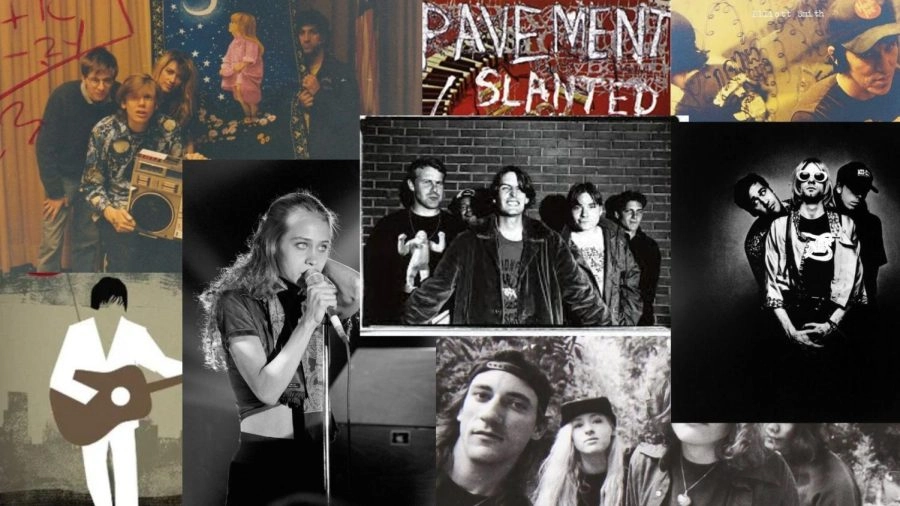
Grunge was the subgenre that made the crossing most visibly. Seattle bands like Nirvana, Pearl Jam, Soundgarden, and Alice in Chains combined the raw energy of punk with the heaviness of metal and lyrics that matched the disillusionment of a generation. In the UK, Britpop moved in the opposite direction: Oasis, Blur, and Pulp looked back to 1960s British rock with a gleeful nostalgia. Both movements were classified as alternative genre, despite sounding nothing alike, which tells you everything about how loose the label really is.
Examples of Alternative Artists and Bands
The easiest way to understand what is considered alternative music is to look at the artists who carry the label. They don’t sound alike. They don’t share a uniform look, a common tempo, or a standard guitar tuning. What they share is a willingness to work against the grain of whatever pop was doing at the time they emerged.
From the 1980s through today, alternative has served as a home for artists who didn’t fit neatly anywhere else. That range is a feature, not a flaw. Here are some of the key acts that define what alternative music looks like across eras:
| Era | Artist / Band | Why They’re Alternative |
|---|---|---|
| 1980s | R.E.M. | College radio darlings; jangly guitars, oblique lyrics, built a following outside the mainstream before crossing over |
| 1980s | The Smiths | Literary melancholy, Morrissey’s ambiguous persona, Marr’s shimmering guitar lines; influential far beyond their chart presence |
| 1990s | Nirvana | Grunge’s breakthrough act; raw production, anti-commercial ethos, catalyzed alternative’s mainstream moment |
| 1990s | Radiohead | Refused to repeat themselves after The Bends; OK Computer and Kid A pushed alternative into experimental territory |
| 1990s–2000s | Nine Inch Nails | Industrial rock meets pop structure; Trent Reznor proved alternative could be dark, electronic, and commercially massive at once |
| 2000s–present | Paramore | Blended emo and pop-punk with arena energy; showed how alternative rock genre sensibility can coexist with mainstream polish |
| Present | Billie Eilish | Bedroom pop production, whisper-to-roar dynamics, anti-celebrity persona; alternative as an aesthetic and cultural stance, not a distribution model |
Classic and 1990s Alternative Acts
R.E.M., Nirvana, and Radiohead are the three acts most people think of first, and for good reason. They represent the three core strands of what is considered alternative music in its most recognized form: the college-rock crossover (R.E.M.), the grunge breakthrough (Nirvana), and the restless experimentalist (Radiohead). What is alternative rock in its 1990s form? It’s largely these bands and their orbit, and they still define how most people hear the genre today.
Nine Inch Nails and Industrial Experimentation
Nine Inch Nails is a useful test case for the alternative rock genre because Trent Reznor doesn’t sound anything like a grunge band. What he shares with the alternative movement is the attitude: distorted production that pushes against clean commercial radio, emotionally raw subject matter, and a refusal to be packaged as a conventional rock act. Industrial rock, synths, metal textures, orchestral flourishes. He used all of it, on major-label releases, and stayed definitively alternative throughout. That’s the genre’s flexibility on full display.
Paramore and Modern Alternative Pop Energy
Paramore are a good example of how the alternative rock genre has evolved. Their early records were squarely in the emo and pop-punk world of the mid-2000s. Their later work moved toward synth-pop and new wave influences without losing the emotional intensity that made them alternative in the first place. Hayley Williams has talked openly about resisting genre boxes, which is itself a very alternative music impulse. You can hear mainstream pop production alongside lyrics that feel genuinely personal and unpolished in the best sense.
Common Traits of Alternative Music
If alternative music doesn’t have one sound, how do you recognize it? The characteristics of alternative music are less about specific instruments and more about how those instruments are used, and what values shape the choices. How to describe alternative music comes down to a few recurring patterns that hold across very different artists.
What makes music alternative usually starts with what’s missing: the over-polished finish of commercial pop, the safety of predictable song structures, the distance between performer and audience that arena rock created. What makes a song alternative is often what it refuses as much as what it includes.
Emotional and Lyrical Depth
Alternative lyrics tend to go places that mainstream pop avoids. Alienation, anxiety, identity, grief, social critique: these are recurring themes in the best alternative music. Where a commercial pop song might sand down an emotion into something radio-friendly and relatable in the broadest sense, an alternative song often names something more specific and uncomfortable. That specificity is part of what makes listeners feel seen rather than just entertained.
Expressive Songwriting and Dynamics
Think about it this way: one of the most common structural moves in alternative rock is the loud-soft-loud shift. Quiet, introspective verses that explode into distorted choruses. The Pixies basically codified it, and Nirvana made it famous worldwide. What makes alternative music work sonically is often that tension: the contrast between restraint and release, between a near-whispered verse and a wall-of-sound chorus. Conventional pop hooks want to be catchy from bar one. Alternative songs often want to earn the moment.
Experimentation With Sound
Alternative music has always absorbed noise, feedback, sampling, distortion, synthesizers, and anything else that serves the song. It’s blended punk energy with folk instrumentation, hip-hop production with guitar rock structures, and electronic textures with confessional lyrics. Production choices in alternative rock consistently prioritize authenticity over polish, whether that means a deliberately raw mix or an experimental one. The common thread is intentionality: the weird sounds are there on purpose.
Cultural Positioning
And it gets more complicated. Alternative music isn’t just a sound; it’s a cultural position. DIY credibility matters. Anti-mainstream identity matters. The best alternative music often comes from artists who built their audience outside the traditional industry pipeline: college radio, independent labels, touring circuits that commercial radio ignored. Even when those artists eventually crossed over, the cultural positioning that defined them didn’t disappear. It became part of their identity.
Alternative Music Genres and Subgenres
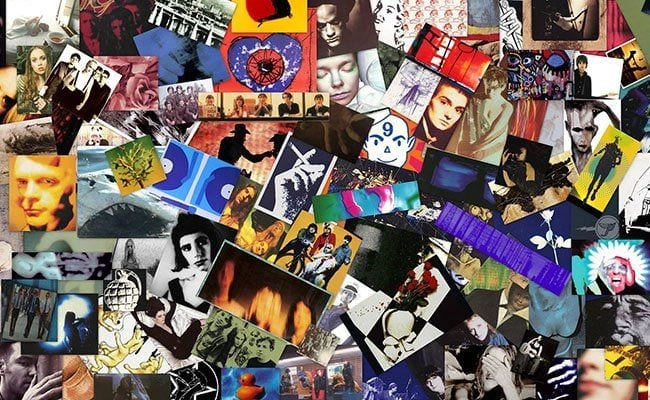
One of the reasons the alternative music genre is so hard to define is that it contains so many other genres inside it. Think of it less like a single style and more like a family of sounds that share a common ancestor in post-punk and the indie underground. The family has grown large. Very large.
Each subgenre under the alternative umbrella developed its own distinct identity, often in a specific city or scene, before the label “alternative” folded them all together. What is alternative genre at its broadest is really a coalition of sounds held together by shared values, not shared instrumentation.
Alternative Rock, Indie Rock, Grunge, Shoegaze, Post-Punk, Britpop, Emo, and Industrial Rock
Here are the major subgenres that live under the alternative umbrella, each with its own sonic fingerprint:
- Alternative rock: The broadest category: guitar-driven music outside the pop mainstream, from the 1980s college rock scene through the 1990s breakthrough and beyond.
- Grunge: Seattle’s contribution: heavy, raw, emotionally dark; Nirvana, Pearl Jam, Soundgarden, Alice in Chains.
- Indie rock: Originally described the distribution model (independent labels), then became its own aesthetic: lo-fi, introspective, deliberately uncommercial.
- Shoegaze: Dense walls of guitar effects, hushed or buried vocals, dream-like textures; My Bloody Valentine, Slowdive, Lush.
- Post-punk: The angular, intellectually restless music that came after punk’s first wave: Joy Division, The Cure, Gang of Four.
- Britpop: 1990s UK movement that looked back to 1960s British rock with irony and pop hooks; Oasis, Blur, Pulp, Suede.
- Emo: Emotionally intense, confessional lyrics fused with punk and rock energy; Dashboard Confessional, My Chemical Romance, early Jimmy Eat World.
- Industrial rock: Harsh electronics, heavy rhythms, confrontational aesthetics; Nine Inch Nails, Ministry, Marilyn Manson.
Alternative Music From the 2000s to Today
After the 1990s, the alternative label started to fragment. Post-punk revival bands like the Strokes, Interpol, and Franz Ferdinand brought angular guitars back to critical attention in the early 2000s. Emo and pop-punk exploded with My Chemical Romance, Fall Out Boy, and Paramore. And electronic production started bleeding into rock at every level, from the Killers to LCD Soundsystem. What is alternative pop in this era? It’s often rock attitude filtered through synth-pop, dance, and bedroom production.
The streaming era changed things again. Digital audio workstations made it possible for a teenager in a bedroom to produce music with the same technical quality as a professional studio. Bandcamp and SoundCloud revived the DIY infrastructure that college radio and indie labels once provided. The result has been an explosion of micro-genres and scenes: hyperpop, bedroom pop, emo revival, pop-punk revival, indie folk, indie sleaze. What is alt music now is harder than ever to pin down because there are so many parallel underground scenes running at once.
Indie Sleaze, Emo Revival, Pop-Punk Revival, and Streaming-Era Discovery
The 2010s and 2020s gave alternative music a new set of subcultures to absorb. Indie sleaze looked back to the early 2000s with a knowing nostalgia. The emo revival brought back confessional intensity with bands like Foxing and The Hotelier. The pop-punk revival connected Olivia Rodrigo and Machine Gun Kelly to an older lineage. And streaming-era discovery through algorithms and playlist culture created what some critics call “Spotify-core,” meaning carefully produced alternative that optimizes for mood playlists without fully committing to either the mainstream or the underground. It’s a new version of an old tension.
Is Alternative a Genre or a Label?
Here’s where it gets interesting. Is alternative a genre in the technical sense, the way jazz or country are genres with defined harmonic and structural conventions? Or is it more of a marketing label, a placeholder that radio programmers and record labels invented to group artists who didn’t fit anywhere else? The honest answer is that it’s always been both, and the tension between those two functions has defined the music ever since.
When Billboard launched its Alternative/Modern Rock chart in 1988, that wasn’t an artistic decision. It was a commercial one. Radio stations needed a format name. Record labels needed a section in the record store. “Alternative” did that job. But the artists filing into that category often didn’t identify with each other at all. Is alternative a music genre by sound? Barely. Is it a meaningful cultural category? Absolutely, at least in terms of values and scene membership.
“The name ‘alternative rock’ essentially serves as an umbrella term for underground music that has emerged in the wake of punk rock since the mid-1980s. Throughout much of its history, alternative rock has been largely defined by its rejection of the commercialism of mainstream culture.”
Wikipedia, Alternative Rock
Is Alternative Actually a Music Genre?
The working answer most music writers and critics have settled on is this: alternative is a real genre the way “world music” is a real genre. It describes something genuine about a set of artists and their relationship to the music industry and to mainstream culture. But it’s not a genre in the same way blues or reggae are genres, where you can point to specific harmonic, rhythmic, or structural conventions. Define alternative music by values and cultural positioning and it holds up. Define it purely by sound and it collapses into contradictions almost immediately.
Why Alternative Music Still Matters
So why does any of this matter now, in an era where genre labels are increasingly unstable and streaming algorithms sort music by mood rather than scene? The short answer is that the impulse alternative music represents has never gone away. As long as there’s a dominant commercial formula, there will be artists working against it. And the best alternative music has always come from that friction.
Alternative music’s influence on rock, pop, and indie has been profound and largely unacknowledged in real time. Artists like Lorde, Frank Ocean, and Phoebe Bridgers have absorbed the alternative tradition and carried it into contexts that would have seemed unlikely twenty years ago. The cultural positioning that alternative artists pioneered: the personal lyric, the raw production, the refusal to be marketed into a neat box. That stance has become the default mode for a whole generation of artists who don’t even use the word. For fans of artists who live between categories, Hindi Zahra’s music is a perfect example of that spirit: rooted in tradition, impossible to classify, and completely its own thing.
Space for New Sounds Outside Pop Formulas
Worth pausing on that for a second. The best alternative music has never been about nostalgia for a specific sound. It’s been about maintaining space for music that doesn’t fit the current commercial formula. That space is as necessary now as it was in 1983, when R.E.M. was playing to 200 people in Athens, Georgia, or in 1991, when Nirvana’s success briefly made the underground feel like it had won. It hadn’t won, of course. The mainstream absorbed the victory and kept moving. But the alternative impulse, making what you need to make on your own terms outside the formula, has proven remarkably durable. It always finds a new generation of artists who need exactly that permission.
What’s alternative music, and how is it different from indie?
What’s alternative music at its core is music that positions itself outside the commercial mainstream, usually with rock roots and a DIY-influenced ethos. Indie and alternative are closely related but measure different things. “Indie” originally described how music was made and distributed, meaning independently, without major label backing. “Alternative” is more about sound, attitude, and cultural positioning. In the 1990s, many alternative bands were actually on major labels (Nirvana signed to DGC, a Geffen subsidiary), while true indie bands stayed independent. Today the terms overlap heavily, but indie usually implies a quieter, more delicate aesthetic, while alternative carries a wider range of sonic possibilities. What is alternative genre comes down to that outsider relationship with the mainstream; what is indie genre often comes down to the specific lo-fi, introspective sound that developed in the 1990s and 2000s.
What is alt music: Is It the Same as Alternative Rock?
What is alt music? Pretty much yes, in casual usage. “Alt” is shorthand for “alternative,” and it’s used interchangeably with alternative rock in most contexts. Technically, alternative rock is a subgenre: guitar-based music with post-punk roots that emerged from the US and UK underground in the 1980s. “Alt music” or “whats alt music” as a search term tends to pull up a wider range: alternative pop, alternative electronic, alternative hip-hop, and more. The family is big. If you’re looking for the music that most people picture when they say “alt,” it’s the 1990s guitar-heavy stuff: Nirvana, Radiohead, Smashing Pumpkins, Pearl Jam. But the broader alternative tradition is considerably wider than that specific era.
What is considered alternative music today?
What is considered alternative music today is genuinely harder to define than it was in 1993. The streaming era has fragmented the music industry into thousands of micro-genres and niche scenes, and what is alternative genre in that context is less about a specific sound and more about a relationship to the algorithmic mainstream. Artists like Boygenius, Wet Leg, Caroline Polachek, and Mitski are all considered alternative, despite sounding very little alike. What they share is a sensibility: personal, unformulaically structured, produced with intention rather than commercial calculation. What is alternative genre now is probably best understood as the space where artists make music on their own terms, even if those terms occasionally result in mainstream success.
What makes a song alternative?
What makes a song alternative is less about any single ingredient and more about how the ingredients are combined and why. Alternative songs tend to prioritize authenticity over accessibility, emotional specificity over broad relatability, and dynamic contrast over consistent polish. You might hear unconventional song structures that avoid the standard verse-chorus-verse formula. You might hear production that preserves rawness deliberately: noise, feedback, or lo-fi textures treated as features rather than flaws. And you’ll almost always hear something in the lyrics that feels more personal and less focus-grouped than what commercial pop radio serves up. That combination of intentional roughness, emotional honesty, and structural freedom is what most critics and fans mean when they call a song alternative.

Leila Benkacem is a Paris-based music journalist with a decade of writing about the intersection of North African folk traditions and contemporary Western sounds. Born in Lyon to an Algerian family, she grew up between two musical worlds — her father’s cassettes of Berber songs and the French radio jazz of Sunday mornings. She discovered Hindi Zahra through a late-night set at La Maroquinerie in 2011 and has followed her work ever since. Leïla writes about world music, diaspora artists, and the quiet power of music that refuses to be categorized. She created this fan site as a personal archive and a space for others who believe Hindi Zahra’s voice deserves far more of the world’s attention.
Sources
- Encyclopaedia Britannica. “Alternative Rock.” Britannica, 1999 (updated).
- AllMusic Staff. “Alternative Pop/Rock.” AllMusic.
- Wikipedia Contributors. “Alternative Rock.” Wikipedia.
- MasterClass Staff. “Alternative Rock Guide: The History and Bands of Alt-Rock.” MasterClass, 2026.
- Kits AI. “What Is Alternative Music? A Deep Dive into the Style and Genre.” Kits.AI, 2026.
- Carew, Anthony. “What Is Alternative Music and When Did It Start?” LiveAbout, 2018.
- Fiveable. “The Roots and Evolution of Alternative Rock.” Fiveable, 2026.