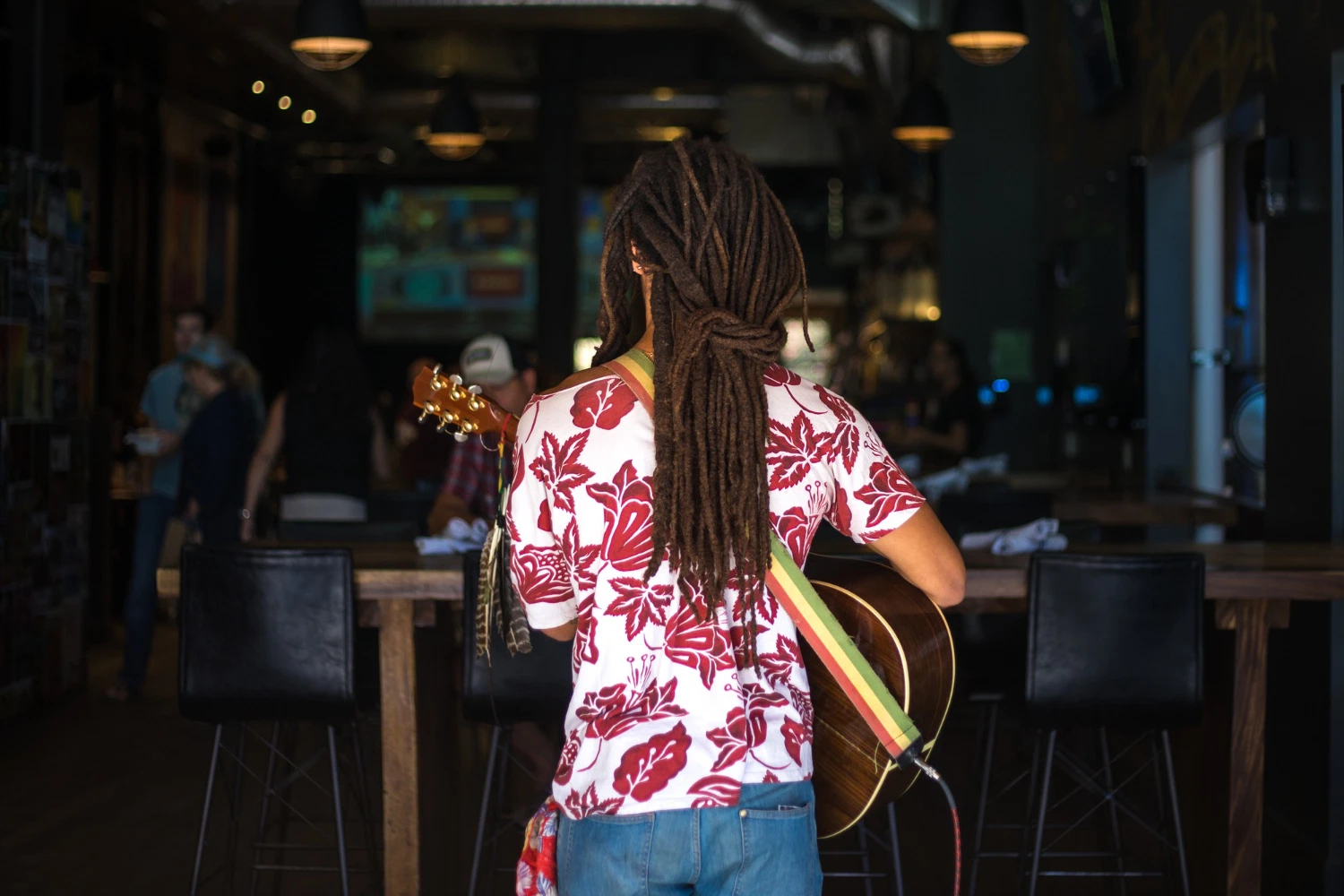
Reggae music is a genre born in Jamaica in the late 1960s, built on a slow, bass-heavy groove and off-beat guitar chords. It grew out of ska and rocksteady, carries deep ties to Rastafari, and became culturally significant enough that UNESCO added it to its list of the Intangible Cultural Heritage of Humanity in 2018. Here’s where it started, how it sounds the way it does, and why it still matters.
I still remember the first time a reggae bassline stopped me mid-sentence. It wasn’t at a festival or in a club. It came through a cracked car window on a hot afternoon, and it felt like the bass was speaking directly to my chest before I’d even registered the words.
That’s reggae in a nutshell: a genre built to make you feel the rhythm before you understand it. It originated in Jamaica in the late 1960s, and in the decades since, it has shaped everything from British punk to American hip-hop. Below, we’ll trace where reggae came from, how it sounds the way it does, and why UNESCO recognized it as part of the world’s intangible cultural heritage.
In This Article
- What Is Reggae Music? A Simple Definition
- Where Does Reggae Come From?
- When Did Reggae Start? The Road From Ska to Reggae
- Who Started Reggae Music? Naming the Genre
- What Does Reggae Sound Like? Key Musical Characteristics
- Reggae and Rastafari: The Spiritual Heart of the Music
- Dub, Dancehall, and Reggae’s Many Branches
- Essential Reggae Artists and Albums
- Facts About Reggae Music Worth Knowing
- Frequently Asked Questions
- Why Reggae Still Refuses to Fade
What Is Reggae Music? A Simple Definition
Reggae music is a genre that started in Jamaica around 1968, built on a slow four-beat rhythm, off-beat guitar chords, and a bass line that usually carries the melody instead of just holding down the low end. So what is reggae, stripped of all the mythology around it? It’s a Jamaican popular music genre, not a mood or a fashion trend, even though it gets used that way constantly.
Reggae belongs to a family of Jamaican styles. Its direct ancestors are ska and rocksteady, and the easiest way to tell them apart is tempo and drum pattern: reggae is slower and heavier, with more space between the notes.
It has also always been more than a rhythm. From the start, reggae carried the voice of Kingston’s poorer neighbourhoods, and from the 1970s it became closely tied to Rastafarian spirituality, so lyrics about faith, injustice and Africa are as much part of the genre as the beat.
In one line: reggae is Jamaica’s signature sound – patient, bass-forward and unafraid to talk about hard things.
Where Does Reggae Come From?
Reggae comes from Jamaica, and specifically from the working-class neighbourhoods of West Kingston in the years after the island’s independence from Britain in 1962.
It grew out of a chain of homegrown styles. Mento, a rural folk music blending African rhythm with European melody, was followed by ska in the early 1960s; ska slowed into rocksteady around 1966, and rocksteady slowed further into reggae by 1968. American R&B and jazz, heard on radio from Miami and New Orleans, also fed into the mix.
Culturally, reggae was born in the sound systems, street dances and recording studios of Kingston, where producers competed to create new rhythms. That scene, more than any single artist, shaped the sound.
When Did Reggae Start? The Road From Ska to Reggae
Most historians date reggae to 1968, when Kingston producers stretched the rocksteady beat further and pushed the bass to the front.
The story is really one of slowing down: ska was fast and brassy, built for energetic dancing; rocksteady cooled it off; reggae cooled it off again and made the bass and the off-beat the centre of the music.
Rival studios such as Coxsone Dodd’s Studio One and Duke Reid’s Treasure Isle were racing to define the new sound at the same time, which is why collectors still debate the “first” reggae record. Candidates include Toots and the Maytals’ “Do the Reggay”, Larry and Alvin’s “Nanny Goat” and the Beltones’ “No More Heartaches”, all from 1968.
Genres rarely have one clean birthday. Reggae’s history is the story of dozens of musicians arriving at the same feeling from slightly different directions within about eighteen months.
Who Started Reggae Music? Naming the Genre
The name comes from Toots Hibbert of Toots and the Maytals. Their 1968 single “Do the Reggay” was the first popular record to use the word, and the genre has carried the name ever since.
What Does Reggae Mean, and How Do You Spell It?
The correct spelling is reggae – R-E-G-G-A-E – although Toots spelled it “reggay” in his song title. Hibbert said he adapted the word from streggae, Jamaican slang for someone who looked rough or ragged; others link it to “rege-rege”, meaning a quarrel or ragged clothes. Either way, the word came from the street, not from a record label.
Is reggae capitalized? No. Like jazz or rock, reggae is a common noun and is written in lower case, except at the start of a sentence or in a title.
Who started reggae as a sound, rather than a name, is murkier: producers, session musicians and singers working in the same small scene all have a claim.
What Does Reggae Sound Like? Key Musical Characteristics
Reggae music characteristics start with one specific drum pattern: the one-drop rhythm, where the kick drum skips beat one entirely and lands, together with the snare, on beat three. That empty first beat is what gives reggae its floating, unhurried feel compared to rock or pop.
The one-drop was popularised by Carlton Barrett, drummer of Bob Marley’s Wailers, and is still the most recognisable reggae beat. Other common patterns are the “rockers” and “steppers” beats, which add more kick drum for a driving feel.
Here’s where it gets interesting. In most popular music, the bass just anchors the low end. In reggae, it often does double duty as the lead melodic voice, weaving lines that answer the vocal rather than just following the chord changes underneath it.
Guitar and keyboards, meanwhile, play short, percussive “skank” chords on the off-beats rather than the downbeats. Layer all three elements together and you get a groove that leans back against the pulse instead of driving straight through it.
What Instruments Are Used in Reggae?
- Drums – the one-drop, rockers or steppers patterns, with plenty of rim shots and hi-hat.
- Bass guitar – deep, round and melodic; often the lead voice.
- Rhythm guitar – short, choppy “skank” chords on the off-beats.
- Keyboards – piano doubling the skank and the organ “bubble”, a rolling off-beat pattern.
- Lead guitar and horns – melodic fills and riffs, especially in roots reggae.
- Percussion – including the nyabinghi hand drums of Rastafarian music.
| Feature | Ska | Rocksteady | Reggae |
|---|---|---|---|
| Approximate era | Late 1950s–mid 1960s | 1966–1968 | 1968 onward |
| Tempo | Fast, brass-driven | Mid-tempo, smoother | Slow, bass-driven |
| Rhythm guitar | Busy off-beat strums | Lighter off-beat skank | Sparse skank, mostly off-beats |
| Dominant instrument | Horn section | Vocals and bass | Bass as lead voice |
Reggae and Rastafari: The Spiritual Heart of the Music
Roots reggae, the style most people picture when they hear the word, is inseparable from Rastafari, a Jamaican spiritual and political movement built around African identity and resistance to what it calls “Babylon,” the systems of colonial and economic power. Words like Zion, Jah, and repatriation show up constantly in reggae lyrics because of this connection.
Let me explain why that matters beyond the lyric sheet. Reggae was never meant to be background music. Musicians in this tradition saw the songs as tools: for protest, for spiritual reflection, for holding a community together under real pressure.
So why does this matter for a listener today, decades removed from 1970s Kingston? Because reggae’s political and spiritual roots are still what separate it from music that simply borrows its beat. Strip away the Rastafari context and you’re left with a rhythm, not the genre.
Dub, Dancehall, and Reggae’s Many Branches
Reggae didn’t stay in one lane for long. By the early 1970s, engineers were taking existing reggae recordings apart and rebuilding them into something new entirely, a subgenre called dub. Producers like King Tubby and Lee “Scratch” Perry stripped out vocals, pushed drums and bass forward, and drenched everything in echo.
And it gets more complicated from there, because dub itself became a launchpad for other genres entirely. Its remix-first approach directly shaped hip-hop production, electronic music, and eventually dubstep decades later.
A few of reggae’s major branches worth knowing:
- Roots reggae: the classic, Rastafari-centered style of the 1970s, associated with Bob Marley and Burning Spear.
- Dub: instrumental remix culture built on echo, reverb, and stripped-down rhythm tracks.
- Dancehall: a faster, digital-era evolution from the late 1970s onward, built for DJs to toast over.
- Lovers rock: a smoother, romance-focused strain that took off especially in the UK.
Reggae’s toasting tradition, DJs talking rhythmically over instrumental tracks at Jamaican sound systems, also fed directly into the birth of hip-hop MCing in 1970s New York, largely through Jamaican-born DJ Kool Herc.
Essential Reggae Artists and Albums
Reggae is much more than one man, but most listeners start with Bob Marley. Here are the artists and records that shaped the genre, from the 1960s to today.
The Founders
- Bob Marley & the Wailers – Catch a Fire (1973) launched them internationally on Island Records; Exodus (1977) was named album of the century by Time; the compilation Legend (1984) is the best-selling reggae album ever.
- Peter Tosh – the Wailers’ most militant voice; Legalize It (1976) and Equal Rights (1977).
- Bunny Wailer – the third original Wailer; Blackheart Man (1976) is a roots classic.
- Toots and the Maytals – their 1968 single “Do the Reggay” helped give the genre its name.
- Jimmy Cliff – star of the film The Harder They Come (1972), whose soundtrack introduced reggae to audiences around the world.
- Burning Spear – deep Rastafarian roots reggae; Marcus Garvey (1975).
Producers and Dub Pioneers
- Lee “Scratch” Perry – producer of early Wailers records and mastermind of the Black Ark studio.
- King Tubby – sound engineer who turned remixing into an art form and helped invent dub.
- Sly & Robbie – the drum-and-bass duo who played on countless reggae and dancehall hits.
Lovers Rock, UK Reggae and the 1980s
- Gregory Isaacs (“Night Nurse”, 1982) and Dennis Brown, the “Crown Prince of Reggae” – smooth, romantic reggae.
- Black Uhuru – won the first Grammy for Best Reggae Album in 1985 with Anthem.
- Steel Pulse – from Birmingham, England; Handsworth Revolution (1978), and the first non-Jamaican act to win the reggae Grammy (1987).
- UB40 – the multiracial Birmingham band whose cover of “Red Red Wine” topped the charts in the UK and US.
Modern Reggae
- Damian “Jr. Gong” Marley – Welcome to Jamrock (2005) mixed reggae with hip-hop.
- Chronixx and Protoje – leaders of the 2010s “reggae revival” in Jamaica.
- Koffee – won the Grammy for Best Reggae Album in 2020 with Rapture, becoming the first woman and youngest artist to win the award.
Facts About Reggae Music Worth Knowing
A handful of facts about reggae music tend to surprise people who only know the genre through a handful of Bob Marley singles:
- In 2018, UNESCO added reggae to its Representative List of the Intangible Cultural Heritage of Humanity, a status shared with things like flamenco and yoga.
- The word “reggae” only entered common use in 1968, making the genre’s name younger than many of the musicians credited with inventing its sound.
- Jamaican students are taught to play reggae in schools, from early childhood through the tertiary level.
- Reggae’s influence reaches genres as far-flung as punk, dubstep, and reggaeton, the last of which borrows its name directly from reggae.
By almost any measure, reggae’s influence far outstrips the size of the island it comes from.
In my ten years writing about music that crosses borders, I’ve rarely seen a genre absorbed this thoroughly into global pop culture while still being so specifically, unmistakably tied to one place.
Is reggae only from Jamaica, or did other places shape it too?
Reggae’s foundation is entirely Jamaican, built from mento, ska, and rocksteady, all homegrown styles. That said, American rhythm and blues and jazz influenced Jamaican musicians in the 1950s and 60s through radio broadcasts and visiting sailors, so there was some outside influence early on. Once reggae took shape, though, it spread outward rather than inward, with the UK’s large Jamaican immigrant community becoming the genre’s first major hub outside the island. So while the DNA is Jamaican, the genre has never stayed contained to one place for long.
What’s the difference between reggae and dancehall?
Dancehall grew out of reggae in the late 1970s and 1980s, but the two sound noticeably different. Reggae, especially roots reggae, tends to be slower and built around live instrumentation, with lyrics leaning toward spirituality and social commentary. Dancehall picked up the pace, leaned into digital production and drum machines, and shifted the lyrical focus toward party culture, boasting, and current events. Think of dancehall as reggae’s faster, more electronic younger sibling rather than a completely separate family.
Why does reggae music feel so “laid-back” compared to other genres?
That feeling comes almost entirely from the one-drop rhythm, the drum pattern that leaves beat one empty and shifts the accent to beat three. Most popular music anchors itself firmly on beat one, so removing it creates a sense of suspension, like the groove is floating rather than marching forward. Add in the sparse, off-beat guitar skank and a bass line that wanders melodically instead of locking rigidly to the kick drum, and you get a sound that feels spacious even at a moderate tempo. It’s a deliberate rhythmic choice, not just a slow tempo.
Is reggae still a living genre, or mostly historical at this point?
Reggae is very much still active, both in Jamaica and globally. Contemporary artists continue to record roots-style reggae, while the genre’s DNA lives on heavily inside dancehall, reggaeton, and various fusion styles around the world. Jamaica also treats reggae as an ongoing cultural institution rather than a museum piece, with dedicated radio stations, an annual Reggae Month, and festivals like Reggae Sumfest keeping new artists connected to the tradition. So while the genre’s golden era gets most of the historical attention, reggae itself never actually stopped.
Is reggae the same as reggaeton?
No. Reggae is a Jamaican genre from the late 1960s built on the one-drop beat and live bands. Reggaeton is a Spanish-language genre from Puerto Rico and Panama in the 1990s, built on the electronic dembow beat. The name and part of the rhythm come from Jamaican dancehall, but they are different genres – see our guide to reggaeton.
Is Sublime reggae?
Not strictly. Sublime, from Long Beach, California, mixed reggae and dub with ska, punk and hip-hop. They are usually described as ska punk or reggae rock: heavily influenced by reggae, but not a traditional Jamaican reggae band.
Did ska come before reggae?
Yes. Ska appeared in Jamaica around the early 1960s, slowed into rocksteady around 1966, and rocksteady developed into reggae around 1968.
Why Reggae Still Refuses to Fade
Think about it this way: most genres from the late 1960s stayed frozen in their era. Reggae didn’t. It kept mutating into dub, dancehall, lovers rock, and reggaeton, without losing its original identity.
That’s rare. And it’s part of why, on a site built around artists who refuse to sit inside one genre box, reggae feels like a natural touchstone. If you’re curious how that same spirit of cross-tradition sound shows up closer to North African and diaspora music, it’s worth exploring more of the artists featured on this site.
Reggae started as the sound of one specific place and one specific moment: Kingston, 1968, a handful of musicians slowing everything down until the silence between beats became the whole point. Almost sixty years later, that silence still hits just as hard.

Leila Benkacem is a Paris-based music journalist with a decade of writing about the intersection of North African folk traditions and contemporary Western sounds. Born in Lyon to an Algerian family, she grew up between two musical worlds — her father’s cassettes of Berber songs and the French radio jazz of Sunday mornings. She discovered Hindi Zahra through a late-night set at La Maroquinerie in 2011 and has followed her work ever since. Leïla writes about world music, diaspora artists, and the quiet power of music that refuses to be categorized. She created this fan site as a personal archive and a space for others who believe Hindi Zahra’s voice deserves far more of the world’s attention.