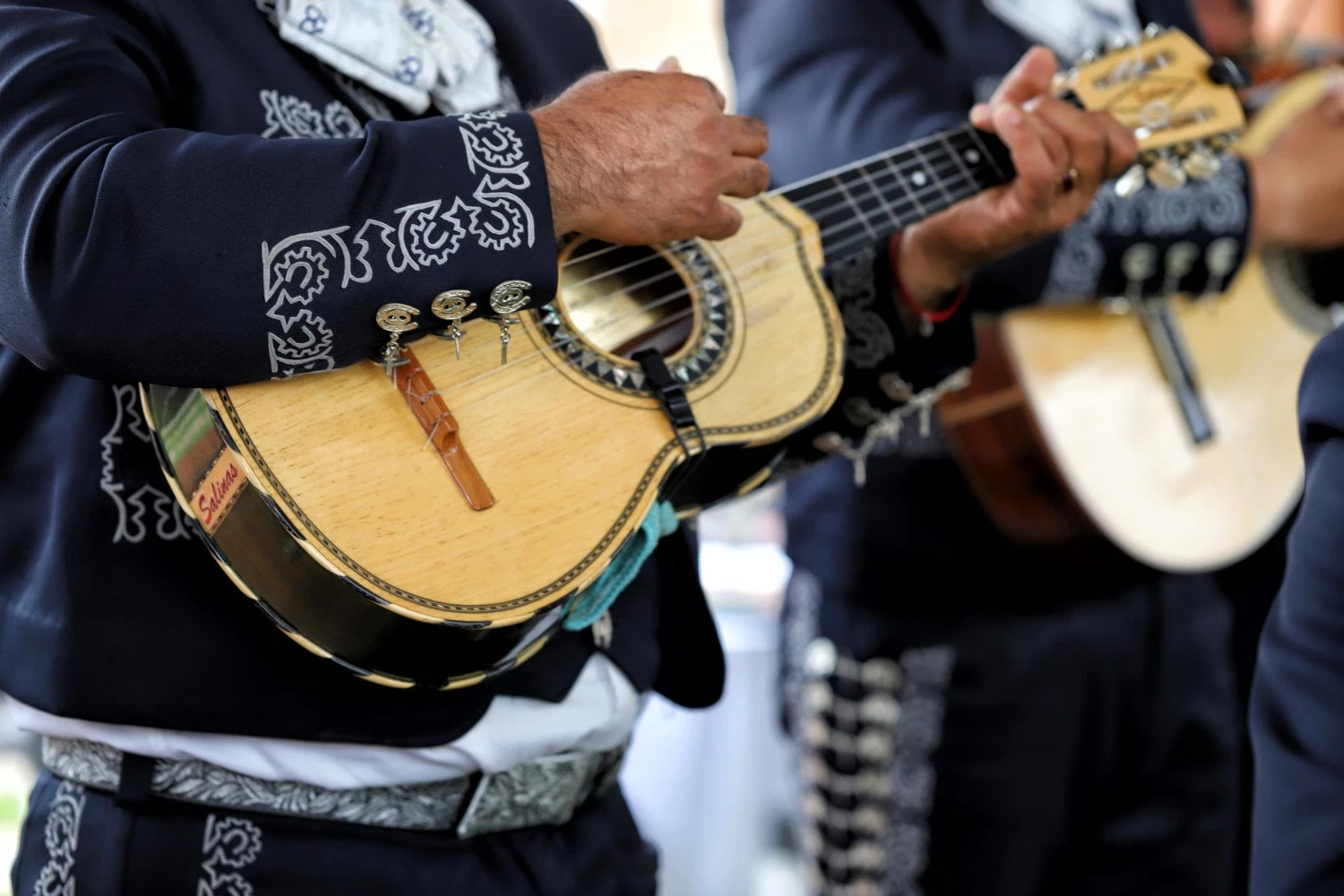
Streaming platforms lump most Mexico music genres under one “regional mexicano” tag, but the genres inside that tag barely resemble each other. Mariachi runs on strings and trumpet. Norteño runs on accordion. Banda runs on brass and won’t touch either. This guide sorts through the main types of Mexican music by instrument, origin, and the social spaces that shaped them.
Here’s a strange fact about how the music industry talks about Mexican music styles: two genres that share zero instruments in common still get filed under the same playlist. Banda’s brass band. Norteño’s built on accordion. A streaming algorithm doesn’t care, but if you actually listen, the difference is obvious within ten seconds.
That’s the problem with most explainers on mexico music genres. They treat the whole category as one blurry thing, when really it’s a set of distinct regional traditions, each one shaped by a different mix of Indigenous, Spanish, and African roots. Mexico is home to 68 recognized Indigenous linguistic groups, and a lot of that regional variety shows up directly in the music. This piece walks through the genres by ear: what they sound like, where they came from, and why grouping them together does them a disservice.
In This Article
- What Are the Main Types of Mexican Music?
- Mariachi: The Sound That Became a UNESCO Treasure
- Ranchera: How Heartbreak Became Mexico’s National Voice
- Norteño and Corridos: Stories Told in Accordion and Verse
- Banda: Why This Brass Sound Never Touches an Accordion
- Son Jarocho and Son Huasteco: Mexico’s Deepest Folk Roots
- Cumbia and the New Fusions Reshaping Mexican Music Today
What Are the Main Types of Mexican Music?
The main types of Mexican music break down into roughly seven families: mariachi, ranchera, norteño, corridos, banda, the regional son traditions like son jarocho, and cumbia, plus newer fusions like corridos tumbados. Each one grew out of a different region and a different mix of instruments, and each one carries its own social role, from weddings to cantinas to street festivals.
But here’s the thing. Genre names in Mexico don’t map neatly onto Western ideas of “pop” versus “folk” versus “traditional.” A single artist might sing rancheras backed by a mariachi ensemble one night and a norteño accordion group the next. The genres of mexican music are more like overlapping dialects than separate languages.
- Mariachi: strings, trumpet, and charro suits, born in Jalisco
- Ranchera: the vocal ballad genre that mariachi and norteño both perform
- Norteño and corridos: accordion, bajo sexto, and narrative storytelling from the north
- Banda: brass-band sound from Sinaloa, no strings or accordion at all
- Son jarocho and son huasteco: regional folk complexes from Veracruz and the Huasteca
- Cumbia mexicana: a Colombian import that became its own thing
Think about it this way: if you learn the instruments first, the types of music from mexico start sorting themselves out on their own. That’s the approach this guide takes, working through the major styles of mexican music genre by genre, starting with the one most people already recognize on sight.
Mariachi: The Sound That Became a UNESCO Treasure
Mariachi is the most internationally recognized of all mexican music types, and it earned that status the hard way. It began in the 18th and 19th centuries in and around Cocula, in the western state of Jalisco, where Indigenous Coca musicians and mestizo settlers combined Spanish string traditions with local sounds. The original ensembles had no trumpet at all. Just violins, guitars, harp, and eventually the guitarrón, the deep-bodied bass guitar that still anchors the sound today.
The trumpet came later, becoming a standard part of the ensemble in the 1930s and 1940s, partly because it projected better on radio and in noisy plazas like Mexico City’s Garibaldi. By the mid-20th century, singer-actors like Pedro Infante and Jorge Negrete had turned mariachi-backed songs into the soundtrack of Mexican cinema’s Golden Age, and the genre never really stepped back from that spotlight.
In my decade writing about diaspora music and where traditions cross borders, I’ve rarely seen a folk genre earn the kind of formal recognition mariachi got in 2011, when UNESCO added it to the Representative List of Intangible Cultural Heritage. That’s not a small honor. It puts mariachi in the same category as living traditions the world has agreed are worth actively protecting.
“Mariachi is considered a fundamental element of Mexican culture, passed down through families and performed at festive, religious, and civil events across the country.”
UNESCO, Intangible Cultural Heritage listing, 2011
Here’s the part most people miss: mariachi isn’t one fixed sound. Modern groups play sones, boleros, waltzes, and even cumbias, all filtered through violins and trumpet in unison. Linda Ronstadt’s 1987 album of mariachi standards became the best-selling non-English-language record in US history, which tells you how far the genre traveled outside Mexico’s borders.
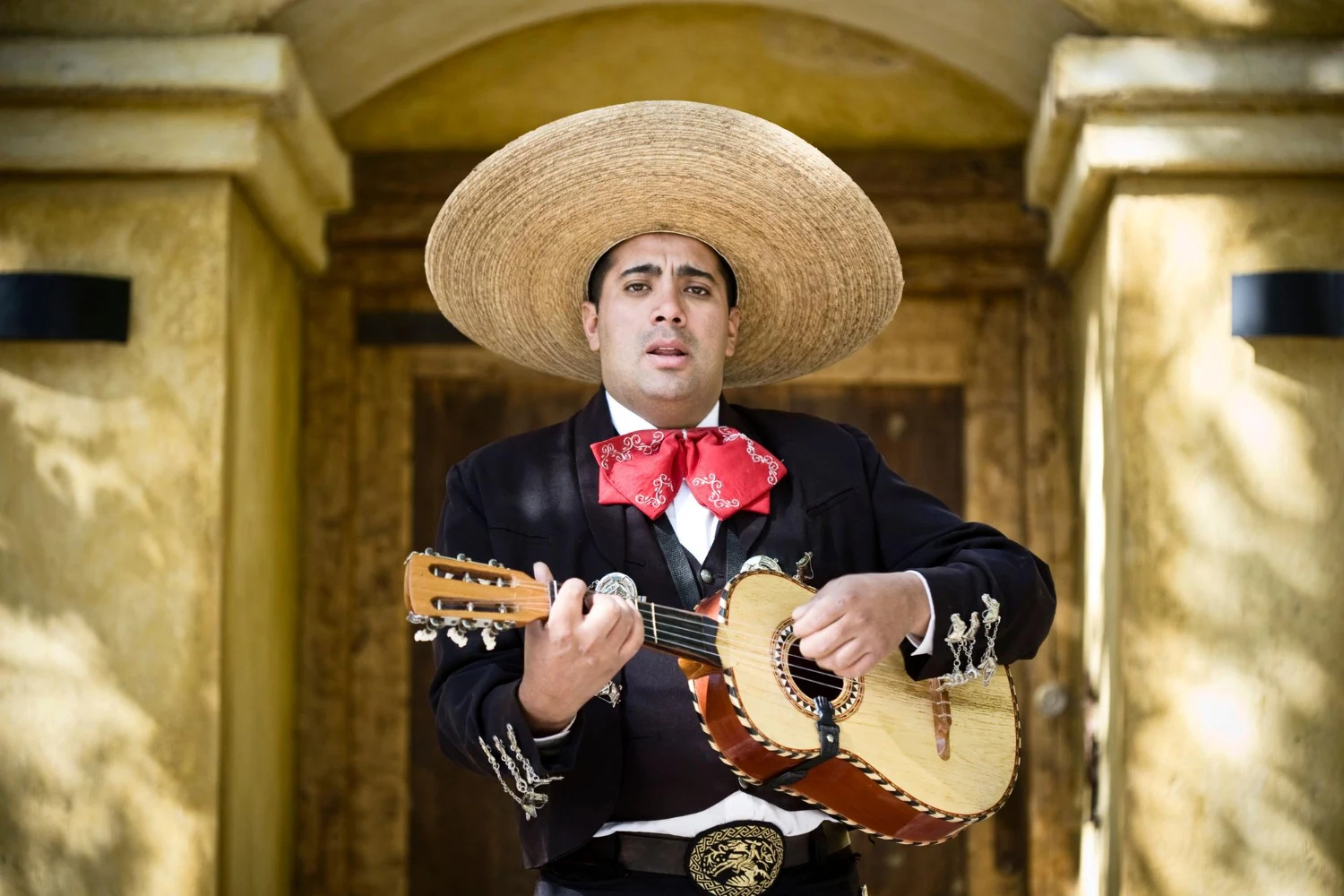
What Instruments Are in a Mariachi Band?
A modern mariachi usually has between seven and twelve musicians. The core instruments are:
- Violins – usually three or more, carrying much of the melody.
- Trumpets – normally two, added in the 20th century and now essential to the sound.
- Vihuela – a small, round-backed five-string guitar that plays bright rhythmic strums.
- Guitarrón – a large, deep-bodied acoustic bass guitar.
- Spanish guitar – for harmony and rhythm.
- Harp (arpa) – used in traditional and some modern groups.
Mariachi comes from western Mexico, especially the state of Jalisco, and the musicians traditionally wear the traje de charro, the silver-studded suit of Mexican horsemen.
How Much Does a Mariachi Band Cost?
Prices vary widely by city, group size, season and occasion, so always ask for a quote. In the US, many groups charge by the hour with a minimum booking, and a full ensemble for a wedding or party costs considerably more than a short serenade by a small trio or quartet. Key factors are the number of musicians, travel distance, the date (holidays such as Mother’s Day and 12 December are busiest) and whether you want specific songs learned. Book well in advance for weekends and holidays.
Ranchera: How Heartbreak Became Mexico’s National Voice
Ranchera is a Mexican style built almost entirely around a single mood: dramatic, unguarded emotion. It emerged around the Mexican Revolution, between 1910 and 1920, as rural communities and cantina culture found their way into a new kind of vocal song, usually in waltz or polka time.
José Alfredo Jiménez wrote the genre’s backbone. Songs like “El Rey” turned ranchera into something closer to a national confessional booth, full of drinking, longing, and pride. Pedro Infante, Jorge Negrete, and later Vicente Fernández, who became known simply as “El Rey de la Música Ranchera,” carried that mexican genre music from cantinas onto movie screens and into the mainstream.
And it gets more complicated, because ranchera isn’t tied to one instrumental backing. It can be sung with a full mariachi ensemble, a norteño accordion group, or a trio with guitars alone. What makes it ranchera isn’t the band behind it. It’s the vocal style: big, unrestrained, often opening with a rubato cry known as the grito before the song even settles into rhythm.
Bolero ranchero, a slower, more romantic cousin, blends Cuban bolero’s tempo with ranchera’s lyrical themes. It’s often sung by duets or trios, and it’s proof that these mexican styles of music were never as boxed-in as a genre label suggests.
Norteño and Corridos: Stories Told in Accordion and Verse
Norteño grew up in the border states, Nuevo León, Tamaulipas, Coahuila, and Chihuahua, where 19th-century Central European immigrants brought polka and waltz rhythms with them. Mexican musicians took the accordion and paired it with the bajo sexto, a 12-string bass guitar, and built something new out of the combination.
A typical norteño group is small, usually four to six musicians, with accordion up front, bajo sexto for rhythm, and a bass line underneath. So why does this matter for telling genres apart? Because that instrumentation is the opposite of banda’s approach, and mixing the two up is the single most common mistake people make with mexican music names.
Corridos are where norteño gets its narrative teeth. These are story-songs, dating back to the 19th century, that document heroes, bandits, tragedies, and current events in verse. According to Smithsonian Folkways, corridos have functioned as narrative ballads along the Mexico-US border for over 150 years, serving almost as a sung newspaper for communities that didn’t always trust the printed one.
Modern branches like narcocorridos and corridos tumbados focus on drug trade, migration, and street life, often fused with trap production. Natanael Cano is probably the name most associated with pulling corridos into that newer, younger sound. Worth pausing on that for a second: corridos aren’t exclusive to norteño. Banda groups sing them too. But norteño remains the genre most identified with the form.
Why Does Mexican Music Sound Like Polka?
Because, in part, it is related. In the 19th century, German, Polish and Czech immigrants settled in northern Mexico and Texas and brought the button accordion, the polka, the waltz and the schottische with them. Local musicians adopted the accordion and the bouncy 2/4 polka rhythm, and those became the foundation of norteño and Tejano music – which is why a norteño song can sound surprisingly like a Central European dance band with Spanish lyrics.
Banda: Why This Brass Sound Never Touches an Accordion
Banda sinaloense traces back to military and municipal brass bands in Sinaloa in the late 19th century, adapted by locals into dance music for cantinas and outdoor fiestas. It shares roots with norteño, both descend from the same wave of Central European polka and waltz influence, but the instrumental route it took is completely different.
A full banda can run 12 to 20 musicians: clarinets, trumpets, trombones, tuba, alto horns (armonías), snare and bass drum. No accordion. No strings. Just heavy, syncopated brass built to carry over an open-air crowd. That’s the catch with lumping banda and norteño into one “regional mexicano” category: they genuinely don’t share a single core instrument.
| Genre | Core Instruments | Region of Origin |
|---|---|---|
| Mariachi | Violins, trumpet, vihuela, guitarrón | Jalisco |
| Norteño | Accordion, bajo sexto, bass | Northern border states |
| Banda | Clarinets, trumpets, trombones, tuba | Sinaloa |
Groups like Banda El Recodo and Banda MS built careers on this sound, and it’s now one of the most commercially dominant mexican music types on streaming platforms, especially among younger, US-based Mexican American audiences rediscovering the genre through their parents’ record collections.
Son Jarocho and Son Huasteco: Mexico’s Deepest Folk Roots
If mariachi is Mexico’s most famous export, son jarocho and son huasteco are its most overlooked treasures. Both fall under “son,” a category of regional song-and-dance complexes that fuse Indigenous, Spanish, and African elements, and both are closer in spirit to a community gathering than a concert.
Son jarocho comes from Veracruz’s Gulf coast, built around the jarana, a small rhythm guitar, the requinto jarocho for melody, and the arpa jarocha, a diatonic harp. According to Wikipedia’s sourced entry on the genre, its sound blends Indigenous, Spanish Baroque, and West African musical elements, a legacy of Veracruz’s role as a colonial port. Its best-known song, “La Bamba,” became a global hit through Ritchie Valens’ rock version, though the traditional form is a communal fandango danced atop a wooden platform called a tarima.
Son huasteco, often called huapango, comes from the Huasteca region and leans on violins, jarana huasteca, and a guitarra huapanguera, with singers reaching into high falsetto over complex triple-meter rhythms. This is one of the mexican music style traditions that rarely charts, but it’s exactly the kind of music this site tends to return to when covering artists who blend folk tradition with something newer, music built for community first and commerce a distant second.

These mexican styles of music matter because they show where the more famous genres borrowed from. Mariachi, banda, and cumbia all lean on rhythmic ideas and instrumental textures that son traditions worked out generations earlier, in villages far from any recording studio.
Cumbia and the New Fusions Reshaping Mexican Music Today
Cumbia didn’t start in Mexico. It came from Colombia, and according to its documented history, it arrived in the 1940s through Colombian musicians like Luis Carlos Meyer, who worked with Mexican orchestras and recorded some of the earliest cumbia made outside Colombia. From there it split into distinct branches: cumbia norteña, played slower with accordion, and cumbia sonidera, faster and built around piano, keyboards, and street-party sound systems.
Groups like Los Ángeles Azules turned cumbia into something that now headlines festivals and even crosses into orchestral territory. It’s one of the more flexible mexican genres, constantly absorbing whatever’s popular around it, from rock to electronic production.
The short answer? It depends on the generation you ask. Rock and pop en español, from bands like Maná and Café Tacvba, carried Mexican rhythmic ideas into global rock frameworks decades ago. More recently, corridos tumbados fuses trap beats and autotune with corrido storytelling, pulling younger streaming audiences back toward regional Mexican themes even as the production leans global.
Here’s where it gets interesting: none of these fusions erase what came before. Sonideros in Mexico City still spin classic cumbia on outdoor sound systems. Corridos tumbados artists still lean on the same narrative structure Américo Paredes documented decades ago. The mexican types of music keep multiplying, but the roots stay visible if you know where to look.
Tejano Music
Tejano is the Mexican-American music of Texas, mixing conjunto accordion, cumbia, polka, pop and R&B. Its biggest star was Selena, the “Queen of Tejano”, whose crossover success in the early 1990s made the style famous across the US.
What are the main types of Mexican songs?
The main types of mexican songs fall into a handful of families: rancheras, sung ballads full of raw emotion; corridos, narrative songs that tell a story from start to finish; sones, regional folk pieces tied to specific dances; and boleros, slower romantic songs often performed in trios. Most Mexican genres, from mariachi to banda to norteño, draw on one or more of these song types as their lyrical foundation. The instrumentation changes by region, but the underlying song forms repeat across genres. That’s part of why the same ranchera can sound completely different depending on whether a mariachi ensemble or a norteño accordion group is backing it.
Is there one name for Mexican music?
No single mexican music name covers everything, and that’s really the whole point of this article. The streaming industry uses “regional mexicano” as a catch-all umbrella, but that term groups together genres, like banda and norteño, that don’t share core instruments and developed in different parts of the country. Mariachi, ranchera, corridos, banda, son jarocho, and cumbia are each distinct traditions with their own instrumentation, regional origin, and social context. Treating them as one genre with one name flattens a lot of real musical history.
What’s the difference between banda and norteño?
If you take away one different type of mexican music comparison from this whole article, make it this one. The core difference comes down to instruments. Norteño is built around the accordion and the bajo sexto, played by small groups of four to six musicians, with roots in the accordion-driven polka traditions European immigrants brought to Mexico’s northern border states. Banda, on the other hand, is a brass ensemble, often 12 to 20 musicians strong, with clarinets, trumpets, trombones, and tuba doing the heavy lifting. Banda has no accordion and no strings at all. Both genres share some song forms, like corridos and rancheras, but the sound of a banda track and a norteño track is immediately distinguishable within a few seconds of listening.
How many different types of Mexican music are there?
There’s no single official count, since regional son traditions alone include multiple distinct local styles, but most overviews group Mexican music into around seven to ten major genres: mariachi, ranchera, norteño, corridos, banda, son jarocho, son huasteco, cumbia mexicana, and newer fusions like corridos tumbados and rock en español. Each of those umbrella genres also splits into subgenres, like technobanda or cumbia sonidera, so the real number of distinct regional styles is much higher once you start counting local variations. The different types of Mexican music keep evolving too, with new fusions appearing roughly every generation.
Is mariachi Mexican?
Yes. Mariachi developed in western Mexico, especially Jalisco, from the 18th and 19th centuries and was recognised by UNESCO as Intangible Cultural Heritage of Humanity in 2011.
What are corridos tumbados?
A modern style of the Mexican corrido that mixes traditional guitar-based regional Mexican music with trap and hip-hop attitude and lyrics. Pioneered by Natanael Cano and popularised by Peso Pluma, it went global in 2023 when “Ella Baila Sola” by Eslabon Armado and Peso Pluma reached the top five of the Billboard Hot 100.
Where This Leaves You
The easiest way to make sense of mexican music genres is to stop thinking of them as one big category with regional flavors. They’re separate traditions that happened to grow up in the same country, shaped by different waves of migration, colonization, and local instrument-making. Mariachi’s strings and trumpet, norteño’s accordion, banda’s brass, son jarocho’s jarana and harp: none of these developed by accident, and none of them sound like each other on purpose.
Mexican styles are part of a much larger family – explore it in our guide to Latin music genres.
After years spent following how folk traditions travel and change hands across borders, I’ve come to think the most interesting part of Mexican music isn’t the famous genres at all. It’s watching how a tradition like son jarocho, built for a community dance floor, still shapes what a corridos tumbados producer does with a laptop and a trap beat generations later.
So the next time a playlist files everything under “regional mexicano,” you’ll know better. Listen for the accordion. Listen for the brass. Listen for the harp. That’s where the real genre lives, not in the label, but in what’s actually being played.

Leila Benkacem is a Paris-based music journalist with a decade of writing about the intersection of North African folk traditions and contemporary Western sounds. Born in Lyon to an Algerian family, she grew up between two musical worlds — her father’s cassettes of Berber songs and the French radio jazz of Sunday mornings. She discovered Hindi Zahra through a late-night set at La Maroquinerie in 2011 and has followed her work ever since. Leïla writes about world music, diaspora artists, and the quiet power of music that refuses to be categorized. She created this fan site as a personal archive and a space for others who believe Hindi Zahra’s voice deserves far more of the world’s attention.
Sources
- UNESCO. “Mariachi, String Music, Song and Trumpet.” UNESCO Intangible Cultural Heritage, 2011.
- IWGIA. “The Indigenous World 2021: Mexico.” International Work Group for Indigenous Affairs, 2021.
- Smithsonian Folkways. “Corridos: Music as Storytelling and Historical Record.” Smithsonian Folkways Recordings.
- Wikipedia contributors. “Son Jarocho.” Wikipedia, 2026.
- Wikipedia contributors. “Mexican Cumbia.” Wikipedia, 2026.
- Wikipedia contributors. “Corrido.” Wikipedia, 2026.