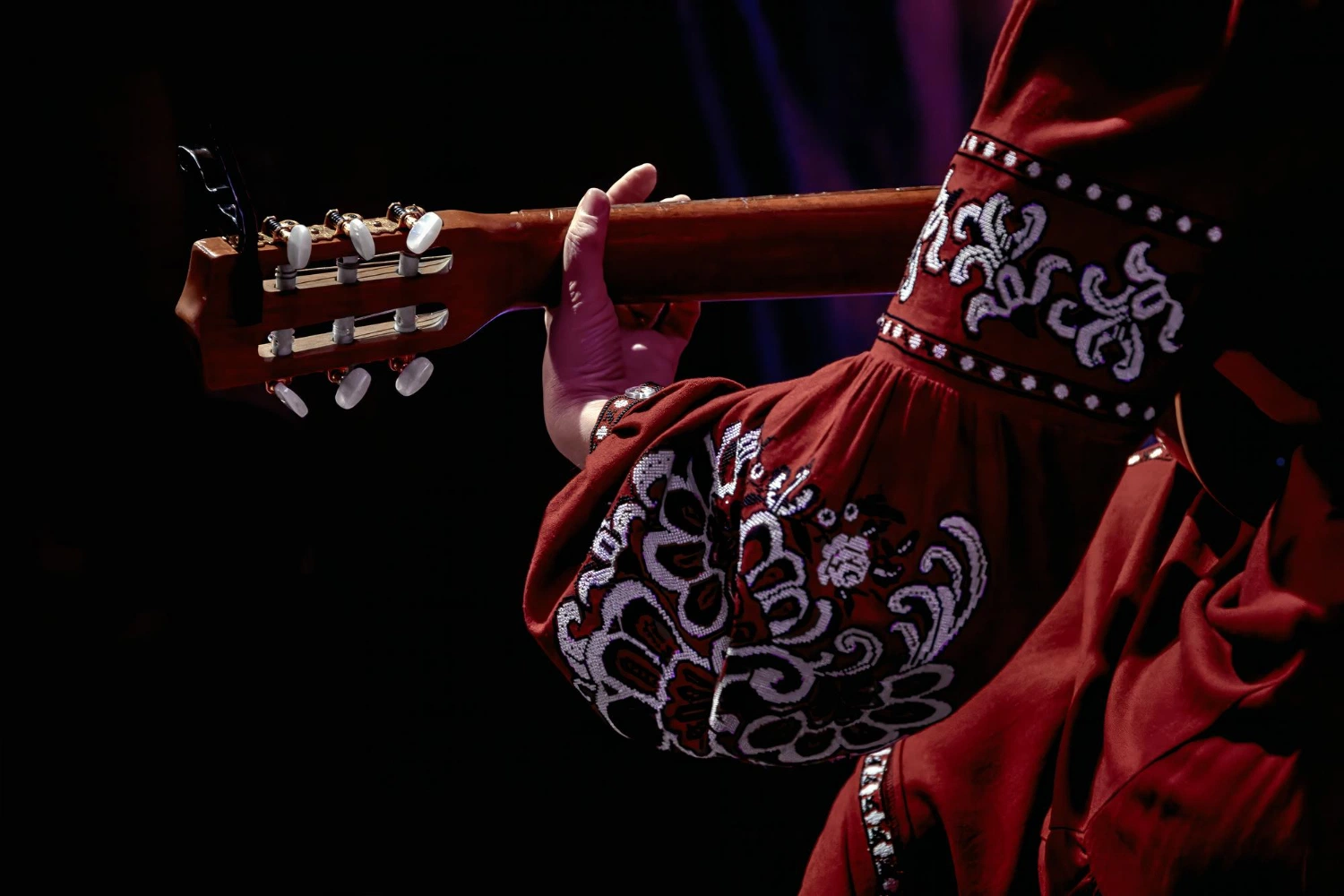
Flamenco music is a centuries-old Andalusian art form built on three pillars: cante (song), baile (dance) and toque (guitar). Rooted in Roma, Arab and Jewish traditions, it earned UNESCO heritage status in 2010. This guide breaks down its history, its many palos, the guitarists and singers who reshaped it, and the famous flamenco songs that made flamenco music from Spain known around the world.
Ask ten people what flamenco music sounds like and you will get ten different answers. Clapping hands. A guitar that seems to argue with itself.
A singer who sounds like they are in pain and joy at the same time. All three answers are correct, and none of them is the whole story.
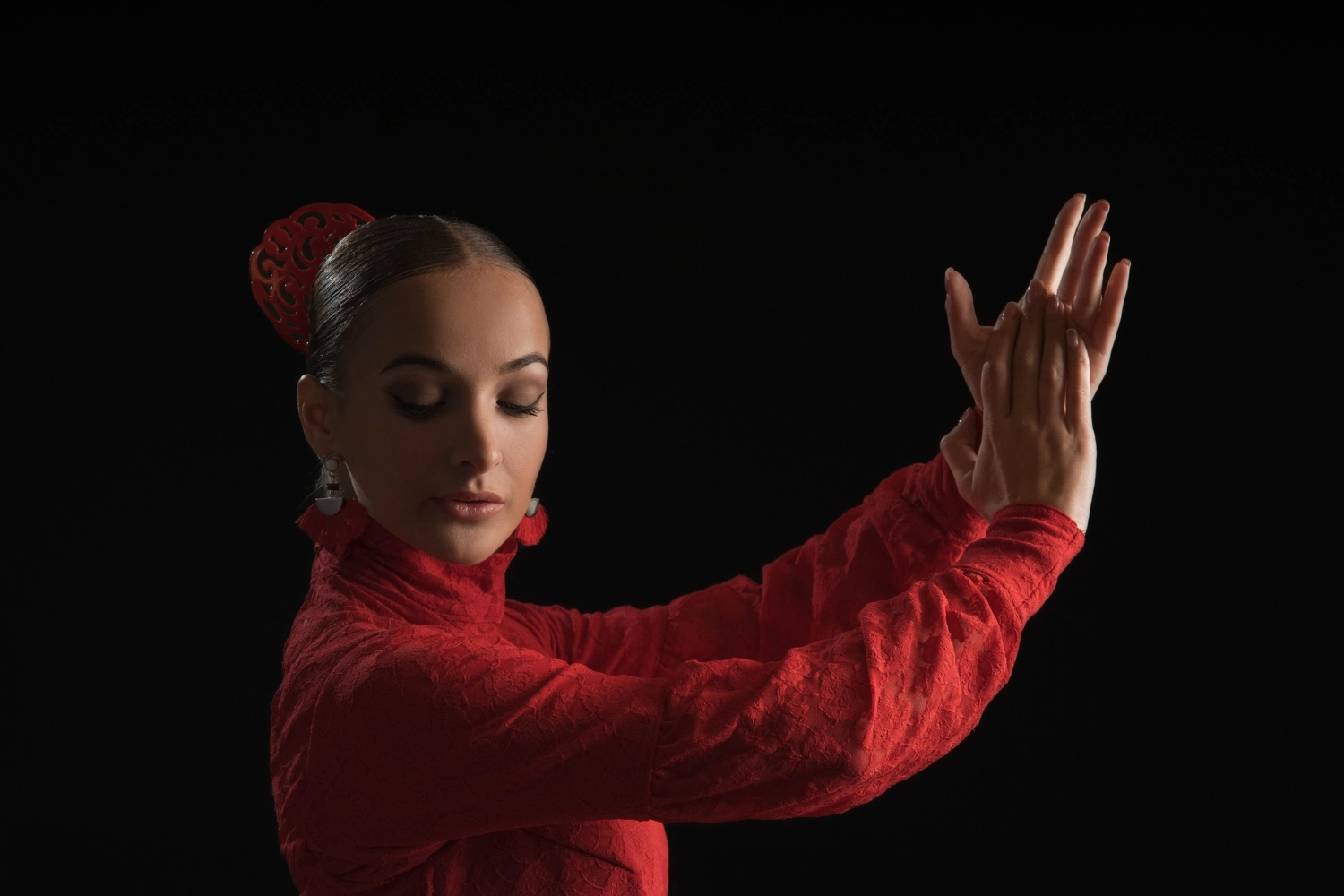
In my decade writing about music that refuses easy labels, few genres have resisted flattening the way flamenco has. It gets used as shorthand for Spanish tourism, all castanets and red dresses, but the real thing runs a lot deeper than a postcard image. This is where it actually comes from, how it works, and why it still matters.
In This Article
- What Is Flamenco Music, Exactly?
- What Instruments Are Used in Flamenco Music?
- Where Did Flamenco Come From?
- What Are the Palos of Flamenco?
- How Flamenco Moved From Patios to Public Stages
- The Guitar Revolution: Paco de Lucía and Flamenco Guitar Songs
- Camarón de la Isla and the Birth of Nuevo Flamenco
- Flamenco Today: Rosalía and the New Generation
- The Most Famous Flamenco Songs You Should Know
- How Flamenco Differs From Every Other Dance Music
- FAQ
- Why Flamenco Still Beats at Its Own Rhythm
What Is Flamenco Music, Exactly?
Flamenco music is a fusion of three elements: cante (singing), baile (dance) and toque (guitar playing), born in the Andalusian region of southern Spain. It is not background music. It is a full performance built on emotion, rhythm and constant call-and-response between the people on stage.
UNESCO’s official definition describes flamenco almost the same way: an artistic expression fusing song, dance and musicianship, with Andalusia as its heartland and roots that also reach into Murcia and Extremadura.
So when people search for flamenco music from Spain, they usually picture the baile first, the dancer mid-turn, heels cracking against the floor. But talk to anyone who has spent real time around a tablao and they will tell you the cante comes first.
The song sets the emotional temperature. Everything else answers to it.
But here’s the thing. Flamenco is not one sound. It can shift from a near-whisper lament to a stomping, joyful eruption inside the same night, sometimes inside the same song.
What Instruments Are Used in Flamenco Music?
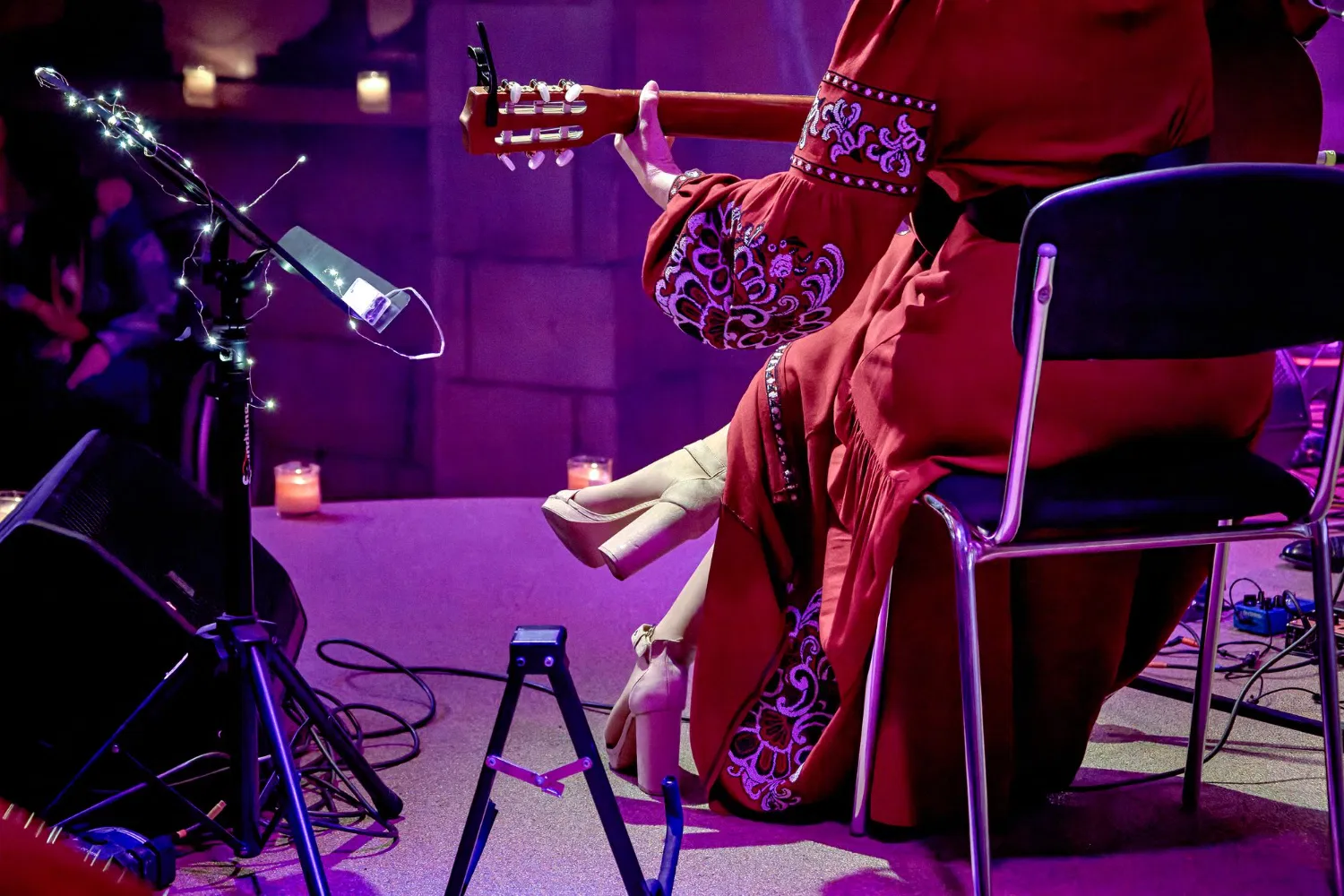
Traditional flamenco needs very few instruments. The voice and the guitar carry the music, and almost everything else is rhythm made by the body. Here is what you will hear in a typical performance:
| Instrument | What it does |
|---|---|
| Voice (cante) | The heart of flamenco: the cantaor or cantaora sings melismatic, emotional lines, often unaccompanied in the oldest styles. |
| Flamenco guitar (toque) | A lighter, brighter guitar than the classical guitar, with low action and a golpeador tap plate so the player can strike the body percussively. |
| Handclaps (palmas) | Sharp (fuertes) or muffled (sordas) claps that mark the compás – the rhythmic cycle of each style. |
| Footwork (zapateado) | The dancer’s heels and toes act as a drum, answering the guitar and singer. |
| Cajón | A wooden box drum from Peru, brought into flamenco in the late 1970s through Paco de Lucía’s group and now standard in most ensembles. |
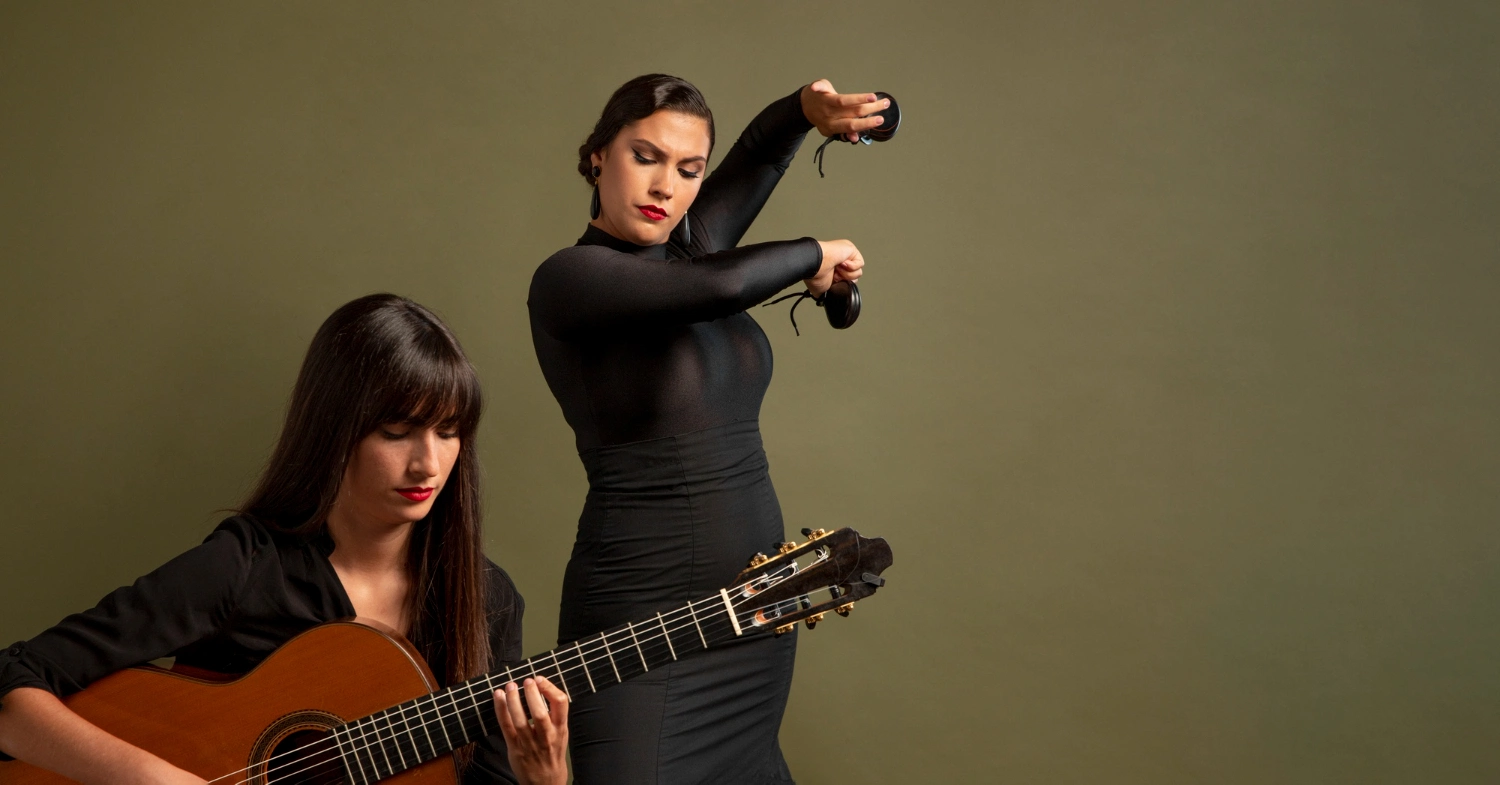
| Castanets (castañuelas) | Used mainly by dancers in some styles and in classical Spanish dance; many flamenco performances leave them out. |
| Jaleo | Shouts of encouragement such as “¡Olé!” from the performers and audience – part of the music, not interruptions. |
Modern and fusion flamenco often adds bass, flute, violin, piano or percussion – Paco de Lucía’s sextet famously used flute and electric bass – but the core of voice, guitar, palmas and footwork remains the same.
Where Did Flamenco Come From?
Flamenco was not invented by one person on one day. It crystallized over generations in 18th-century Andalusia, in a triangle roughly drawn between Seville, Jerez de la Frontera and Cádiz.
When Roma, or Gitano, communities arrived in the region starting in the 15th century, they met an already layered soundscape: Arab-Andalusian chant, Sephardic Jewish song, and Castilian folk music. Their own traditions merged into that mix, and something new came out the other side.
Even the word itself is contested. Some linguists trace flamenco to the Spanish word for Flemish, a nickname implying swagger. Others link it to the Arabic felah-mengu, meaning wandering peasant, a nod to Roma itinerant life.
Nobody has settled the argument, which feels fitting for a genre built on multiple roots.
According to Britannica’s account, flamenco took shape in a largely private period from the late 18th century to the mid-19th, and its so-called golden age came with the café cantante era of roughly 1860 to 1910. Before that, it was not performed for paying audiences at all. It happened in homes, fields and family gatherings, as a way to process grief, pride and protest.
What Are the Palos of Flamenco?
Flamenco is not one style. It is dozens of them, called palos, each with its own rhythm, mood and typical tempo. Aficionados usually count more than 50, though a smaller core cluster covers most of what you will hear live.
Think about it this way: palos work a bit like keys in Western classical music. Once you learn to recognize a few, the rest of the genre starts to make sense instead of blurring together.
| Palo | Compás (rhythm cycle) | Mood |
|---|---|---|
| Soleá | 12-beat | Melancholic, introspective |
| Seguiriyas | 12-beat | Dark, tied to death and loss |
| Alegrías | 12-beat | Festive, lively, from Cádiz |
| Bulerías | 12-beat | Fast, improvisational, used to close a set |
| Tangos | 4/4 | Playful, sensual, danceable |
| Sevillanas | 3/4 | Folkloric, social, festival music |
Palos also split emotionally. The jondo, or deep, palos like soleá and seguiriyas carry loneliness and existential weight. The festive palos, like alegrías and bulerías, are built for celebration and swagger.
A few, like fandangos, sit somewhere in between.
- Soleá: named after soledad, or solitude, and often considered the most fundamental palo.
- Bulerías: notoriously hard to master, prized for improvisation, usually closes the night.
- Tangos: a 4/4 outlier among mostly 12-beat forms, with regional variants in Granada and Triana.
How Flamenco Moved From Patios to Public Stages
For most of the 18th and early 19th centuries, flamenco stayed private. No tickets, no stage, just taverns and courtyards. Documentation from this period is thin, and most of what we know comes from oral tradition passed down through families.
Here’s the part most people miss. The turning point came with the café cantante, a cabaret-style venue that flourished roughly between 1860 and 1920. Singer Silverio Franconetti opened one of the most influential of these in Seville in 1881, and it is credited with helping standardize flamenco’s repertory as it moved from patios to paying audiences.
The early 20th century brought the opera flamenca era, a more theatrical and sometimes diluted version of the art staged in large theaters. A mid-century return to roots followed, led by artists who pushed cante jondo back toward serious, unpolished territory.
Then, in 2010, flamenco received a very different kind of recognition. UNESCO’s intergovernmental committee, meeting in Nairobi of all places, inscribed flamenco on the Representative List of the Intangible Cultural Heritage of Humanity. Post-Franco Spain had already seen the tablao replace the old cafés and nuevo flamenco fuse traditional palos with rock and jazz, so the UNESCO listing arrived as confirmation of something that was already happening on the ground.
The Guitar Revolution: Paco de Lucía and Flamenco Guitar Songs
Toque started out as simple rhythmic accompaniment, there to support the singer and nothing more. Guitarist Paco de Lucía, born in 1947, is the reason that changed. Starting as a child prodigy, he gradually folded jazz harmony, Latin rhythm and classical guitar technique into flamenco without abandoning its compás.
His 1973 album Fuente y Caudal, which includes the instrumental rumba Entre dos Aguas, brought a richer, more lyrical flamenco guitar sound to listeners who had never set foot in a tablao. It remains one of the defining flamenco guitar songs of the 20th century, and it did not need a single lyric to land.
And it gets more complicated. Paco also introduced the Peruvian cajón into flamenco after encountering it on a trip to Peru, and, according to MasterClass’s overview of the genre, that one instrument is now considered standard equipment in modern flamenco ensembles.
I have watched flamenco guitarists play this way in small clubs in Paris, and even through a mediocre PA system, that rhythmic attack cuts through everything else in the room. It is not subtle. It is not meant to be.
Camarón de la Isla and the Birth of Nuevo Flamenco
José Monje Cruz, known as Camarón de la Isla, was born into a Gitano family in San Fernando, Cádiz, in 1950. He sang in taverns as a child, won festival prizes as a teenager, and eventually became a fixture at Madrid’s Tablao Torres Bermejas, where he partnered with Paco de Lucía on a run of traditional albums through the 1970s.
But there’s a catch. In 1979, Camarón released La Leyenda del Tiempo, produced by Ricardo Pachón, and it broke almost every rule flamenco purists held sacred. Rock and jazz instrumentation, electric bass, drums, texts adapted from Federico García Lorca.
Fans reportedly returned copies to record stores, and the album sold only around 5,000 to 6,000 copies before Camarón’s death in 1992.
“A bona fide before/after landmark in the flamenco world.”
Don Snowden, AllMusic, on La Leyenda del Tiempo
What sounded like a commercial failure in 1979 is now treated as the birth of nuevo flamenco, per Wikipedia’s account of the album’s reception. Camarón never lived to see that reversal happen in full, which is part of why his story still stings a little.
Flamenco Today: Rosalía and the New Generation
Flamenco is still changing. The most visible example is Rosalía, who studied flamenco singing for years at the Catalonia College of Music in Barcelona. Her debut Los Ángeles (2017) reworked traditional cantes with sparse guitar, and El Mal Querer (2018) – a concept album inspired by the 13th-century Occitan romance Flamenca – fused flamenco handclaps and melisma with R&B, trap and electronic production. It won the Latin Grammy for Album of the Year in 2019 and made songs like “Malamente” international hits.
Her success also sparked debate. Some flamenco artists and Gitano voices questioned whether a non-Gitano Catalan artist was borrowing a tradition rooted in Andalusian Roma culture; others welcomed the global attention. The discussion is part of a long flamenco history of purists versus innovators, from Camarón onwards.
Other artists keep pushing in different directions: Estrella Morente and Israel Fernández deepen the classic cante, experimental singer Niño de Elche deconstructs it, and pop artists such as C. Tangana have recorded with flamenco legends on albums like El Madrileño (2021).
The Most Famous Flamenco Songs You Should Know
If you want a starting playlist, these famous flamenco songs cover most of the emotional range the genre is capable of, from mournful cante jondo to pure celebration.
- A Tu Vera, Lola Flores: a passionate love song and one of the best-known flamenco songs of its era.
- Entre dos Aguas, Paco de Lucía (1973): the instrumental rumba that introduced flamenco guitar to a global audience.
- Soy Gitano, Camarón de la Isla (1989): recorded with the Royal Philharmonic Orchestra, and Camarón’s first gold record.
- La Leyenda del Tiempo, Camarón de la Isla (1979): the album that scandalized purists and later defined nuevo flamenco.
- Noches de Bohemia, Navajita Plateá: broken-voice cante built for a new generation.
- Ay Pena, Penita, Pena, Lola Flores (1953): originally composed in 1951, immortalized by Flores in the film of the same name.
So why does this matter beyond trivia? Because these flamenco songs trace the genre’s whole arc: private grief turned public art, tradition bent without breaking, and a handful of voices stubborn enough to change what an entire country thought its own music should sound like.
How Flamenco Differs From Every Other Dance Music
Structurally, flamenco is palo-based and compás-driven. Performers work inside codified rhythmic cycles instead of free song forms, improvising ornamentation while staying loyal to the palo’s identity, similar to how jazz musicians improvise within a standard but with an entirely different rhythmic logic.
Here’s where it gets interesting. The 12-beat compás behind soleá, alegrías and bulerías, with its unusual accent pattern, has nothing in common with the steady 4/4 backbeat of rock or the regular clave of Afro-Cuban music. As flamenco dance music, it demands a completely different sense of timing from dancers and musicians alike, and mastering that feel is a lifetime project even for professionals.
The way I see it, that structural rigidity is exactly what makes flamenco’s improvisation so impressive. Real freedom shows up inside real limits, not outside them.
Emotionally, the deep palos sit closer to blues field hollers than to typical European folk song, dealing in poverty, prison and existential struggle. Festive palos flip that entirely, making room for humor and spontaneous joy. That range is what keeps flamenco from ever being just one thing.
FAQ
Is flamenco music Spanish or Roma/Gitano in origin?
Both, and that is exactly the point. Flamenco took shape in Andalusia through the meeting of Roma, or Gitano, communities with existing Arab-Andalusian, Sephardic Jewish and Castilian Spanish traditions. Gitano communities are widely credited with playing an essential role in developing and transmitting the art form, but flamenco was never the product of one group working in isolation. Historians and UNESCO’s own documentation both describe it as a shared, multi-rooted tradition rather than a single ethnic export.
What’s the difference between flamenco and Spanish guitar music generally?
Spanish guitar is a broad umbrella that includes classical, folk and popular styles from across Spain. Flamenco guitar, or toque, is a specific technique within that broader world, built around compás, rasgueado strumming and close interaction with a singer or dancer. A classical guitarist trained at a conservatory can be technically brilliant and still not play flamenco, because flamenco guitar depends on rhythmic conversation as much as raw technique. That is part of why flamenco guitar songs sound so distinct even to untrained ears.
Can you dance to all flamenco music?
Not comfortably, no. Deep, jondo palos like seguiriyas were built for sitting and listening, not for movement, since their slow, heavy weight works against a dance rhythm. Festive palos like bulerías, alegrías and tangos are a different story entirely, built specifically for baile and full of rhythmic cues dancers respond to in real time. If you are looking for flamenco dance music specifically, festive palos are almost always the right entry point.
What instruments are used in flamenco music?
Mainly the voice and the flamenco guitar, with rhythm from handclaps (palmas), the dancer’s footwork and, since the late 1970s, the cajón box drum. Castanets appear in some dance styles, and modern groups may add bass, flute, violin or piano.
Why Flamenco Still Beats at Its Own Rhythm
Let me explain why this genre has stuck with me for a decade of writing about music. Flamenco refuses to be simplified, and every attempt to package it neatly, from tourist tablaos to stock photography, ends up leaving something important out.
What survives that packaging is the same thing that has always carried flamenco: a singer’s voice doing the emotional heavy lifting, a guitarist answering in rhythm, and a tradition that keeps absorbing outside influence without losing its own compás. Camarón proved that decades ago, and every serious flamenco artist since has had to reckon with the same tension between roots and reinvention.
It is the same tension I hear in the diaspora artists I cover most closely on this site, including Hindi Zahra’s own cross-tradition sound. Music that carries more than one inheritance rarely stays still, and flamenco is proof that resisting a single, tidy label is often what keeps a tradition alive.

Leila Benkacem is a Paris-based music journalist with a decade of writing about the intersection of North African folk traditions and contemporary Western sounds. Born in Lyon to an Algerian family, she grew up between two musical worlds — her father’s cassettes of Berber songs and the French radio jazz of Sunday mornings. She discovered Hindi Zahra through a late-night set at La Maroquinerie in 2011 and has followed her work ever since. Leïla writes about world music, diaspora artists, and the quiet power of music that refuses to be categorized. She created this fan site as a personal archive and a space for others who believe Hindi Zahra’s voice deserves far more of the world’s attention.
Sources
- UNESCO. “Flamenco.” Intangible Cultural Heritage, 2010.
- UNESCO Intergovernmental Committee. “Decision 5.COM 6.39.” Intangible Cultural Heritage, 2010.
- Britannica. “Flamenco: Dance, Music, History, Artists & Facts.” Encyclopaedia Britannica.
- Wikipedia. “La Leyenda del Tiempo.” Wikipedia, 2024.
- Wikipedia. “Flamenco.” Wikipedia, 2026.
- MasterClass. “Learn About Flamenco Music: History, Dance, and Flamenco Guitar.” MasterClass, 2026.