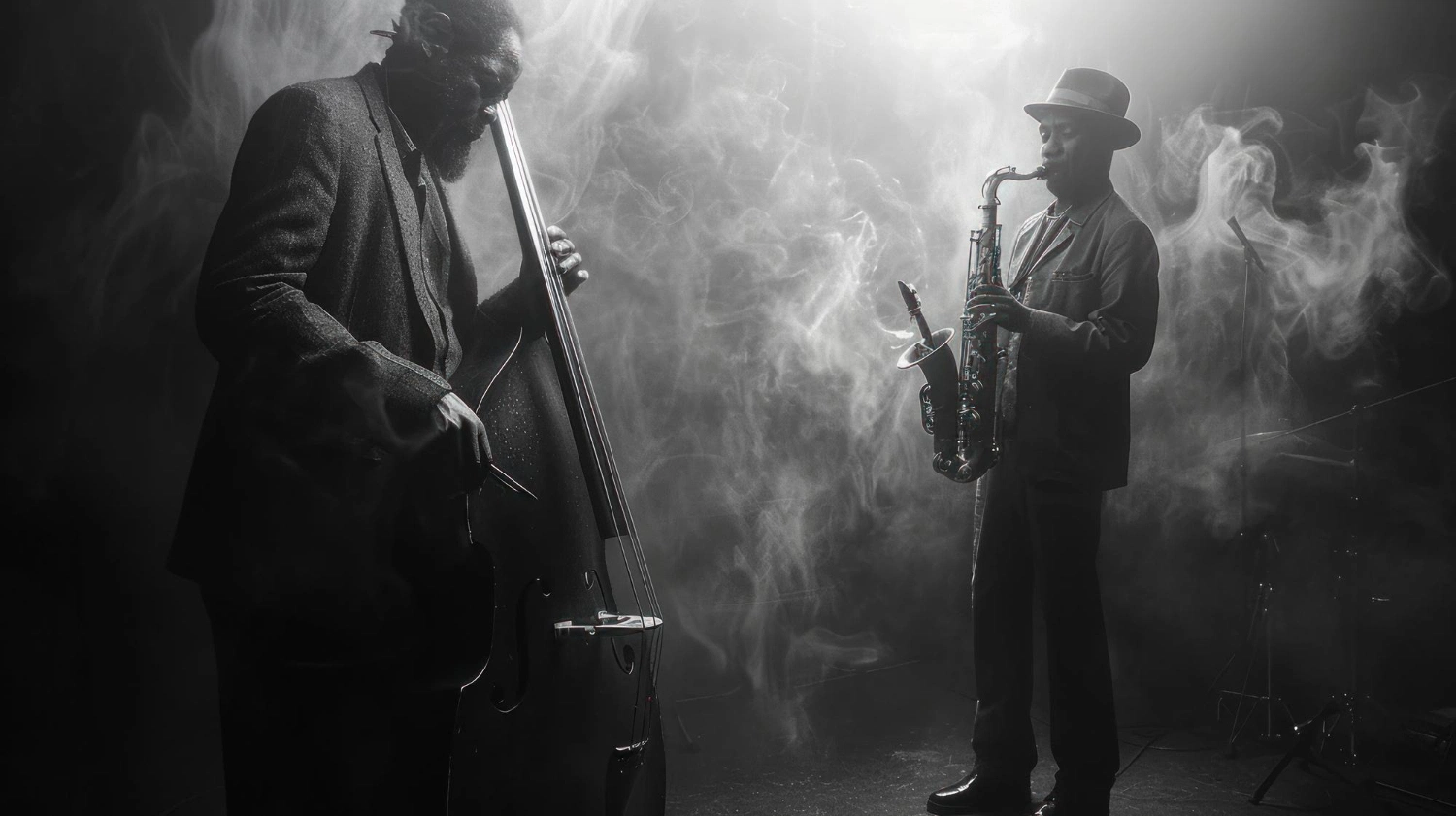
The history of jazz doesn’t start with one genius or one date. It starts in New Orleans, where African rhythm, brass band tradition, blues, and ragtime crashed into each other around 1900. From there it split into swing, bebop, cool jazz, modal jazz, and a dozen other branches, spreading from a single American city to nearly every country on earth.
Here’s a strange fact to sit with: the first jazz record ever released wasn’t made by any of the Black musicians who actually built the style. It was cut in 1917 by a white band from New Orleans, for the Victor Talking Machine Company, while the people who invented the sound they were copying went unrecorded and largely uncredited.
That’s not a footnote. That’s the history of jazz in miniature: a genre shaped by brilliant, often unrewarded innovators, then popularized, packaged, and sold by whoever got to the microphone first.
So what does that actually mean for you, if you’re just trying to understand where this music came from? It means the story isn’t a straight line, and anyone who tells it like one is skipping the interesting parts. Below is the real one, from Congo Square to the global stage.
In This Article
- Where Did Jazz Originate? Inside New Orleans’ Musical Melting Pot
- What Musical Traditions Collided to Create the Jazz Genre?
- The Birth of Jazz: Buddy Bolden and New Orleans’ First Innovators
- The Rise of Jazz: From Swing to Bebop
- Cool Jazz, Modal Jazz, and the Sound That Changed Everything
- Jazz After the 1960s: Free Jazz, Fusion and Today
- Why Jazz Still Feels Like a Global Conversation
- Jazz History Timeline
- FAQ
- What Jazz’s History Still Has to Say
Where Did Jazz Originate? Inside New Orleans’ Musical Melting Pot
Jazz originated in New Orleans, sometime in the 1890s, in a city that was already unlike anywhere else in America. That’s the short version. The longer, truer version is that New Orleans didn’t invent every ingredient in jazz; it just happened to be the one place where those ingredients were forced to share the same streets.
The city had a French and Spanish colonial past, a large free Black and Creole population, waves of Caribbean immigrants, and a brass band tradition that showed up at everything from funerals to political rallies. Enslaved and free Black New Orleanians gathered in Congo Square on Sundays, playing drums and dancing to rhythms carried over from Africa and the Caribbean. That gathering, more than any single performer, is usually cited as the deepest root of jazz origins.
Layer European harmony and instrumentation on top of that, brass and woodwind instruments borrowed from military and marching bands, and you get a city primed to produce something new. Any honest map of the origins of jazz has to start with that overlap, not with a single performer.
The birthplace of jazz wasn’t a studio or a concert hall. It was a port city where cultures were already colliding daily, long before anyone called the resulting sound “jazz” at all.
What Musical Traditions Collided to Create the Jazz Genre?
The jazz genre didn’t spring out of nowhere. It’s the direct offspring of at least four older styles, all mixing in the same New Orleans neighborhoods around the turn of the century.
- Blues supplied the emotional core: call-and-response phrasing, bent “blue” notes, and the feeling that a melody could talk back to you.
- Ragtime brought syncopation, the off-beat accents that make a straightforward rhythm feel like it’s stumbling forward on purpose.
- Brass band music gave jazz its instrumentation: cornet, clarinet, trombone, tuba, drums, all built for playing outdoors and being heard over a crowd.
- Spirituals and work songs carried over rhythmic patterns and vocal techniques from earlier generations of African American musical life.
Here’s the part most people miss when they talk about jazz music origins: none of these traditions arrived pure. Ragtime was already a fusion of European march structure and African syncopation, and blues had already absorbed church music and field hollers. Jazz is a fusion of fusions, which is exactly why pinning down one single moment of invention has never really worked.
How did jazz music start, practically speaking? With musicians in dance halls and on street corners combining these elements on the spot, then testing what worked on a live audience that night. Collective improvisation, several horns weaving independent lines around a shared melody, became the signature texture of this early style, sometimes called Dixieland or New Orleans jazz.
The Birth of Jazz: Buddy Bolden and New Orleans’ First Innovators
If jazz has an origin point with a name attached, it’s cornetist Buddy Bolden, active in New Orleans around 1900 and widely described as the music’s first great bandleader. The origin of jazz as a distinct, recognizable style is often traced to his loud, blues-soaked cornet playing and the dance bands he led through the city’s streets and halls.
But there’s a catch: Bolden left no recordings, not one. Everything we know about him comes from secondhand accounts and memories of musicians who heard him play. The birth of jazz, in other words, happened almost entirely off the record, literally.
Other early shapers filled in the gaps Bolden left: Joe “King” Oliver, Jelly Roll Morton, Freddie Keppard, and Sidney Bechet all helped build the vocabulary of early jazz in the years after Bolden’s career ended. When recording technology finally caught up to the music, it captured a version of jazz that had already been evolving on the streets for close to two decades. And the first band to actually get into a studio wasn’t one of them.
On February 26, 1917, a white New Orleans group called the Original Dixieland Jass Band recorded “Livery Stable Blues” for the Victor Talking Machine Company, and it became a runaway hit. The band’s members went on to claim, in print, that they had invented jazz themselves.
Meanwhile, the Black innovators who shaped the style kept playing to segregated audiences, for far less money and far less credit.
The Rise of Jazz: From Swing to Bebop
The rise of jazz from regional New Orleans style to national obsession happened fast. Storyville, the city’s entertainment district, closed around 1917, and musicians scattered north to Chicago and New York looking for work. Louis Armstrong made that trip, and his Hot Five and Hot Seven recordings in the mid-1920s changed jazz history for good, shifting the music’s center of gravity from group improvisation to the virtuoso solo.
Here’s where it gets interesting: by the 1930s, jazz music history entered its most commercially dominant phase, swing. Big bands led by Duke Ellington, Count Basie, and Benny Goodman turned jazz into America’s popular dance music, complete with sold-out ballrooms and a 1938 Carnegie Hall concert that helped legitimize the genre as concert-worthy art. Vocalists like Billie Holiday and Ella Fitzgerald brought jazz phrasing into the spotlight in a way instrumentalists alone never could.
Then, in the early 1940s, a younger generation got tired of playing music built for other people’s dancing. At late-night jam sessions in Harlem, most famously at Minton’s Playhouse, musicians like Charlie Parker, Dizzy Gillespie, and Thelonious Monk built bebop: faster, harmonically denser, and pointedly not designed for the dance floor. Bebop turned jazz from mass entertainment into a listener’s art, and every style that came after owes it a debt.
| Era | Approx. Years | Key Figures | Defining Sound |
|---|---|---|---|
| New Orleans / Dixieland | 1900s–1910s | Buddy Bolden, King Oliver | Collective improvisation, brass band roots |
| Swing / Big Band | 1930s–early 1940s | Duke Ellington, Count Basie, Benny Goodman | Danceable, arranged, orchestral |
| Bebop | Mid-1940s | Charlie Parker, Dizzy Gillespie, Thelonious Monk | Fast tempos, complex harmony |
| Cool & Modal | 1950s | Miles Davis, John Coltrane | Relaxed tone, scale-based improvisation |
Cool Jazz, Modal Jazz, and the Sound That Changed Everything
After bebop’s intensity, some musicians pulled back. Cool jazz, led by Miles Davis, Chet Baker, and Dave Brubeck, softened bebop’s edges into slower tempos and more relaxed phrasing. It’s a good reminder that the history of jazz music has never moved in one direction; it swings, pushes forward, then pulls back, again and again.
But here’s the thing: hard bop went the opposite way, pulling jazz back toward blues and gospel feeling through bandleaders like Art Blakey and Horace Silver. And then modal jazz arrived, stripping away rapid chord changes in favor of improvising over scales, or “modes,” which opened up far more space for a soloist to breathe.
The clearest landmark here is Miles Davis’s 1959 album Kind of Blue, widely cited as the best-selling jazz record ever made. It features John Coltrane, who took modal ideas even further into spiritual and eventually avant-garde territory on albums like A Love Supreme. This stretch of the history of jazz is arguably where the genre stopped being defined by any single geography and started being defined by ideas instead.
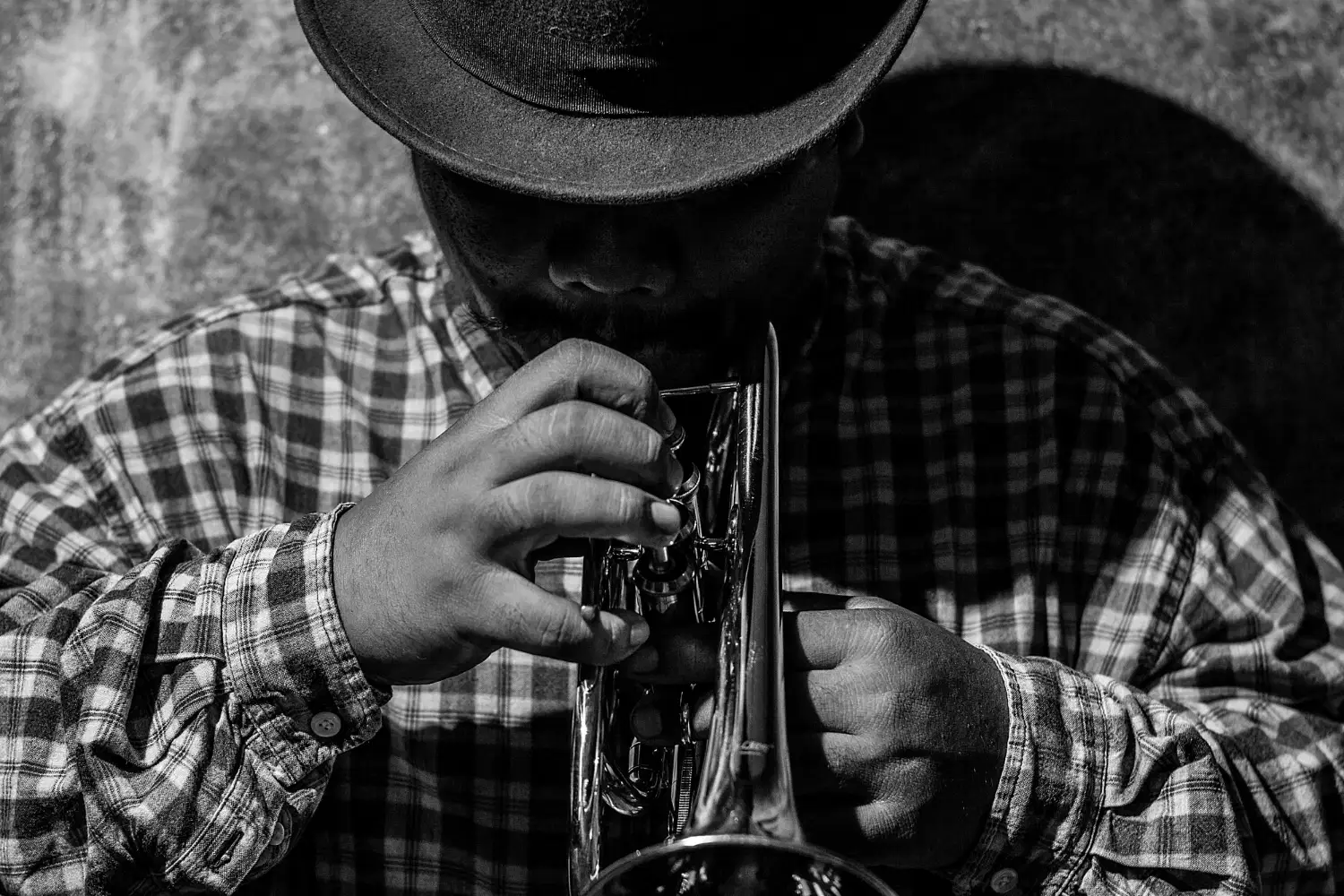
Jazz After the 1960s: Free Jazz, Fusion and Today
The story does not stop with Kind of Blue. Over the next six decades jazz kept splitting into new directions, often in arguments with itself about what jazz should be.
Free Jazz and the Avant-Garde (late 1950s–1960s)
Ornette Coleman’s The Shape of Jazz to Come (1959) and Free Jazz (1961) threw out fixed chord changes altogether, letting musicians improvise collectively and freely. Cecil Taylor, Albert Ayler and Sun Ra pushed even further, and John Coltrane’s late records such as Ascension (1965) joined the avant-garde. Pharoah Sanders and Alice Coltrane developed what is now called spiritual jazz, drawing on African, Indian and religious music.
Jazz Fusion (late 1960s–1970s)
Miles Davis changed direction again with In a Silent Way (1969) and Bitches Brew (1970), bringing electric instruments, rock rhythms and studio editing into jazz. His sidemen spread the new jazz fusion sound: Joe Zawinul and Wayne Shorter formed Weather Report, John McLaughlin led the Mahavishnu Orchestra, Chick Corea founded Return to Forever, and Herbie Hancock’s funk-driven Head Hunters (1973) became one of the best-selling jazz albums of its time. In Europe, the ECM label (founded 1969) developed a quieter, spacious sound, and Keith Jarrett’s solo improvisation The Köln Concert (1975) became one of the best-selling piano recordings ever.
The 1980s and 1990s: Tradition and Crossover
In the 1980s trumpeter Wynton Marsalis led a “neo-traditionalist” movement back to acoustic swing and the music of Ellington and Armstrong, and later became artistic director of Jazz at Lincoln Center in New York. At the same time, smooth jazz took over radio, while hip-hop producers began sampling classic jazz records; Us3’s “Cantaloop (Flip Fantasia)” (1993), built on Herbie Hancock’s “Cantaloupe Island”, became a hit on Blue Note.
Jazz in the 21st Century
Jazz today is more open to other genres than ever:
- Norah Jones’ Come Away with Me (2002), released on Blue Note, brought jazz-influenced songwriting to tens of millions of listeners.
- Bassist and singer Esperanza Spalding won the Grammy for Best New Artist in 2011, the first jazz musician to do so.
- Robert Glasper’s Black Radio (2012) blended jazz with R&B and hip-hop, and Kamasi Washington’s three-hour The Epic (2015) revived spiritual jazz for a new audience. Both played on Kendrick Lamar’s To Pimp a Butterfly (2015).
- London’s young jazz scene – Shabaka Hutchings, Nubya Garcia, Moses Boyd, Ezra Collective – mixes jazz with Afrobeat, grime and Caribbean music. In 2023 Ezra Collective became the first jazz act to win the UK’s Mercury Prize.
- Since 2012, UNESCO’s International Jazz Day on 30 April has celebrated jazz worldwide.
If you want to hear these eras for yourself, start with our list of the best jazz albums of all time.
Why Jazz Still Feels Like a Global Conversation
The history of jazz doesn’t really end in America. Once it left New Orleans, jazz kept doing the same thing that created it in the first place: absorbing whatever local tradition it landed near. In my decade writing about music that lives between cultures, I’ve come to think jazz is less a genre and more a method, a way of letting two traditions argue with each other until something new comes out the other side.
Let me explain: you can hear that pattern repeat itself all over the world.
- Afro-Cuban rhythms merged with jazz harmony to create Latin jazz, championed early on by Dizzy Gillespie.
- European classical composition blended with jazz improvisation to form what critics dubbed “Third Stream.”
- In North Africa, Gnawa music and jazz improvisation have been drawing closer for years, formalized when Tangier, Morocco hosted UNESCO’s International Jazz Day in 2024, built explicitly around that connection.
“In jazz, differences are strengths.”
Audrey Azoulay, UNESCO Director-General
That’s really the throughline of the whole history of jazz: it was never one pure thing, and it was never supposed to be. That’s also why it keeps showing up in unexpected places today, including in artists like Hindi Zahra, whose music sits at its own crossroads of Berber tradition and Western songwriting, part of the same long lineage of musicians turning collision into something worth listening to.
Jazz History Timeline
| Period | Style | Key figures |
|---|---|---|
| 1890s–1910s | Early New Orleans jazz | Buddy Bolden, Jelly Roll Morton, King Oliver |
| 1917 | First jazz recording (“Livery Stable Blues”) | Original Dixieland Jass Band |
| 1920s | Chicago jazz and the Jazz Age | Louis Armstrong, Bix Beiderbecke, Bessie Smith |
| 1930s–mid 1940s | Swing and big bands | Duke Ellington, Count Basie, Benny Goodman, Billie Holiday |
| 1940s | Bebop | Charlie Parker, Dizzy Gillespie, Thelonious Monk |
| 1950s | Cool jazz and hard bop | Miles Davis, Chet Baker, Art Blakey, Horace Silver |
| Late 1950s–1960s | Modal, free and spiritual jazz | Miles Davis, John Coltrane, Ornette Coleman |
| Late 1960s–1970s | Fusion | Miles Davis, Weather Report, Herbie Hancock |
| 1980s–1990s | Neo-traditionalism, smooth jazz, acid jazz | Wynton Marsalis, Us3 |
| 2000s–today | Genre-crossing jazz | Norah Jones, Esperanza Spalding, Robert Glasper, Kamasi Washington |
FAQ
Who invented jazz?
No single person invented jazz, and anyone who tells you otherwise is oversimplifying. Cornetist Buddy Bolden is usually credited as the first major bandleader to shape the style around 1900, and musicians like King Oliver, Jelly Roll Morton, and Sidney Bechet built its early vocabulary alongside him. Jazz grew out of a collision of blues, ragtime, brass band traditions, and African rhythmic patterns inside New Orleans’s Black communities, which makes “who created jazz” a question about a whole musical culture, not one inventor.
Who created jazz music?
Jazz was created primarily by African American musicians in New Orleans, drawing on blues, ragtime, spirituals, work songs, and the brass band tradition, then blending those with European harmony and instrumentation. Early figures like Buddy Bolden, King Oliver, and Jelly Roll Morton get the most individual credit, but the style itself emerged from a broader community of musicians experimenting in dance halls, parades, and street performances rather than from one composer sitting down to write it.
When was jazz invented?
Jazz doesn’t have one invention date, but most historians place its emergence in New Orleans sometime in the 1890s to early 1900s, as Buddy Bolden’s bands began combining blues and ragtime with brass band instrumentation. The first jazz recording, “Livery Stable Blues” by the Original Dixieland Jass Band, wasn’t made until February 26, 1917, roughly two decades after the style had already been developing live in New Orleans. So the music predates the recording by a wide margin.
Where did jazz come from?
If you’re asking where did jazz music come from, the answer is New Orleans, a city whose mix of African, Caribbean, Creole, and European populations created ideal conditions for musical fusion. Congo Square gatherings, brass band parades, ragtime piano, and blues singing all fed into the new style. From there, jazz spread north along routes tied to the Great Migration, reaching Chicago and New York by the 1920s and becoming a national phenomenon within a decade of its New Orleans beginnings.
How did jazz music start?
Jazz started as musicians in New Orleans combined existing styles, blues, ragtime, brass band music, and African-rooted rhythmic traditions, into something new, testing it live on dance floors and street corners rather than developing it in isolation. Collective improvisation, where several instruments played interweaving lines around a melody at once, became the technique that separated this new sound from its ragtime and brass band ancestors. That improvisational core is still what defines jazz today.
Who is considered the father of jazz?
Buddy Bolden is often called the first figure of jazz, because his New Orleans band shaped the style around 1900 – though he never recorded. Jelly Roll Morton famously claimed to have invented jazz, which historians treat as an exaggeration, and Louis Armstrong is widely regarded as its most important early innovator for turning the improvised solo into the heart of the music.
What is the most famous jazz song?
There is no single No. 1, but the Dave Brubeck Quartet’s “Take Five” (1959) is one of the best-selling jazz singles ever, and Miles Davis’s “So What”, Duke Ellington’s “Take the ‘A’ Train” and Thelonious Monk’s “’Round Midnight” are among the most recorded and recognised jazz pieces.
Which US city is the birthplace of jazz?
New Orleans, Louisiana. Its mix of African American, Creole, Caribbean and European communities, the gatherings in Congo Square and the city’s brass-band and dance-hall culture produced the music in the late 19th and early 20th centuries. Chicago and New York later became its main centres.
What Jazz’s History Still Has to Say
Worth pausing on that for a second: the first jazz record came from a white band, while the Black New Orleans musicians who built the style were still playing for pennies in segregated clubs. That’s not a footnote to skip past. It’s a pattern that shows up again and again in American music history, and jazz is one of the clearest examples of it.
But the real story isn’t just about who got credit first. It’s about a sound that refused to sit still, moving from Congo Square to Chicago ballrooms to Harlem jam sessions to Miles Davis’s modal experiments to jazz clubs in Tangier and Tokyo. Each stop added something the last one didn’t have.
That’s the pattern worth remembering, whether you’re a lifelong listener or just starting to explore jazz music history: the most interesting music usually comes from somewhere in between two traditions, not from either one alone. Jazz proved that first, and plenty of artists since have proven it again.

Leila Benkacem is a Paris-based music journalist with a decade of writing about the intersection of North African folk traditions and contemporary Western sounds. Born in Lyon to an Algerian family, she grew up between two musical worlds — her father’s cassettes of Berber songs and the French radio jazz of Sunday mornings. She discovered Hindi Zahra through a late-night set at La Maroquinerie in 2011 and has followed her work ever since. Leïla writes about world music, diaspora artists, and the quiet power of music that refuses to be categorized. She created this fan site as a personal archive and a space for others who believe Hindi Zahra’s voice deserves far more of the world’s attention.
Sources
- Library of Congress. “Livery Stable Blues.” National Jukebox, 1917.
- Library of Congress. “The First Jazz Recording: One Hundred Years Later.” Now See Hear!, 2017.
- Himes, Geoffrey. “This Is the ‘Jass’ Record That Introduced Millions of Americans to a New Kind of Music.” Smithsonian Magazine, 2016.
- Ken Burns. “Jazz.” PBS, 2001.
- New Orleans Jazz Museum. “Congo Square to the World: Early Jazz in New Orleans.” Exhibits.
- UNESCO. “International Jazz Day.”