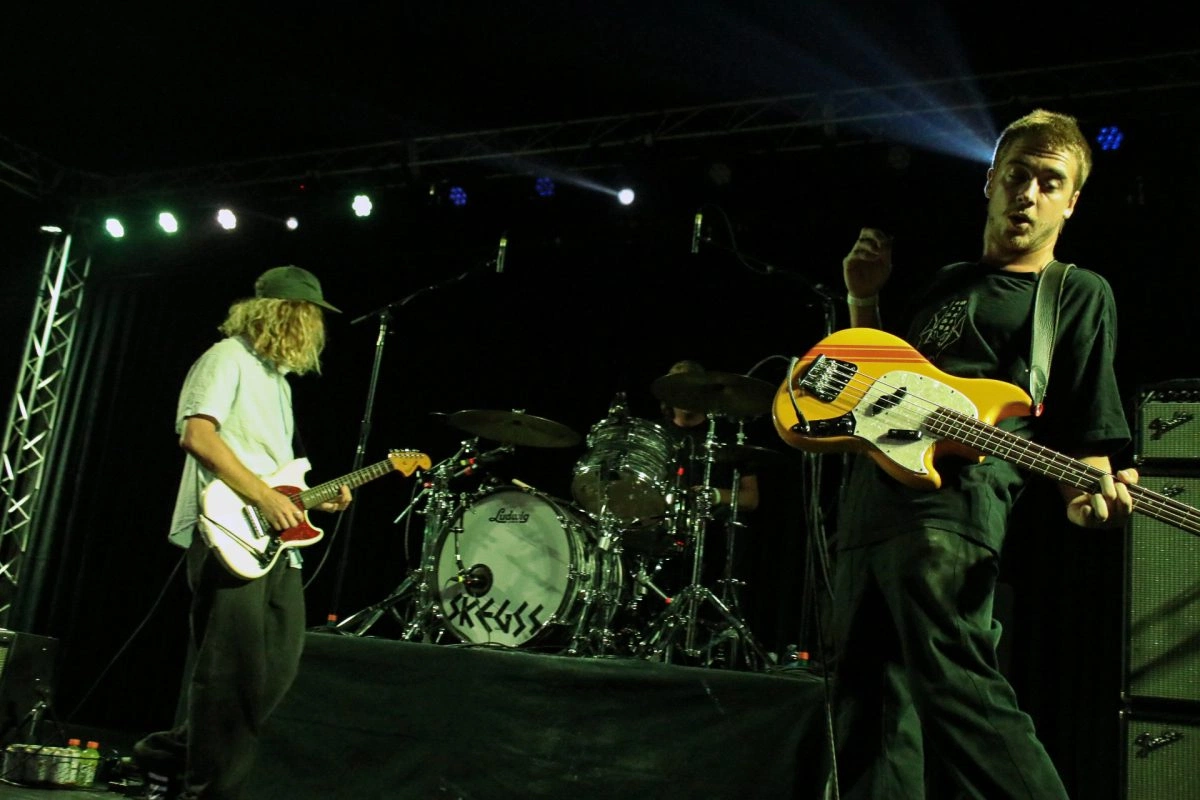
A guitar note echoes through an avalanche of reverb and the drums come thundering ahead like a crashing wave. A melody whizzes by in front of your nose, giving you visions of beaches, hot rods and California dance floors. No vocals yet.
The feeling of motion is what gives surf rock its energy. There are two closely related styles of surf rock: instrumental rock that relies heavily on the electric guitar, and vocal surf songs with harmonies about surfing, love, hot rods and the carefree nature of youth. Going through the same path from sound to history to culture to artists to songs to how it’s played will help you understand where these two styles overlap, and where they diverge.
In This Article
- What Gives Surf Rock Its Distinctive Sound?
- The History Of Surf Music From California To The World
- Southern California Culture Beyond The Music
- Artists Who Shaped The Genre
- Landmark Songs That Define The Sound
- How To Hear And Play The Style
- Revivals, Soundtracks, And Modern Influence
- Key takeaways
- Frequently asked questions
- Start Exploring the California Sound
What Gives Surf Rock Its Distinctive Sound?
The simplest explanation for “surf rock” starts with the guitar. In most instrumentals, there’s a bright, heavily-picked lead over a basic backing of chords, a straightforward bass line, and drumming that keeps up a strong beat. The lead might contain some minor-mode runs, repetition, gliding chords, and short, clipped passages. It all builds up energy.
This tempo separates the style from more laid-back surf music. Fast alternate picking is nervy and the snare drum hits and rolling tom fills suggest motion. A number of compositions use small forms, straightforward riffs and abrupt stop points rather than lengthy solos. Even though it sounds frantic, the best of this music requires tight coordination between guitar, bass and drums.
But there’s another side to surf music. Often the lead instrument on these vocal records isn’t the guitar at all, but rather harmonies and catchy hooks. The songs are about surfing, parties, cars, school, dating and life in paradise. They played an important role in defining the California sound, even if their approach owes more to pop or R&B than to Dick Dale.
Which makes the label surfer music confusing. It could mean music created by surfers, it could mean music about surfing, or it could mean music with a beach vibe. The genre surfer music was also known more by its audio signature: wet guitar reverbs, upbeat rhythms, short catchy tunes, and in vocal tracks, tight harmonies. Some of the surf rock bands had all of these elements; others emphasized just one aspect.
The surrounding imagery mattered too. Beach party films and record sleeves supplied boards, cars, striped shirts, and surf slang, allowing listeners far from the ocean to recognize the scene. Yet the musical history of surf culture cannot be reduced to costumes. Its defining language remains audible even when a modern band drops every lyrical reference to California.
Reverb, Tremolo, And The “Wet” Guitar Tone
Spring reverb gives a surf guitar note its splashy trail, as though the sound were striking a hard surface and scattering. Tremolo picking repeats one note at high speed, turning melody into a rushing stream. Amplifier tremolo does something different: it raises and lowers volume in a regular pulse, making sustained chords throb beneath the lead.
Instrumental Rock Versus Vocal Surf Music
Dick Dale’s music was built on fast, loud instrumentals; fast, aggressive picking; and dramatic-sounding melodies without lyrics. The Beach Boys’ music was about beaches, cars, romance, and youth; it was a description of all those things through beautiful vocal harmonies. Both of them made fast and fun music, but Dick Dale put the music first, whereas the Beach Boys put their vocals first.
The Gear Behind The Classic Sound
Classic setups were heavily based around Fender equipment, often using bright solid-body guitars such as a Fender Stratocaster or Fender Jaguar paired with clean tube amplifiers, with an outboard reverb tank positioned in front of the amp to generate the signature deep splash heard on many classic recordings. The entire setup can now be recreated using modern effects pedals without the need for any vintage equipment.
The History Of Surf Music From California To The World
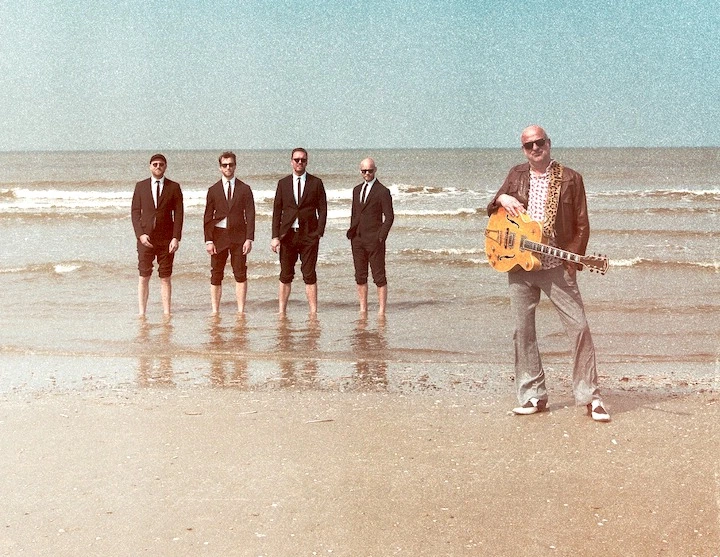
This late-1950s style emerged in Southern California when beach culture intersected with instrumental guitar music, rhythm and blues and teen dances. By then, guitarists had been borrowing blues licks, rock ‘n’ roll grooves and non-pop melodies from around the world. The difference was their approach to loudness, faster picking with more reverb, combined with a distinct Californian theme of surf.
In the early 1960s, this was a strong enough brand to be marketed. Surf instrumentals sold on their riffs; surf songs sold on images of beaches, hot rods, and youthful independence. Radio, touring, television, and movies allowed surf culture to spread outside those actually practicing it. One didn’t have to live on the West Coast to get in on the fun.
The “beach” idea provided the unifying force that made it possible for very different types of music to be marketed in the same space. By pointing out the differences between Dick Dale’s minor key instrumentals and Brian Wilson’s harmonic vocals, record companies could sell the idea that this was all one cohesive entity, allowing the artists involved to all benefit.
That original commercial peak lasted a short time, as post-1964 British bands, garage, folk rock and psychedelic music drew the interest of teenagers away. But the sound didn’t disappear. It was picked up by musicians in Australia and elsewhere, it was brought back in instrumental form by revival bands, and it reached wider audiences via film soundtracks that brought classic songs to fresh ears. That chain of reawakenings transformed a Southern California genre into a global guitar style.
Dick Dale And The Birth Of The Style
“Let’s Go Trippin’” was Dick Dale’s fast, aggressive approach that set the standard for the style as it was developing. Dale was loud and his playing demanded both volume and steady, insistent beats. His incorporation of Middle Eastern melodies also expanded the harmonic palette from the blues roots. It was Dale who provided the fast attack, the driving tempo, and the dramatic minor tonality of this style.
The Beach Boys And The California Sound
“Surfin’ U.S.A.” popularized the surfing movement for a pop audience through a combination of lyrical images and a simple but appealing tune. Under the direction of Brian Wilson, The Beach Boys achieved a new level of musical sophistication through intricate vocal harmonies and elaborate arrangements. Through blending elements of beach life, automobiles, girls, and youth dreams, the group broadened a small subculture into an epic fantasy of all things Californian.
The British Invasion And The First Decline
However, the arrival of the Beatles in America in 1964 created a change in musical taste that saw the popularity of vocal surf groups give way to that of garage and later psychedelic music. The British beat group’s influence meant that the market for instrumental guitar records disappeared from radio airplay, effectively ending the first commercial wave of surf music in spite of continued activity by local surf musicians.
Southern California Culture Beyond The Music
And the landscape depicted in the music was based on a real region but popular culture transformed that region into something more marketable. The southern coast of California had beaches, warm weather, cars, suburbs, and a young population. Records represented these factors as an opportunity for a carefree, mobile, and social lifestyle with no adult responsibilities.
Surfing’s appeal lay in its contradictions; it required athleticism as well as rebellion, technique as much as patience. But images were even more reductive than songs. They rarely went beyond showing a surfer, his board, a wave, and perhaps a smirk. This wasn’t too far removed from the way songs addressed surfing. Few, if any, songs actually spoke about the ocean’s currents or techniques. But what did appear, again and again, were references to the emotions evoked by waiting for a wave, or the excitement or risk or status of catching one.
This emphasis on youth gave non-surfers a youth identity. You could buy a record, wear the clothes, talk the talk, and imagine California while you were in some other state or country. It was a beach that made independence look easy. And cars expanded the scene of the beach inland, uniting driving, cruising, dating, music, and motion.
Graphic design was similarly affected by surf. Albums featured large typefaces, splashing waves, musical instruments, and crowds of youth huddled around their boards. Groups often wore uniforms, either t-shirts or jackets, so they could be readily distinguished on television and in press photos.
Surf Slang, Fashion, And Beach Identity
The board shorts, striped shirts, light jackets, and other leisure wear formed a recognizable visual code, while words like “stoked” and “wipeout” created a recognizable verbal one. With surfer music now part of youth culture, people who might not want to go surfing could still speak and dress like surfers, and in so doing imitate regional fashion choices to make them into a broader culture.
Beach Party Films And Television
Frankie Avalon and Annette Funicello’s beach party movies offered up a sunny vision of the coast: sand, music, sunbathing and light-hearted rebellion against authority. The narratives assumed that the shore was a leisure venue for continuous partying. Such assumptions were also conveyed through the actors’ TV shows, which brought a version of a California utopia to viewers who had no direct experience of the shore.
Artists Who Shaped The Genre
I think the quote means something like: surf rock was developed by early guitarists, spread by the hits and radio versions, and brought to a wider audience by the vocal groups. Thereafter, many acts from around the world have adopted the style, and many acts in California have brought the style back.
This instrumental lineage started with Dick Dale and proceeded to groups that valued riffs, drums, and atmosphere over vocals. While the Ventures played songs beyond those associated with the surf phenomenon, their crisp arrangements set the standard for many guitarists regarding both melody and tone. The Surfaris delivered a blunt riff and a memorable drum hook; the Chantays produced a murkier, more expansive soundscape.
While the Beach Boys went in the opposite direction, creating complex arrangements based on the composition and production of Brian Wilson, Jan & Dean combined wit, teen-oriented lyrics and vocal harmonies to transition from surfing music into hot rod music. And while the Marketts may have often played their material live without vocals, the Marketts recordings are not far removed from the commercial surf record aesthetic either.
Then international musicians took the sound away from where it was born. The Atlantics crafted a hard-driving Australian version and proved that ocean imagery and reverb guitar were compatible. A new wave of revivalists has since come along to perform the music in a spirit of love, technique, showmanship or even punk.
That list is good for when you start listening to the genre. Listen to one loud, instrumental song, one song with vocal harmonies, and one song by a revival artist. Listening to those songs will help you see that the common thread is not a particular set of chord progressions, but a certain sense of movement and timbre.
Essential Surf Rock Bands And Pioneers
Dick Dale & His Del-Tones bring the live feel and speed with guitar, The Ventures the tightness of the group and groundbreaking instrumental tracks, and The Surfaris a more rudimentary blend of riff, drums and novelty. In aggregate they provide a compact list of names that will get you started in understanding how melody, rhythm and reverb could co-exist as equal parts.
Vocal Groups And Surf Music Artists
The Beach Boys added lush vocals and elaborate arrangements to the genre; Jan and Dean combined simple pop songwriting, humor, and songs about beach and car culture; and The Marketts attached the trend to instrumental recordings produced in the studio. In all cases, the bands’ music made beach culture palatable for fans of sing-along melodies and caricatures, rather than guitar solos.
International And Revival Performers
While it’s possible the American bands mentioned above may have influenced these international bands, it’s just as likely these groups took the basic elements of surf rock and reinvented them, finding new ways to revitalize the sound and keeping it alive. For example, New Zealanders Dirty Three mixed in jazz, and in Germany, Die Nixen and Die Huttchen incorporated heavy guitar into their own music.
Landmark Songs That Define The Sound
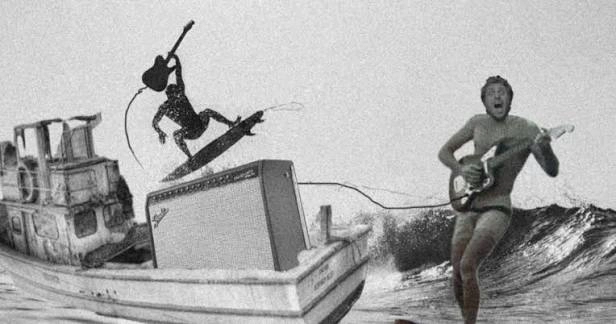
Nothing conveys what a genre is quite like canonical recordings do. The signature riff is there in the first few seconds. The reverb creates space. Drums drive the rhythm. The arrangement is short so you aren’t distracted from the main melody.
“Misirlou” reaches its peak of energy. Its melody comes as a torrent of repetition, with the fast picking giving every note an immediate feel. This power is enhanced by the juxtaposition of the thick lead against the tight, driving rhythm beneath. There’s little to be gained by lyrically describing what’s already conveyed in the song, danger and velocity.
This text is a fragment, but I don’t know what the assignment was. Can you tell me?
“Pipeline” is more atmospheric. The descending line, the layering of the guitars, the measured pace, it sounds like it’s moving, but not as fast as Dale’s. On the recording, the style does a fine job of sounding like water coursing through space and contour, rather than just speed.
The vocal versions are helpful. “Surfin’ U.S.A.” uses melody, harmony, and location names; it puts the surf in a group singing together. The instrumental versions encourage you to experience the surf; the vocal versions encourage you to imagine yourself surrounded by the community that experiences it. Having both prevents surf rock from becoming identified as a single, specific guitar sound.
“Misirlou” By Dick Dale
Dick Dale’s “Misirlou” is another song with a Middle Eastern melody, but it’s characterized by relentless tremolo picking and a hard-driving band behind it. Because of its rapid attack, this track is probably the clearest single showcase for high-speed surf guitar. The track was brought to a new generation with its inclusion in Pulp Fiction, and we can now hear those first few notes and think “action.”
“Wipe Out” By The Surfaris
After a spoken “Wipe Out!” and some laughing, The Surfaris launch into a short, punchy riff. This becomes the centerpiece of the recording, in which Ron Wilson performs a lengthy drum solo that mimics a crowd going wild or a crashing wave. When the song became a hit in 1963, it proved that instrumental songs could be massive popular successes if they had enough energy and flair.
“Pipeline” By The Chantays
“The Chantays built “Pipeline” on a descending line and two guitars, with one guitar playing the main hook and the other providing color and depth for a sound a little more subdued than even the nastiest of surf recordings. Its aquatic name sets your mind in the right direction, but it’s the arrangement that makes you feel like you’re floating through water.”
How To Hear And Play The Style
Listen for the lead tone first. Often on classic recordings, you’ll hear a bright guitar up close, then a long, spring reverb tail. Sometimes the notes will be clipped and percussive, and sometimes you’ll hear them repeated rapidly through alternate picking. Either way, the melody functions rhythmically: the accent on each note creates the beat.
After the drum kit, eighth note runs, strong snare hits, tom fills, and abrupt stops, everything moves faster. Then the bass, which typically anchors these rhythms, does not fight for space, but instead propels them along. When the music stops, when the guitar comes in again, it seems bigger, because of what the rhythm section did before.
Harmony offers another important hint for classification. A number of instrumentals utilize minor keys, sweeping downward lines, and chord changes that repeat over a very basic rhythm. Even vocal tracks might seem sweeter – especially if there are lots of harmonies – but often these are still upbeat and fairly short, typical of pop songs. Therefore, just because something has lyrics about surfing doesn’t mean it is surf rock, as the music itself is far more important.
Work on the control first, not the speed. Play a single note and keep a steady beat, alternating between down and up strokes and making sure your wrist is loose and relaxed. Wait until you have a consistent beat before adding reverb. If your timing is inconsistent you’ll hear it when the reverb isn’t hiding the beats.
Switching briefly to minor-key phrases, you should use low strings muted, chords that slide, and simple two-note double-stops. Drill them with a drummer, or with a solid click track, until they fall neatly into a steady rhythm. The goal here is to make them sound urgent but not frantic. Being able to do this while keeping a tight beat is what makes this technique work in practice.
A Listener’s Recognition Checklist
The key difference here is the emphasis on strong reverb, the staccato lead guitar, the repeated-note melodies and the driving rhythm of the drum kit. Rockabilly typically features a slapback echo and a swingy root-based feel. Garage rock relies on gritty vocals, power-chords and a generally loose feel. Some surf-inspired pop will rely on similar imagery, but without the signature wet lead guitars.
A Beginner Surf Guitar Setup
For a crisp and defined sound, use the bridge pickup with your amp on clean (to emphasize note separation). Add a touch of reverb to give every note a noticeable splash, but be careful not to make it too thick. Optionally, add a touch of tremolo to the chords if available. You don’t need anything special; just a good solid body guitar is enough to produce this simple, believable tone.
Revivals, Soundtracks, And Modern Influence
Revivals of Surf Rock later managed to survive, by using the early recordings not as a historical relic, but as a vocabulary. Instrumental bands in the 1980s and 1990s embraced spring reverbs, fast finger-picking, uniformed stage attire, and horror/science fiction imagery. With this evolution of imagery, we saw how the sound of the guitar conveyed much more than a love for the beach.
Punk also had an affinity. Both value short songs, body music, strong image and immediate delivery. Many contemporary bands crank the fuzz, or accelerate the drums, or pair twangy melodies with punk forms. Some add spy movie harmonies, garage rock sounds, rockabilly beats, or film scoring style sections over the top of reverb-drenched lead guitar.
The fact that “Pulp Fiction” was revived gave it a huge platform. Even though “Misirlou” was used in a setting totally removed from its surf rock beginnings, its pace and danger made it appropriate for the movie. Thus it became more than just a retro throwback; people heard it as cool modern music before they even knew what Dick Dale sounded like.
That portability has also made it a go-to for TV, commercials, video games, and indie films. A few measures can evoke stalking, slapstick, vintage hipness, or beachside movement. The context dictates the meaning, yet the cues themselves are unmistakable.
Instruments like Los Straitjackets and Laika & the Cosmonauts’ revivals have shown how diverse the genre can be. One show could be highly theatrical, while another could feel expansive and cinematic. It’s that malleability which keeps this music in play: a small vocabulary of guitar licks can take on different shapes and never lose its essence.
Key takeaways
Surf rock is famous for its guitar sound, which employs spring reverb, tremolo picking, and driving beats. Its roots can be traced back to two different schools: instrumental surf music pioneers and vocal harmony surf rock groups. The surf music trend was mainly made popular as a national phenomenon through the influence of Southern California’s beach scene and movies depicting it. For anyone looking to get into the world of surf rock, these artists and songs provide a great place to start: Dick Dale, The Beach Boys, The Ventures, and The Surfaris. Decades after the original surf music movement died out, surf music has been kept alive by surf music appearing in movie and television soundtracks, and even by modern day surf rock revival bands.
Frequently asked questions
What is considered surf rock?
In general, music is categorized as surf rock if it uses bright, reverb-laden guitar, driving drumbeats, short, punchy riffs and techniques such as tremolo-picking. The term may be applied to a related vocal tradition that often relies on close harmonies and lyrics about surfing or California themes even though the resulting music may sound more like pop than guitar-driven instrumental music.
Why was surf rock so popular in the 1960s?
The result was a blend of sonic and pictorial qualities that fused a high-energy music form with colorful pictures of young people, carefree living and the Southern California beach scene. That scene, via radio, recordings, movies and television, became available to millions of listeners who had never even been to the beach. The infectious instrumental riffs and singable tunes made the music easily accessible to a mass audience.
What is the most iconic surf rock song?
Dick Dale’s “Misirlou” is the best pick for this piece because its fast picking, aggressive tempo, minor key melody, and wet reverb exemplify the instrumental music at maximum intensity. Another very well known popular example is “Wipe Out”, particularly due to its beginning and drum solo.
Who is the king of surf rock?
Dick Dale is widely regarded as the “king of surf guitar” because he pioneered its particular blend of fast tempos, high volumes, excessive reverb, and pick-driven sound. His performances and records provided a blueprint for many subsequent instrumental artists.
How is surf music different from garage rock?
The music usually features clean or slightly overdriven electric guitar, spring reverb, clean picking, and instrumental arrangements. Garage rock, in contrast, utilizes distorted guitars, rough vocals, rudimentary chord structures, and a lo-fi sound; many subsequent bands combine styles from both genres.
Start Exploring the California Sound
There’s also the fact that the sound has so much to offer beyond surf-rock nostalgia. It’s a unique sonic vocabulary composed of spring reverb, fast guitar picking, pounding drumming, stacked vocals, and Southern California mythology. Dick Dale brought the instrumentation to life, and The Beach Boys turned surf culture into meticulously arranged pop.
Songs like “Misirlou,” “Wipe Out,” and “Pipeline” are the best examples, since they show off different qualities: pace, groove, and sound. “Surfin’ U.S.A.” should be next on the list to hear how the use of harmony altered the approach without losing its feeling of motion and freedom.
Try to find examples by The Ventures, The Chantays, Jan and Dean, The Atlantics, Laika & the Cosmonauts, Los Straitjackets etc. At first just hear the wet guitar, and after that compare the riff with the drums. The revival bands and movie soundtracks prove that the initial commercial explosion was over, yet the music continued.