
A bass-heavy rhythm rolls through a club, the kick and snare locking into a pattern that feels familiar before you recognize the song. Spanish rap gives way to a melodic hook, and the floor responds almost on instinct. So what is reggaeton, and how did that rhythm travel from the Caribbean to playlists around the world?
It originated as a mix of Jamaican music, Spanish language rap, hip-hop, electronic production and dance club culture from Panama and Puerto Rico and went through a series of stages from underground to mainstream and became a phenomenon in Latin Pop music. This article will cover the history of reggaeton including the origin of Reggaeton, the Dembow, the change in music production, the origin of the dance and its sudden leap to the mainstream.
In This Article
- A Clear Reggaeton Definition: Origins, Sound, And Culture
- What Is Reggaeton? The Genre In Today’s Music
- How Reggaeton Developed From Underground Music
- Where Reggaeton Is Most Popular
- Why Reggaeton Connects With Global Audiences
- Reggaeton In English: Meaning, Lyrics, And Crossovers
- Reggaeton Dance Moves, Lessons, And Learning Apps
- How Reggaeton Differs From Reggae
- Ghost Production In The Reggaeton Industry
- Questions About Reggaeton’s Meaning And Identity
- Key takeaways
- Frequently asked questions
- Hear the Dembow for Yourself
A Clear Reggaeton Definition: Origins, Sound, And Culture
Reggaeton is a relatively new form of music which came out of Puerto Rico and Panama. The origins of the genre can be traced back to Caribbean and Latin music in general, and typically features electronic drum beats with heavy bass lines and the characteristic dembow beat. But more than just the style of music, Reggaeton also possesses a particular vocabulary, set of themes, culture, type of dance, and even specific style of ghost production. If you translate “what is reggaeton” into English, you get the word “reggaeton”.
The Dembow Rhythm And Other Signature Sounds
The dembow is the driving, syncopated beat of reggaeton. Its heavy rhythm creates a “push and pull” groove that is usually created using programmed drums. The bass is typically very close to the kick to ensure that it has a hard, thumping presence in the track but still leaves enough room in the mix for the vocals.
Most of the album’s vocal styles consist of a mixture of Spanish rap, singing, shouting, and hooks, though each song may pull back slightly on intensity by slowing down the pace, mellowing out the sound for pop radio, and adding trap and dancehall elements.
What Is Reggaeton? The Genre In Today’s Music
Nowadays Reggaeton is also considered its own music genre, separate yet related to other genres within “urbano latino”. Its catchy beats are made for dancing, and its lyrics cover a bunch of different subjects, from self-expression, romance, and club life all the way to social rivalries and political commentary.
Normal songs in this subgenre have a heavy dembow beat and rapping vocals, but popular ones can be more melodic, have softer drums, or even be rapped by non-Spanish-speaking people. Nevertheless, they are all part of the music, style, movement and culture of the Latin Caribbean.
How Reggaeton Developed From Underground Music
The origins of reggaeton stem from Panamanian reggae en español and an underground movement that arose in Puerto Rico during the early 1990s. DJ Playero mixed together elements of Jamaican dancehall, hip hop and the dembow rhythm which became the hallmark of the genre. Without any support from the mainstream radio stations, reggaeton was spread to a massive audience by underground mixtapes, building up its own fan base.
It became popular worldwide in the 2000s after Daddy Yankee released “Gasolina.” Today, artists combine it with elements of pop, trap and electronic music while maintaining the essential element of a beat that gets people moving.
Where Reggaeton Is Most Popular
Despite the fact that Puerto Rico still considers itself the capital of reggaeton, countries like Colombia, the Dominican Republic, Mexico, Chile, and Argentina have created their own versions of the genre in their own accents and styles.
It’s also blown up in the U.S., another key Spanish-speaking territory. It’s been picked up by bilingual audiences, nightclubs, radio, and cross-over listeners. Even people listening on Spotify can’t remember the lyrics.
Why Reggaeton Connects With Global Audiences
A danceable rhythm is one of the first things we hear and instantly defines the genre and feeling of the song. A catchy hook ensures that even one chorus of the song will be memorable. This is true no matter the context, whether it’s played on a jukebox at a club or TikTok, or in the ears of one listener.
This will make them known to new audiences while expanding each other’s audiences. By working together, they also create a path from popular genres like pop and hip-hop to the more niche genre of reggaeton (in Spanish). This helps promote a song through algorithmic recommendations based on what the listener might be interested in listening to.
Reggaeton’s Influence On Mainstream Pop
Dembow has become ubiquitous in crossover pop singles, though some people feel it’s used as a veneer, without the underlying influence of its culture. Dembow-pop will borrow the specific drums and bass and choppy rap style, but won’t focus on rap call-and-response or Caribbean influence like most hip-hop.
As more and more of these Latin artists, producers, and songs in Spanish are becoming prominent and getting more airplay, we as an audience are able to realize that you don’t necessarily have to sing the whole song in English to make a hit. Even if it’s their crossover hits that get us to like them more and introduce us to their culture and style, the people who created and made these styles popular should get their due credit.
Reggaeton In English: Meaning, Lyrics, And Crossovers
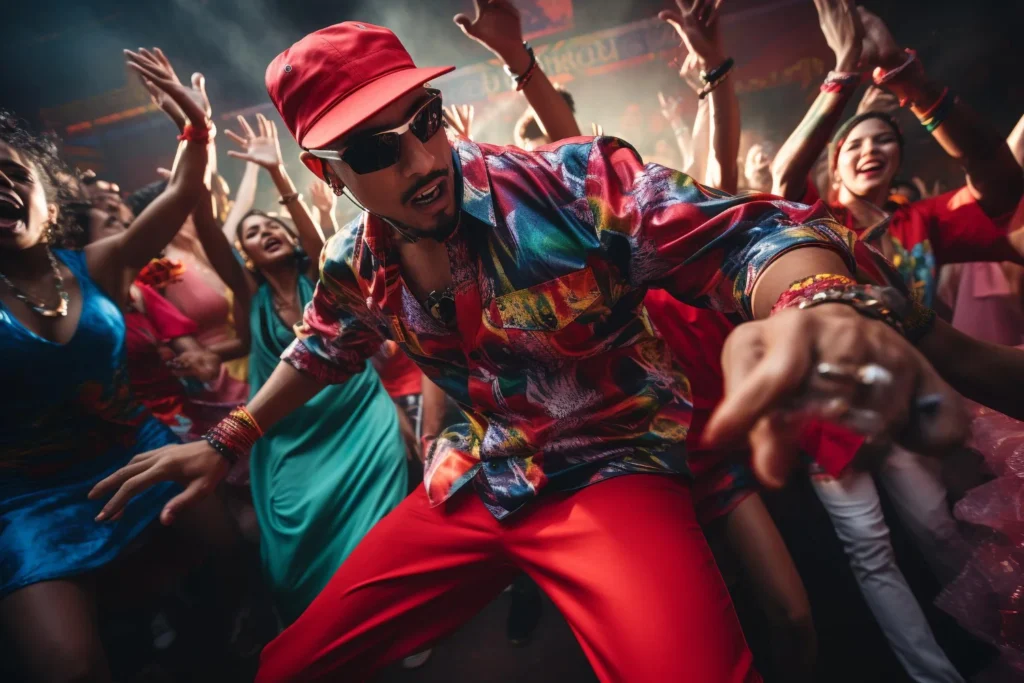
It’s true that “reggaeton” is frequently used by English speakers as a catch-all name for Latin urban dance music. But reggaeton is actually a specific blend of Caribbean Spanish music, rap and reggae. All of these genres are tied together by the dembow beat. Even though the lyrics may be in Spanish, English or some combination of the two (especially for crossover hits), and you might not understand every word, you don’t need to know every word to understand what the song means. You can get the gist from listening to the beat, words you repeat back to yourself, the way the singer sings and even the way you dance.
Reggaeton Dance Moves, Lessons, And Learning Apps
Perreo consists of close-to-body rhythmic hip movements. Beginner steps help you learn weight transfers and timing. With classes, you get personalized feedback. Videos allow you to go at your own pace. In an app like How to Dance Reggaeton (or any app), take a look at the sequence of lessons, the instructor’s clarity, the privacy policy, and the difficulty level.
To learn the steps to reggaeton music, take a class at a dance studio near you that teaches Latin dances. These classes typically meet in person and you’ll be able to learn the proper way to move your hips and feet to the beat. You could also find online tutorials or an app dedicated to reggaeton music. Many of these platforms allow you to practice at your own pace and some apps feature ways for you to check your form or follow along with the music.
| Option | Best for | Typical cost and pace | Pros | Cons |
|---|---|---|---|---|
| Beginner step drills | First-time dancers learning dembow timing | Free; 10–15 minutes per session | Builds weight shifts, knee bends and side-to-side timing before choreography | No instructor feedback; repetition can feel basic |
| Perreo fundamentals class | Adults learning hip isolations and partner-aware movement | About 45–60 minutes per class; studio or online | Teaches grounded posture, hip control, rhythm and consent-based spacing | Close movement may feel uncomfortable; often unsuitable for children |
| In-person group lessons | Learners who want live correction and social practice | Commonly 60 minutes weekly; paid per class or course | Immediate feedback, mirrored demonstrations and structured progression | Fixed schedule, travel and less individual attention than private tuition |
| Private reggaeton lessons | Learners preparing for performances or needing tailored coaching | Typically 45–60 minutes; highest-cost option | Personal corrections, adjustable pace and choreography matched to ability | More expensive; instructor quality and style may differ |
| YouTube tutorials | Self-paced learners seeking free move breakdowns | Free; videos commonly 5–30 minutes | Large choice of beginner steps, combinations and mirrored routines | Uneven lesson order and teaching quality; ads can interrupt practice |
| How to Dance Reggaeton app | Phone-based learners wanting guided practice | Check current store price; short, repeatable lessons | Portable instruction, replay controls and a defined lesson sequence | Check skill level, instructor clarity, updates, permissions and privacy terms |
| Dance fitness reggaeton class | Beginners prioritising cardio over technical mastery | Usually 30–60 minutes per class | High repetition, full-song practice and a low-pressure group format | Limited technique correction; routines may simplify authentic dance styles |
Here’s a breakdown of each method. Free, online videos – Beginner drills & YouTube: Free, easy to access. Could be superficial or overwhelming. Low cost options – Perreo classes, Fitness classes, & Apps: $5–$30. Structured and easy to use, but can be hard to find or limited. Dedicated apps – Apps: $5–$30. Easy to use, but limited content. Easy to use, but limited content. Private instructor – Instructor: $50–$100 per class. Personalized instruction, but expensive.
How Reggaeton Differs From Reggae
Despite having a common musical DNA, as both styles are descendants of traditional Jamaican music, these two genres have taken vastly different paths over the years. While reggae evolved in Jamaica during the late 1960s (with the classic off-beat known as the “skank”, different types of drumming patterns, and often political or spiritual lyrics), reggaeton has its origins in Latin America, especially in Panama and Puerto Rico. The result of blending Jamaican dancehall with traditional Latin American genres such as bomba and plena, reggaeton is now recognised by its signature dembow rhythm, Spanish language lyrics, heavy use of electronic drums, and rap vocals.
Reggaeton and reggae are two different music genres. Although they both have similar names, they have different histories, rhythms, lyrics, and production. Reggae was born in Jamaica in the late 1960s and was influenced by Jamaican culture and religion. Reggaeton was born in Panama and Puerto Rico in the late 1990s and was influenced by Jamaican dancehall reggae, bomba, plena, rap, and electronic music. The lyrics of reggae songs are usually about spiritual, social, and cultural topics, while the lyrics of reggaeton songs are usually about urban topics like partying, sex, and money. The rhythm of reggae is based on the one drop rhythm, which emphasizes the third beat, while the rhythm of reggaeton is based on the Dem Bow rhythm, which emphasizes the first beat. Reggae singers usually sing melodically about love or spiritual things, while reggaeton singers usually rap. Reggae music is usually made with live instruments like guitar, keyboard, and drums, while reggaeton music is usually made with electronic music.
| Genre | Origin and era | Core rhythm | Typical vocals and language | Production and sound |
|---|---|---|---|---|
| Reggaeton | Puerto Rico and Panama; emerged in the 1990s | Steady dembow pattern, commonly in 4/4 | Spanish rap, chanting, singing, and melodic hooks | Drum machines, sampling, synthesizers, heavy bass, hip-hop influence |
| Reggae | Jamaica; emerged in the late 1960s | Offbeat guitar or keyboard skank; one-drop, rockers, or steppers drums | English or Jamaican Patois singing, chanting, and toasting | Live bass, drums, guitar, keyboards, horns, and dub effects |
| Dancehall | Jamaica; developed in the late 1970s | Digital or live riddims with syncopated dance rhythms | Jamaican Patois deejay vocals, singjay delivery, and hooks | Bass-heavy riddims, drum machines, samples, and sound-system mixing |
| Reggae en Español | Panama and Latin America; grew in the 1980s–1990s | Reggae and dancehall riddims adapted for Spanish-language performance | Spanish singing, rapping, and dancehall-style delivery | Jamaican-influenced riddims with Latin-Caribbean vocals and production |
| Latin trap | Puerto Rico and wider Latin America; rose in the 2010s | Trap hi-hats, programmed kicks, and slower half-time feel | Spanish rap or melodic vocals with hip-hop phrasing | 808 bass, rapid hi-hats, dark synths, and sparse electronic beats |
Reggaeton emerged in the Latin Caribbean from blending dembow beats with Spanish-language lyrics and hip hop-inspired production. Reggae emerged in Jamaica, featuring a syncopated “skank” rhythm, use of live instruments, and lyrics in English or Jamaican Patois.
Debates And Controversies Around Reggaeton
Criticism has also been directed at reggaeton’s sexual content (perreo), with its sexually suggestive videos and explicit lyrics. While much of the debate focuses on the genre’s misogyny and limited range of relationship representation, other critics have labelled reggaeton’s working-class, Afro-Caribbean and urban roots as “dirty”, resulting in a classist, racialised stigmatisation of the music and dance form.
It’s extremely important to exercise every day to keep healthy. If someone exercises frequently, their heart will be stronger and they’ll have more energy in everyday life. They’ll also be able to reduce their stress levels and improve their sleep quality. I believe that a simple daily walk can have great benefits for your body and your mind.
Ghost Production In The Reggaeton Industry
Ghost producers are people who significantly contribute to the beat, arrangement, vocal production or mix of a song, without being credited in any substantial way. This might mean simply creating the drum programming for a song, or coming up with a brand-new bassline, or even auto-tuning the vocals of a singer, or perhaps producing a demo which later forms the basis of the finished track.
This type of music is usually produced by commercial producers who have their own production teams, who handle different parts of the work in order to get the job done quicker. As a result, it can be hard for the average listener or musician to find out exactly who was involved in the creation of the final recorded product.
Why Artists And Labels Use Ghost Producers
The above sentence is a textbook example of a production model that requires the cooperation of both parties.
This is where the “division of labour” kicks in and helps both parties do what they do best. Artists have more time for recording and performing, and record labels can use different styles of music without having to add each contributor as a feature. It’s efficient and speeds up business, but it also means we need to move away from “how do we get it done” and towards “how do we make sure everyone gets paid and has consented and been credited correctly?”
Questions About Reggaeton’s Meaning And Identity
Reggaeton is a type of urban music which combines reggae rhythms with elements of hip-hop and Latin music. The music emerged in Puerto Rico in the 1990s and has been influenced by Jamaican dancehall music and Latin American music, specifically bomba and plena. Reggaeton songs typically feature a distinct beat, or “dem bow” rhythm, with a syncopated bassline, and lyrics which are typically sung in Spanish and very fast-paced.
Reggaeton or reguetón is a music style that originated in Puerto Rico during the late 1990s. Reggaeton features a “dem bow” rhythm from Jamaican dancehall and a large influence from hip hop music. It also contains elements from salsa, merengue and other Latin American music styles, as well as electronic music. Its lyrics often discuss partying, love, and social issues.
Key takeaways
The roots of reggaeton can be traced back to a combination of Panamanian reggae en español and Puerto Rico’s underground music. It diverged from reggae in terms of its sonic aesthetic, language, and cultural milieu. Reggaeton is largely characterized by its use of the dembow beat. This rhythm is produced by a series of drum loops, electronic sounds, and a heavy bass line. Its rise in popularity is due to the growth of digital streaming, cross-border collaborations, and the cultural ubiquity of dance. It is also likely that the practice of ghost producing has enabled reggaeton artists to produce faster. This allows artists to meet commercial demands, and release more songs in a shorter time span.
Frequently asked questions
Is Bad Bunny a reggaeton artist?
Yes, Bad Bunny is from Puerto Rico. His main genres are reggaeton and Latin trap but he’s primarily known for reggaeton. He has also been known to sing other genres like pop, rock, dembow, bachata etc.
What is the difference between reggae and reggaeton?
Reggae is a music genre that originated in Jamaica. It has been characterized by its rhythmic pattern, the appearance of live bands, and borrowed characteristics from other styles of music which came before it. On the other hand, reggaeton is a genre that has origins in Panama with reggae en español, and Puerto Rico with its underground scene. The genre has been characterized by its use of the dembow beat, the incorporation of electronic music, singing in Spanish, and rapping.
Is reggaeton hispanic or Latino?
Although it’s often described as a “Latino” genre because it comes from Latin America and the Caribbean, and a “Hispanic” genre because it is mostly sung in Spanish, Reggaeton is also a product of Jamaican dancehall music and other African Caribbean styles.
Who are the top 3 reggaeton artists?
Among the top reggaeton artists are Daddy Yankee, Ivy Queen, and Bad Bunny. Daddy Yankee helped bring reggaeton to international audiences; Ivy Queen was one of the first female reggaeton artists to find success, and now Bad Bunny is very popular and helped take the genre to new heights. There isn’t really a way to determine which artist is the “best,” because there are many subgenres of reggaeton, and there aren’t any official means to rank artists.
Who created the dembow rhythm used in reggaeton?
No single individual is responsible for inventing the fundamental beat that characterizes reggaeton. It emerged through musicians in Jamaica, Panama and Puerto Rico drawing on a sound that originated from Jamaican dancehall. The term reggaeton is taken from the title of a Shabba Ranks song “Dem Bow,” produced by Bobby Digital, which came out in 1990. The track’s rhythm served as inspiration for other reggaeton producers, who modified the song’s beat repeatedly until they reached the repetitive pattern that is typical of the style today.
Hear the Dembow for Yourself
Reggaeton is not only a type of dance but also is a type of Latin Caribbean music that is based on Panamanian reggae en español, Puerto Rican underground reggae, hip hop, and dancehall. Reggaeton uses the dembow rhythm which is made with electronic drums and heavy bass lines. It usually contains very simple melodies, very direct lyrics, and a rhythmic hook which can be applied to other parts.
That will give you some tools to differentiate between reggae and reggaeton. You will be able to hear how the musicians that make contemporary songs modify the base beat for rap songs, ballads, dance songs, bilingual duets, etc. Listen to recordings from various eras. Focus on the beat when listening to the lyrics. Notice what has been modified. You’ll be able to trace its history once you learn its origin.