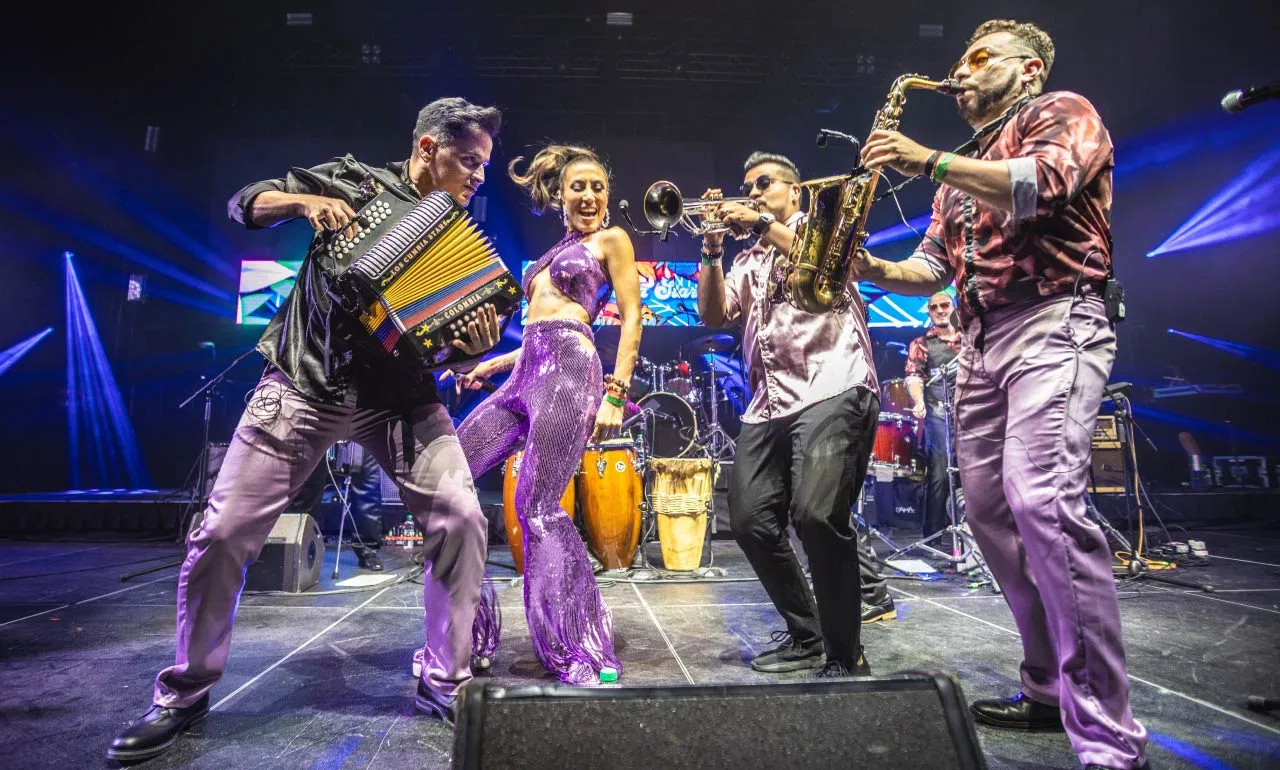
What is cumbia? Cumbia is a fusion of Indigenous, African and Spanish cultures. The song and dance, first introduced in Colombia, is known for its earthy rhythm and has taken Latin America by storm. The dance that began on the Caribbean coast of Colombia is now a common form of music throughout Latin America. The music’s roots can be traced back as a courtship dance between men and women. This dance is very symbolic of its roots and is characterized by the beat that is deeply grounded and the tunes of the flute. Couples dance in a circle and are usually surrounded by candles and flashy costumes. It has since become a popular music genre that is recognized by many. Touring musicians, recordings, migration patterns, and regional adaptation are some of the factors which have contributed to this popularization of the music. Although each region puts its own twist on the genre, it all still holds rhythm and respect to its origin on the Caribbean coast of Colombia.
In This Article
- Where Is Cumbia From? Tracing Its Caribbean Roots
- The Rhythm And Sound Behind The Music
- Traditional Instruments And Their Roles
- How The Cumbia Dance Works
- Clothing Worn In Traditional Performances
- Distinctive Features Of The Performance
- Cultural Heritage And Colombian Identity
- From Colombian Tradition To Global Styles
- Influential Performers And Ensembles
- Essential Recordings And Festival Performances
- Related Rhythms Across Colombia
- Plan Your Next Music-Focused Visit
- Key takeaways
- Frequently asked questions
- Hear the Tradition for Yourself
Where Is Cumbia From? Tracing Its Caribbean Roots
Colombia’s Caribbean coast is the cradle of a musical and cultural tradition that has been exported all around the world: Cumbia. The cumbia tradition was built in Colombia’s Caribbean Coast, specifically in the communities joined by the lower Magdalena river. The confluence of the indigenous, african and spanish populations produced one of the most representative musical genres in the world. The cumbia music was built with elements coming from three different ethnicities. The indigenous music, specially its piercing flute melodies, the percussion and rhythm of body of African people and the influence of spanish culture on the dresses, the structure of the songs and social practices.
To truly understand the musical roots of cumbia it helps first to understand the dance, its origins and its development, for the dance, drumming and melodies, combined with the costumes, all came together to create a unified cultural event that could be labeled cumbia. In the early cumbia dance shown here, the dance movements were meant to demonstrate courtship. The dance circle moved intentionally around musicians. This collective act of dancing grew to include a musical genre, one meant to be performed by musicians both for public celebration and for recording. Today there are a number of popular cumbia songs that feature modern arrangements of cumbia. While the sound has evolved and the compositions change, the rhythm is always reminiscent of coastal Colombia.
Where Is Cumbia Music From Historically?
While there is no specific place that can be cited as the cradle of cumbia, the first manifestations of the genre can be traced back to rural areas and communities connected by the rivers on Colombia’s Caribbean coast. In these areas, cumbia took shape as a result of a mixture of musical traditions that brought together elements of Indigenous and African descent. Indigenous performers played a critical role in the development of cumbia, especially in the use of the caña de millo and flutes. Communities of African descent contributed an equally important element: polyrhythm in percussion and vocal performances, call and response, and dancing focused on the pulse.
Spanish influence appeared through melodic conventions and formal clothing adapted for performance. That combination makes cumbia colombian music rooted in cultural exchange, although each contribution retained recognizable features. The cumbia dance emerged within this shared setting as a social ritual performed collectively around musicians.
The Rhythm And Sound Behind The Music
Rhythm & The Sound of Africa-derived traditions:
The strong call-and-response vocal style is another way that the sense of togetherness in the music is accentuated. One voice may take the lead by singing a phrase, and the collective voices answer back. In combination with the underlying drum pattern, this call-and-response structure allows for a very strong rhythmic flow to propel the melody and lyrics. The deep drums establish a pulsing tone that creates a swaying effect throughout the piece, anchoring the rhythm. The crisper, higher tones of the drum then help to advance the music in a direction, providing propulsion and momentum to the flow established by the deeper notes.
The cumbia dance cumbia dance is similarly restrained. The dance movements are guided by circular rhythms, so dancers make more measured movements without quick turns and twists. The cumbia’s musical restraint can be traced to its instrumentation. The melodic instruments in cumbia, gaitas and caña de millo, have their own timbre restrictions that shape the melody. The gaitas produce long, airy notes which float above the rhythmic accompaniment. The caña de millo has a nasal, piercing tone. The melodies in cumbia reflect the characteristics of its timbres. Because the melodic instruments cannot easily play fast, intricate melodies, melodic progressions are relatively simple and focus on repetitive cycles with small variations, as opposed to constant, quick key changes.
Traditional Instruments And Their Roles
Traditional Instruments And Their Roles
The concept of where is cumbia popular may not make much sense to you as you start listening to the instruments. However, it will begin to make more sense if you first listen to the role of each of these in a traditional ensemble. Each has its very own distinct role, be it in the delivery of rhythm or the melodic line.
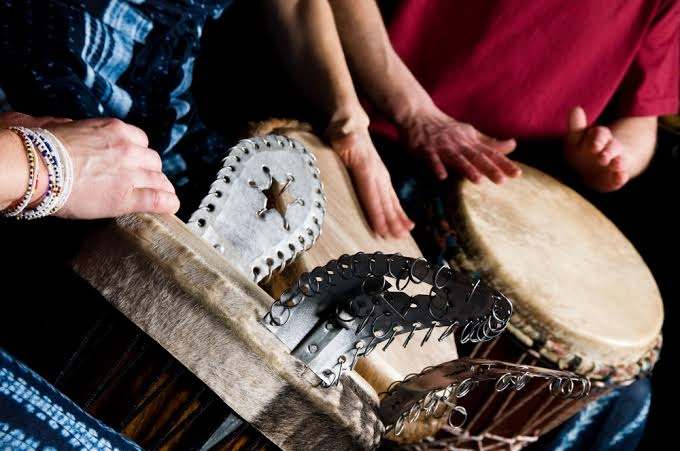
Tambora: a big drum that provides the deep bass to the ensemble and has a prominent role to help the dancer feel the accents and central beat. Tambor alegre: hand drum that plays in the ensemble, but can often vary its playing. It will have improvised patterns and often interacts with other drums and the singer. Gaita: long indigenously-made flutes that come in male and female versions. These instruments have different pitches and roles and can be heard to weave the melody, sometimes playing one tune with another instrument playing a harmonic line. Llamador: small drum that provides the steady pulse of the ensemble; unlike the tambor alegre, this drum has a repeated, less improvising part, allowing the music to stay grounded while other drums improvise. Caña de millo: reed instrument with a piercing timbre that will play short repeating melodic patterns and have the force to play above the drums and audience. Guache: similar to maracas, this instrument is shaken to provide a percussive sound throughout the performance. Maracas: percussion that is shaken during the performance and breaks the beat into smaller subdivisions. This allows the listener to hear more texture and percussive sounds between the deeper drum accents.
How The Cumbia Dance Works
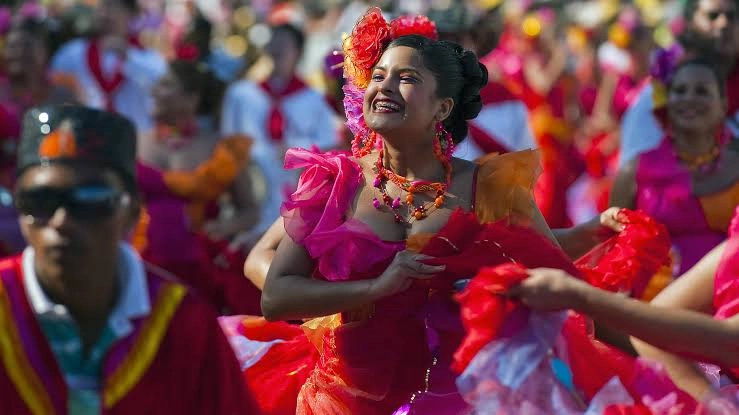
In traditional cumbia, the musicians are located at the center of the performance. The couples dance in a circle around the musicians. Although it appears to be more subdued and involves a lot of shuffling steps and not necessarily big flashy jumping steps, the partner relationship between the woman and the man can be interesting to observe and follow. The woman (sometimes with candles in her hand) guides the path of the dance and the man makes stylized gestures. He goes forward, then back to make gestures etc. This is part of a stylized courtship exchange.
The cumbia is not a dance with an intimate hold, as space is allowed to move between partners, and yet, connection is maintained through the gaze and communication that occurs in the dance where is cumbia from. As the partner is focused on timing and gesture, space in the dance is filled with narrative, and expression is channeled through attention. The space between the partners, and the communication within it, can hold different meanings in the telling of a dance. The candle is an illuminating element in the dance. It can symbolize dignity or protection and provides light for the dancer. In the case that space is being used to intentionally hold away from an unwanted partner, the candle can be used to show where the boundary is. The circular movement of the dance, in regard to where the musicians are and where the dancers’ attention is focused is a response to . It physically shows that cumbia is a communal dance that is structured around the live musicians.
Steps, Posture, And Partner Movement
Knowing where is cumbia from helps you preserve its upright carriage, measured footwork, and respectful space between partners.
Keep your torso upright and knees soft. Keep the steps low to the ground and this will help allow the hips to move naturally in response to the rhythm of the dance. Move your body weight from one foot to the next deliberately and on the beat of the music, and don’t kick out your legs, turn sharply or bounce. The dance is meant to be performed in a circular motion, so remember to travel around the floor as the dance progresses, and watch out for other dancers. Use hand gestures (as well as skirt, hat, handkerchief or candle gestures, if applicable) to talk to your dance partner. Remember to look at your dance partner! You want to give the appearance that you two are engaged in a dialogue with each other. If your dance involves a female partner, she will likely be the one swinging around her skirt or waving candles in your face; if you’re a guy, you’ll be the one holding out the handkerchief or hat. Don’t crowd or rush your dance partner because cumbia is about courtship. The couple is supposed to advance toward one another, and then retreat or pause. You shouldn’t grab your partner or attempt to dance closer to them. Watch the musicians and other dancing couples as they are part of the performance too. How The Cumbia Dance Works
Clothing Worn In Traditional Performances
Female performers are dressed in a very full, long skirt, usually made of a patterned fabric. It is worn together with a blouse that allows the movement of the skirt as well as of the arms to remain visible. During the performance, the skirt is lifted and sometimes fanned out as the women turn or step to the side. In this way, although it covers the body of the dancer, it serves to frame her footwork while allowing the observer to still enjoy its precise, measured rhythm.
The costumes are an essential aspect of the traditional dance and include some basic characteristics, such as that of men wearing a white shirt and pants, frequently accompanied by a red scarf. They may also be expected to perform with the sombrero vueltiao, which is waved through the air or presented to their partners. It is common for the sombrero to be taken off and used during the choreography. Some particular groups, identified as cumbia for this work, may adapt the colors and small details of the traditional costume according to their own performance, or stage, or community. However, the opposition between colors is a characteristic that remains intact: the woman’s large skirt and the man’s lighter costume help the audience follow the courtship dynamic.
Distinctive Features Of The Performance
What is cumbia? what is cumbia Imagine this story as being played out in a dance. Can you see what the characters in this story are doing? Are their movements quick or languid? How close are they to each other? In cumbia, all these things happen. But one important distinguishing feature of cumbia compared to other social dances is that it is performed without a close hold between partners. Instead there is a courtship story being communicated through circular pathways, close approaches and abrupt separations, through swaying, stepping and turning. All these movements convey the narrative.
What separates this dance from other dances, which consist primarily of the woman being turned by her partner, is the music and meaning of the candles, the space in which the dance takes place, and the elaborate costumes. The music has a unique rhythm and melody. The rhythm comes from the percussion, a component brought by the African influence. The melody is a product of the wind instruments; this is a feature of Indigenous cultures. The elaborate costumes are a product of the Spanish influence. The candles illuminate the path of the woman. They reflect her composed demeanor. And, they establish the boundary that the man must respect. Ultimately, it is this perfect combination of sounds, sight, symbolic elements, and arrangement of space that gives the dance its meaning.
Cultural Heritage And Colombian Identity
what is cumbia To really understand what what is cumbia is it is necessary to go beyond the simple rhythm. In the case of Colombia it is a tradition that links memory with the festive and that is manifested in different forms. On the Caribbean coast the whole cumbia tradition brings together a series of elements around music, uniting in one shared space those who make music, dance and craft, as well as those audiences, in a common act of celebration.
Though the dance has grown to a national level, there is a regional stronghold in the dance. The coast communities are the center of the dance where the traditional sound, instrumentation, and choreography are taught and displayed. This article can be viewed as an example of how Colombia’s tradition and identity are kept alive today. The tradition is not placed in a museum but is actively kept alive in the communities in which it is practiced. At festivals, family gatherings, and civic events the dance continues to be a part of life and the cultural heritage of Colombia. To keep the dance alive, though, the culture itself needs to be understood by newer performers. Learning the steps and music is important but so is learning the relationships the dance represents and the symbols used in courtship. It is the older, traditional sound that is being kept alive for future generations as the dance and Colombian culture are preserved.
From Colombian Tradition To Global Styles
Answering the question of where cumbia is most popular would be difficult today, however, outside of Colombia. As the genre of cumbia began to spread, it was adopted by a large number of communities across Latin America and has become a major musical genre in many countries. Through commercial recordings, radio play, touring groups, and migration, the musical style was introduced into Mexico and beyond, but did not remain static. As with most musical genres, local musicians have innovated the traditional style to adapt to their audiences. Over the years, instrumentation, tempo, vocal delivery, and production styles have all seen major change. As such, there is no longer a modern epicenter of cumbia
It might seem a given that artists in other areas would make their own versions of the music, but it is critical to understand that although these versions all stem from a shared rhythm, they are in no way interchangeable. Each one of these regional versions speaks to a particular musical history in the region and a specific type of dance setting in which the music might be played. Mexico has especially built a strong culture around the genre, but musicians elsewhere made their own national and regional versions as well.
Instrumentation has changed greatly in relation to the genre. The addition of keyboards, electric guitars, electric basses, amplification, and studio effects allowed the genre to incorporate the sounds of psychedelia and other forms of guitar-heavy music. Later producers have also introduced electronic elements into their versions of these genres.
Influential Performers And Ensembles
What is cumbia music, really? One can only know the answers to these questions, and learn about how the music evolved, by looking at the what is cumbia music. These performers have all done their part in making cumbia popular. With unique styles and approaches to the music, the cumbia sound was able to reach a diverse selection of audiences. Some acts, including the orchestral arrangers, aimed to make the music popular with new audiences. Other acts, including the more traditional groups, kept the music true to its origins.
Lucho Bermúdez, a hugely influential Colombian musician, interpreted these Caribbean rhythms with more polished big ensembles. Pacho Galán, another Colombian musician, helped to popularize coastal Colombian dance music in big band orchestral formats. While the sound of the large traveling orchestras of dance musicians is quite different from that of a traditional gaitero ensemble, these big bands did incorporate elements of the coastal music. Los Gaiteros de San Jacinto are one of the most popular Colombian traditional music groups. They represent the Caribbean Colombian music tradition with gaitas, drums played with hands, maracas, and singing. Today, both the more modern interpretations of the genre by orchestras in urban centers, with the added sounds of arranged brass bands and extended rhythm sections for ballroom dancing, and the more traditional and folkloric renditions by smaller groups based in communities, where the musical forms retain a more live interaction among the paired flutes, percussion, singing, and dancing, are popular in Colombia. Contemporary musicians continue to reinvent the genre and give their own musical interpretation to the traditional rhythm, keeping some traditional aspects of the music and introducing sounds of other instruments, like guitars, keyboards, and electronic devices.
Essential Recordings And Festival Performances
If you are planning to explore what is cumbia music, then you may wish to hear some examples of traditional cumbia, using just flute and drums, as well as orchestral arrangements. This should help you to get a feel for the music, and how it compares to other types of music that you have listened to in the past. Essential Recordings And Festival Performances
Listen to Los Gaiteros de San Jacinto and pay attention to the breathiness of the flute melody and the cyclical rhythm. Consider also the call-and-response pattern and the balance of sound in this more traditional and acoustic style. Listen to the Lucho Bermúdez big band arrangement of the song and pay attention to how he changes the texture of the music using a larger band, while keeping the rhythm that invites dancing (and which is still recognizably Caribbean). Listen to Pacho Galán’s arrangement of the song and pay attention to the dynamics of the band (i.e., how the different sections play together and then take turns playing). Listen to this recording with the Benny Goodman attribution (note that there are different versions of this record and you may need to do a bit of sleuthing to confirm the personnel; see the release notes, personnel listings, discography listings, etc. for clues) and pay attention to its rhythmic elements. Go to Barranquilla for Carnival. Listen to the music and notice the dancers’ steps. Move around the space to find a good spot where you can hear both the gaitas and the drums and where you can also watch the dancers. If you cannot go in person, check out this video. Listen for the musical elements you heard in the other examples and pay attention to the costumes, the circle, the candles, the live music and the space.
Related Rhythms Across Colombia
Vallenato and other regional musical genres are connected since they share the same origin in the Caribbean region of Colombia. However, they are very different genres. Another genre is the porro, which is also from Colombia’s Caribbean region. However, it is very different from cumbia, vallenato, and the other genres discussed previously. Instruments: Porro is often played using wind bands or orchestras, similar to how cumbia is played. Vallenato, on the other hand, is heavily influenced by the narrative aspect of the music, led by the accordion. In summary, Vallenato and porro, similar to the cumbia genre, originated from Colombia’s Caribbean region but are significantly different from each other in terms of melody, function, and instruments and roles within the ensemble.
The instruments that may be borrowed from other Caribbean Colombian genres are commonly seen in modern performance. By understanding these distinctions, you can identify how cumbia, vallenato, and porro share elements in common but still maintain their own distinct identity. First, look at cumbia’s distinct rhythm and instrumentation Traditionally, the main focus of cumbia is the conversation between the drumming, gaitas, or caña de millo, and shaken percussion. Next, listen for the accordion and the change in melody that results in vallenato Finally, porro adds arranged wind instruments, which help to create a more full-band sound. Influenced by each other and the Colombian genres surrounding them, these styles can and have been used to create new sounds. Although the modern artist may utilize other instruments from these genres, the base rhythmic structure remains distinct. Understanding the differences means that Colombian music from the Caribbean is not just one genre but many.
Plan Your Next Music-Focused Visit
Plan your music-focused trip to include both a large-scale public festival as well as some smaller local events or concerts. When visiting Colombia’s Caribbean coast, you can’t go past Barranquilla Carnival as a large-scale event. This annual tradition manages to bring together a whole range of the region’s cultural traditions into one place: elaborate choreography and costumes, a wide array of musicians, the whole lot. Complementing a festival on this scale with an opportunity to view traditional dancers or sit in on a local performance with a musician will make for a really immersive and engaging trip. Find out more about the region’s cultural centres, and plan your trip to include a community event.
where is cumbia music from Listen carefully to the drums and dancers (take note of the measured steps) before you shift your attention to the flutes. This might sound like an easy question, and perhaps it is. But a deeper question, and one important for a trip focusing on this style of music, is what are the origins of cumbia and where is it played today? The traditional answer would be the regions connected historically by the Magdalena River, but there are contemporary interpreters that live and perform in certain locations, as well. It is best to confirm current performance information before making travel plans to be sure of specific details. Festival and venue schedules change over time, for example, as do performers, itineraries, admission guidelines, ticket policies and so on. Always check current programs and timetables, and confirm with the organizers or venues if needed.
Key takeaways
- This tradition was born in Colombia’s Caribbean coast where African, Spanish, and indigenous cultures fused creating an unique musical genre.
- The typical accompaniment of this tradition is made up of percussion, gaitas, and the caña de millo.
- The courtship dance is a partner dance which tells the story of the couple’s relationship. The circular footwork, the costume, the gestures, and the lit candles are just some of the characteristics of this dance.
- Some of the key figures which disseminated the song and dance genre were the musician Lucho Bermúdez and the musical group Los Gaiteros de San Jacinto.
- The globalization and the adaptations in different regions have transformed the tradition into an international music genre which still represents an authentic Colombian music tradition.
Frequently asked questions
Is cumbia Colombian or Mexican?
Well… both. What is cumbia? Is it a Colombian or a Mexican music genre? The Colombian one was developed in the Caribbean coastal area of Colombia, resulting of the merging of African, Spanish, and indigenous influences and practices. Nevertheless, Mexico has a hugely popular and influential cumbia scene, which developed its own take on the genre, with different sounds, instrumentation, artists, use in dancing, and regional styles. It’s wrong to call it Mexican and disregard its true Colombian origin and history, but at the same time, it would be wrong to call all of these Mexican iterations Colombian, given how different they are and how much of a real evolution they have been for decades now.
Who is the most famous cumbia singer?
There is not one single most famous singer. Depending on the country, generation or even musical style people may cite different artists. However, the most pivotal roles in this type of music were not only carried out by singers. Some of the most important contributors to the development of music were instrumentalists, composers or bandleaders. Therefore, it may be more adequate to identify Lucho Bermúdez or Pacho Galán as fundamental artists in the history of this genre since they brought this orchestral style to the popular music. On the other hand, musical groups like Los Gaiteros de San Jacinto are an entire music lineage, fundamental in traditional music.
What does cumbia mean?
Current discussions are based upon: the meaning or sense in which the term cumbia is being used. It is a Colombian coastal tradition, especially associated with music, dance, courtship, etc. The word cumbia refers to a genre of music, and the dance that accompanies it. The musical genre itself is inseparably linked to the dance that it inspires. The tradition also includes costume and ritual aspects associated with the dance. The origin of the word is much disputed. Cumbia (or Colombian cumbia) is a rhythm (a musical genre), a musical song or piece, and a dance. The context in which the word cumbia is used determines its meaning; whether the cumbia refers specifically to the rhythm, the dance, the song, or the whole cultural tradition. It includes rhythm and musical accompaniment (percussion and wind instruments), vocal music, circle dancing, costumes and romantic/courtship themes.
What makes a song cumbia?
What type of music qualifies as a style? As long as its rhythm is such as to give the dance its pulse, that rolling quality, it can definitely be put into this category. A very wide variety of instrumentation is in the repertoire for this type of music. While the traditional versions highlight drums and flutes, later versions often include brass, accordion, even electric guitar, or are often a product of synthesizers and electronic production. What are some musical components that characterize this type? There are a few aspects that help identify this type of music, the most distinctive feature of which is its rhythmic pulse. This comes from repeated patterns of percussion as well as repetitive melodies. Also, the music is generally composed in a cyclical fashion, as well as leaving room in the structure for measured, repetitive movements between couples.
How did the genre spread from Colombia to Mexico and other countries?
Today, we might distinguish cumbia mexicana, cumbia guitar-driven, cumbia orquestrada, cumbia electronica, etc. Why are there so many variations? Why is there not one standardized Cumbia song that was exported to the rest of Latin America? It’s true that there is a common musical denominator, and this is due to the fact that it originated in Colombia. From this epicenter the musical genre was distributed throughout Latin America in several ways: through the tour of recordings, the radio, which exposed new listeners to the genre, and through touring musicians, who performed for urban audiences at dance-related events. Cumbia was also disseminated through migrants, who carried with them this culturally-familiar genre and its rhythms to new social contexts throughout Latin America. Once the genre made its way to new locations, local performers began innovating on and adapting the musical genre and creating new styles as a result.
Hear the Tradition for Yourself
Cumbia You’ll see the cumbia being played today on traditional instruments (such as drums and gaitas) as couples dance in circles. Performers often wear colorful and expressive clothing and bring out the candles. Did you know? The cumbia originated on Colombia’s Caribbean coast! This is a very rich and colorful tradition that mixes African and indigenous elements. It’s based on a fusion of indigenous musical elements, African percussion and rhythms, as well as Spanish cultural components, all coming together to form a music and dance genre that still exists today. The elements of the dance and instruments remain unchanged as a homage to its original origins.
Hear the Tradition for Yourself Influential artists and local styles carried the cumbia to every corner of Latin America and generated orchestral, electronic, guitar-centric, and psychedelic versions of the music. The following recordings offer just a sample of cumbia’s many styles. Start with a more traditional, acoustic cumbia performance by the group Los Gaiteros de San Jacinto. Next listen to a song arranged by any one of the following artists, and compare it to the Los Gaiteros de San Jacinto recording: the influential arranger Lucho Bermúdez, or perhaps Pacho Galán. Listen for cumbia at the Barranquilla Carnival. You can find a few examples here: While listening to each song, keep track of the layers of rhythm and try to understand the meaning of the song. If you can pick out the basic rhythm and the story of a courtship, that can help you to identify the cumbia.