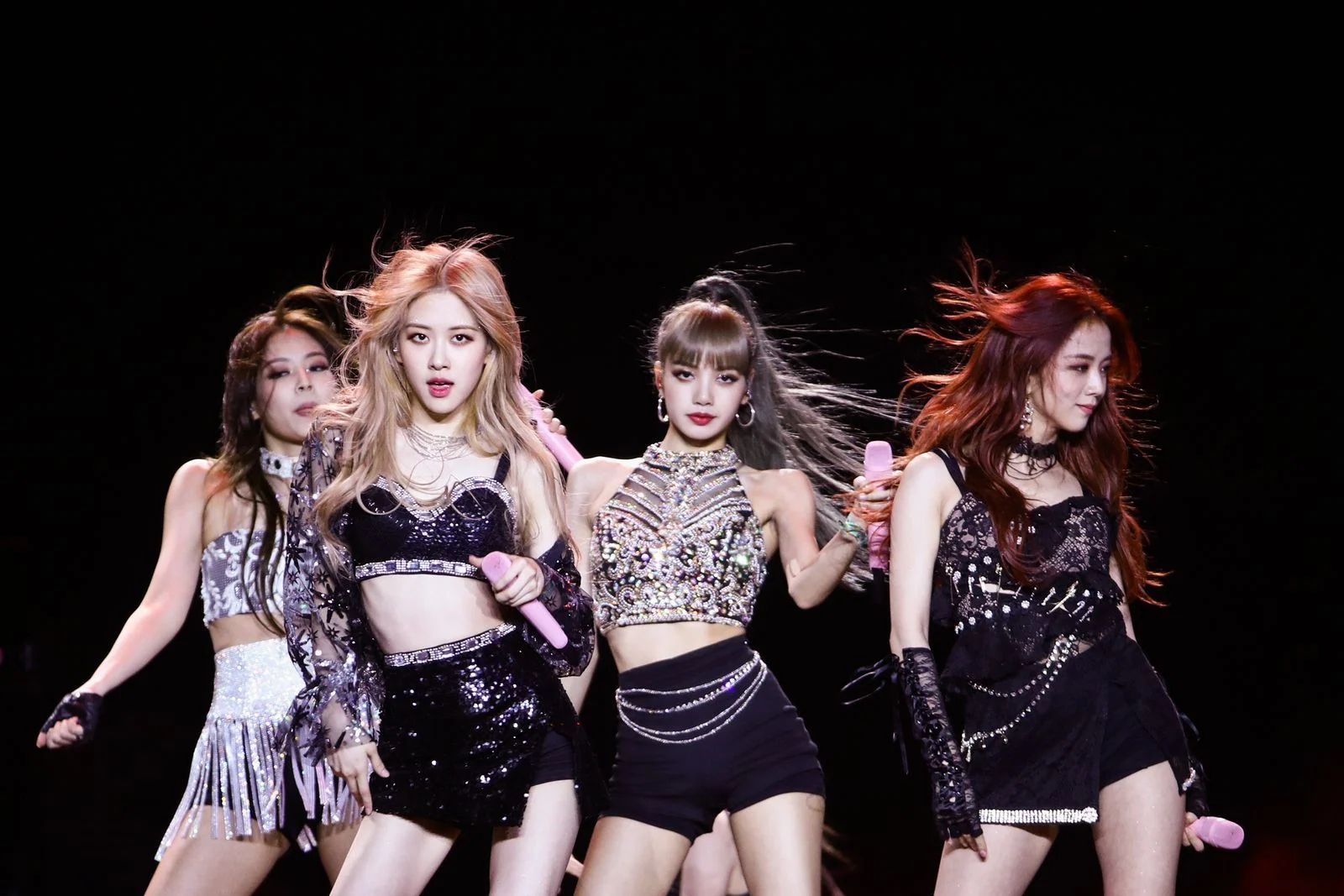
So what is K-pop?
Kpop music started as Korean pop music. It began in South Korea and spread around the world. When you hear K-pop songs you will hear multiple genres in a song. You will also see multiple different elements in the performance. There is usually very specific and synchronized choreography, the story behind the Kpop songs that can be found in the videos, different languages and more!
When you listen to a K-pop song you need to look at the bigger picture and realize that it is a medium that encompasses all of the above listed items.
K-pop has expanded worldwide due to an array of factors. From the music itself, to rigorous training and development programs, to visual storytelling and synchronized choreography, to the digital age with online music streaming, to social media, to the global expansion through concerts, to the engaged and organized fans. It is a complex combination of many different items.
K-pop has been making waves worldwide. It started as an industry in South Korea but is now a global phenomenon. So what is K-pop and how did it become a global force?
In This Article
- What Is K-Pop? A Practical K-Pop Definition
- How K-Pop Began And Evolved
- How K-Pop Expanded Around The World
- Choreography, Stage Presence, And Fan Culture
- Why K-Pop’s Popularity Keeps Growing
- Where K-Pop’s Global Momentum Goes Next
- Key takeaways
- Frequently asked questions
- Understanding K-Pop’s Lasting Appeal
What Is K-Pop? A Practical K-Pop Definition
When you type the question- what is k pop into your favorite search query, chances are, you’ll get a short summary along the lines of K-pop is the name for a style of modern pop music from South Korea. While this definition is not incorrect, it doesn’t really give you much insight into K-pop. To elaborate a bit more, K-pop (Korean popular music) refers broadly to South Korean popular music, but also to the industry which produces it, and is distinguished by a production system that treats artists’ musical sound, performances, visual presentation and promotion as components of an integrated whole. This, of course, cannot fit into a short definition. In addition to this, K-pop music isn’t limited to any particular genre of music, with K-pop idol groups and soloists performing a variety of styles. The genre can encompass a range of styles including dance-pop, electronic music, R&B, rock and rap. Modern K-pop artists often incorporate both pop and hip-hop influences from western music.
Trainee system Before a K-pop artist makes his/her debut, he/she will have to train, usually at the agency that s/he will eventually perform for. During this process, trainees learn singing and dancing, may study foreign languages, and learn various other skills such as how to speak in front of the media. The artists are usually evaluated periodically, and only a few of them get to debut. This system requires a lot of time, discipline, and effort from a trainee, and there is no guarantee that a trainee will debut. For example, G-DRAGON spent 11 years training for two different agencies. In addition to training these groups, agencies are also responsible for many other aspects of their groups, including concepts, group schedules and member roles, and fan interaction. The above has been the system used to produce the extraordinarily well-choreographed K-pop performers we know today. What is K-pop? K-pop, in essence, is not just music. K-pop also includes an industry and a culture, both which are highly active and constantly evolving.
K Pop Meaning In Music And Culture
But what makes K-Pop K-Pop? K-pop is Korean pop music. But what does that make the “K”? Geographical boundaries are not what creates a K-Pop genre. The “K” in K-pop refers to the Korean origin of the music, as the genre started within Korean pop culture and has been built within the Korean music industry. Portland State University asks what the “K” stands for in K-Pop The songs are a mixture of different languages including English, Korean and others. Although K-pop is Korean pop music, the performers as well as the producers are made of individuals from many different countries. So although the genre started in Korea and has strong ties with Korean music culture it is much larger than just the Korean peninsula. It is making its impact internationally and its influence has spread throughout the world. K-pop has had a great international influence, serving both to promote and spread Korean culture and to become a part of the globalizing of the music industry, which can often diminish cultural influences.

How K-Pop Began And Evolved
The Modern K-pop industry is often divided into eras that are colloquially known as K-pop generations. Acts are grouped by the time during which they first debuted to help track the evolution and changes in K-pop. These eras help outline the shifts and developments in training, music, technology, international outreach, fan interaction, and more. It should be noted that generations are conventions rather than concrete categorizations. There is no standard or official way to define K-pop generations, especially when it comes to acts debuting around the time of transition to a new generation. As a result, different sources will vary in describing the generation an act belongs to.
In order to truly appreciate K-pop on a historical level, it is necessary to understand the way each generation of K-pop has both adopted an agency-led idol system and adapted that system to the latest media formats. As you will see, K-pop has been built cumulatively, with each iteration maintaining certain elements but changing up the way idols debut, present musical concepts, and reach out to fans. While earlier idols made extensive use of television appearances and physical media, later generations have expanded to other Asian markets before using social media and streaming services to make more direct connections with audiences. As you will hear as you read on, each generation of idols has responded to a slightly changing set of opportunities and challenges, using music and visual media in new ways to build their careers. This has meant increased speed and frequency in idols’ communication with their audiences, an increasing importance of the music video in a given release cycle, and more opportunities for individual idols to build their careers outside of their groups.
First Generation: The Modern Foundation, 1992–2003
Music, styling, and television choreography: what were the first-generation of idols made of? Music A lot of the first generation’s music was influenced by western pop, dance and rap songs. This first generation is the reason for idol groups. It started the system we see now for groups, where they are trained by agencies. Styling The first generation didn’t just create the idol system, they also helped define what idols are. Not just singers but entertainment acts. The agency not only worked on creating the song and group concept, but also the choreography, styling, and TV performances. This created the foundation for future entertainment companies to build on and adjust in order to create bigger acts for local and foreign markets.
Second Generation: Regional Growth, 2003–2012
The audience is more digital, they have forums, fanclubs, translated content and clips of videos to keep up with the latest releases or performances. They are not necessarily watching on TV and relying on the domestic broadcast system. This means that the music industry has the tools and an enthusiastic, digitally connected global audience which wants to engage with the music.
As searches such as what does k pop stand for became relevant, during the second generation of K-pop companies strategically aimed to promote their artists overseas. The polished group concepts were attracting new listeners and the music industry made a point of focusing its promotional efforts outside of Korea, particularly in Asia. Together with these efforts was a global fanbase that was developing a connection to each other regardless of the country they came from. This created a market that the industry could promote to, and a solid audience to fall back on in the future for performances and tours.
Third Generation: Worldwide Breakthrough, 2012–2019
K-pop groups and their fans have taken full advantage of social media and streaming services. Music streaming platforms and online media have helped spread K-pop around the world. K-pop transformed from a mere export industry to a music genre with global reach. K-pop fans have organized global listening campaigns, coordinated streaming and social media activity. K-pop agencies have also benefited, with K-pop music videos receiving attention around the world when they are released. K-pop groups are regularly charting internationally, which only increases awareness of the genre. With such large support systems online, K-pop groups are able to build global followings before embarking on overseas tours or becoming subjects of foreign media coverage. Through the use of social media, the K-pop industry has bypassed traditional methods of international distribution. Fans in different countries work to spread interest in K-pop by organizing listening and social media campaigns, as well as offering translations of songs.
Fourth Generation: Digital-First Expansion, 2019–2023
The grassroots efforts by K-pop fans, who upload subtitled clips and reaction videos, produce how-to dance tutorials, and continue the conversation long after a song comes out, have turned fans into active participants and promoters. Choreography in the fourth generation has also become an integral component of a song and a group’s identity. Fourth generation acts debuted amidst an environment built around short video clips and online engagement. Consequently, choreography became recognizable; the focus was on making specific moves easily identifiable in short clips. However, synchronization and formations are still of high importance in full stage performances. In addition to this, memorable and easy to learn moves, gestures, and highlights are still choreographed in a way that invites fan participation, from challenge videos to fan performances. As a result, user-generated content has extended the span of K-pop’s promotional activities.
Fifth Generation: The Current Era, 2024–Present
What does k-pop mean? Even though its international scope has been expanding for decades, nationality is still a crucial part of its identity, especially for new listeners looking into its definition. In particular, however, the fifth generation is characterized by further crossover among new acts and, crucially, among fans. The very definition of the term K-pop is therefore under the potential of re-evaluation, both from the industry (i.e. agencies and critics) and listeners. Although it is important to keep an understanding of the history, its scope as a musical genre is still very much alive and subject to change. Especially as new groups debut, the scope of the term is re-evaluated. Fifth-generation groups are defined by the international nature of the act itself. The very nature of these acts is constructed with the international market in mind. Membership, language, and marketing may be multinational from the get-go.

How K-Pop Expanded Around The World
Why K-Pop Has Reached Such Global Success, So Quickly Digital distribution One reason that K-pop has been able to spread globally so rapidly and successfully lies with a decrease in the barrier between the music coming out of Korea and listeners all around the world thanks to digital distribution. The songs on streaming services are right there, alongside everything else, in searchable libraries. Videos and social media Through video sites and social media, it’s easy for an interested overseas listener to discover videos, interviews, performances, and other content about their favorite artists, and this information often is spread far and wide . All combined Overall, an individual wondering what is k-pop? can find a song, a choreographed dance for that song, a video of the group performing their own dance, and a clip with someone providing translated context all within minutes of each other.
Without these actions by the K-pop fandom, it’s unclear as to how the genre would have managed to maintain global interest. The availability of this music online, then, created an opening and made the K-pop genre an option for consumption by other global music fans, but the fandom ensured continued interest. The K-pop fandom was also highly organized, working to translate media content, curate artists and tracks to listen to for prospective fans, organize listening parties, and, perhaps most importantly, use the genre of K-pop to introduce others to specific performers. This, coupled with these performers beginning to tour internationally, created local fandoms and gave those already listening to the music an opportunity to gather around an exciting event.
K-pop fans are highly involved and supportive of their favorite artists. Their passion has made the locations of demand easily visible to music promoters, with fans undertaking creative projects, covering songs, setting up forums to discuss music and putting money into their fan communities and the groups and soloists they support. Estimates of the cost to be involved in fandom vary widely, ranging from as little as $100 up to $1,400+ per fan per year, dependent on such factors as the number of artists one follows and exactly what is purchased. All in all, however, it is clear that fan participation goes well beyond the reach of music distribution, pushing music to new locations, even those where it may be able to gain traction.
Choreography, Stage Presence, And Fan Culture
Why do fans watch a live stage performance for the same song again and again? What are they looking for? Choreography is the visual embodiment of music. During a choreographed performance, the group members dance in unison, which expresses not only the music but the identity of the group as well. The dancers also use specific gestures or change their formations during the dance to express certain ideas and messages carried within the song. A spotlight might be put on one of the dancers, allowing him or her to express certain concepts of the song and perform an individual moment. In a live performance of the same song, the production changes, such as the performers’ clothing, camera angles, and opening/closing, which motivates the fans to watch the same song again and again. These are the main elements of a K-pop live stage performance.
One aspect of K-pop is the light sticks, which fans use to show their fandom in venues. These sticks have different colors and patterns that can show off different things (for example, if all fans of the same group go to a show, the whole arena could be a sync’d color with meaning.) Another aspect is that K-pop songs usually have fan chants for them. Meaning there are certain beats or parts that the fans are supposed to shout back something. This is different for every song but it really makes the fans a part of the performance. So when you stumble on a search for whats k pop mean you are not only finding a music genre. You are finding and experiencing a different type of listening, a viewing and a participation.
Fans may participate in the music shows and chart, but it is completely optional. Fans of artists may get more involved in their favorite artists’ releases. For instance, some fans may enjoy watching the weekly promotion shows, or pay close attention to chart rankings for details. Fans may also participate in fan campaigns where they follow set guidelines to buy, stream or vote for a release. The level of participation is entirely dependent upon the individual fan, but many find that being involved in the process offers a sense of community. You don’t have to get involved in any of these activities and can enjoy a song simply by listening to it. There’s no need to delve deep into a group or purchase merchandise, it’s okay to just listen and enjoy music!
Why K-Pop’s Popularity Keeps Growing
The K-Pop industry is known for its large amount of content. Within a simple release, there is usually concept photos, a tease video, music video, dance practice video, stage performances, interviews, and various updates and casual videos from the artists. This variety of material is what allows there to be regular reasons for audiences to reengage with artists. Not just this, but the different media also appeal to different types of listeners. Some may only listen to the actual music, while others are more interested in the styling and visuals, the choreography, the humorous side of the artists, or the overarching concept. Through all these different types of content, different aspects of the artist can appeal to different types of people, allowing for broader audiences and longer lasting acts within the industry.
All this may seem like a far cry from the traditional sound of K-pop music, but it’s an example of a key part of what has kept K-pop popular for so long: the ability to adapt. It may be more performance-centered, but the production side of things can still be flexible, and that’s exactly what’s happened time and again. From the dance music and R&B to the rap, rock, and everything in between, producers have incorporated sounds from an array of genres, all while retaining the overall format of K-pop tracks. That versatility has allowed K-pop acts to remain true to themselves and their individual sounds while still being able to keep up with the changing tastes of music fans, which is a huge part of why the genre shows no signs of slowing down.
This is where a new listener can delve into the archive of content and see for themselves what the experience is like. All these messages, videos, clips of behind-the-scenes footage etc. build a stronger relationship between the artist and the audience through consistent engagement. The shared content is especially important for those listening from other countries who will watch the videos with subtitles and feel closer to the artist through their language. It builds a bridge between artist and audience. It keeps audiences engaged between album releases. Instead of just releasing a new song to engage your audience for one night, they’re building a constant dialogue through their use of media. The content is a constant engagement tool, keeping fans’ ears to the ground.
Where K-Pop’s Global Momentum Goes Next
Overall, the future growth of the K-Pop industry will likely depend on artists striking a balance between the international accessibility and the creative roots in South Korea that K-Pop music has. In fact, language is not always a barrier to connecting to K-Pop music. While it can certainly be helpful, especially for non-musical fans, to understand the meaning of the song via translation, there are often other entry points to enjoy K-Pop music for listeners that are unfamiliar with the language, including appealing melodies, visual storytelling, and performances. That said, K-Pop artists are taking a variety of steps to make their music more accessible to fans worldwide. Artists have been actively participating in collaborations around the world that may help them reach audiences they wouldn’t traditionally reach and releasing music in different languages to help minimize some of the language barriers.
Will K-pop be able to keep its momentum in the future? Korean pop music is taking a step forward, with a goal of attracting global audiences. The multinational groups and promotions may reflect this. It is not surprising to see agencies that launch groups for not just one but multiple global markets. However, as they try to appeal to an increasingly global audience, will groups maintain their unique identity as artists or may they simply become generic music acts? As globalization brings Korean pop music to audiences around the world, one may still expect those groups to present a distinct identity rather than being just artists who appeal to everyone with generic songs.
It can also be found in dance classes and fashion and in the interest it has sparked in a foreign language. These signs of cultural diffusion, along with the export of production practices, will outlive even the most popular K-Pop acts. Where K-Pop’s Global Momentum Goes Next Specific predictions, particularly those involving artists, key financial figures or top companies, are also likely to evolve. If this article is more than a few months old, you should re-check the latest reporting in this area before relying on it. But what will remain the same is the change at the structural level: a new audience that expects more frequent content, more direct contact with the stars they support and a greater level of cross-border reach, participation and consumption than they’ve seen in pop culture before.
Key takeaways
Key takeaways
- K-pop is more than just music, but an amalgamation of music, dance, image, and fan communities.
- Contemporary K-pop can be traced back to around 1992. Since its inception, K-pop has gone through five distinct eras.
- Influences from Western Pop and hip-hop music have helped to shape and evolve K-pop’s sound.
- Social media, online music streaming services, and dedicated fan communities all contributed to K-pop’s rise in popularity around the globe.
- K-pop’s continued expansion includes international collaborations and more globally-minded productions, such as songs in a variety of languages.
Frequently asked questions
What does K-pop stand for?
K-pop is short for Korean popular music. K-pop is so called because it originated in South Korea. The format often features many different genres, multiple languages and multinational members in its music production team and performers. K-pop is less a musical genre than an approach to the music industry that emphasizes performance. If there’s one thing in common among K-pop songs, it’s that they were all released by groups or artists in the South Korean music industry. The label encompasses a broad range of artists and genres. If you want to learn more details about the meaning of kpop check out the faq section for what does kpop stand for
Is it okay for Christians to listen to K-pop?
Are there any songs that Christians shouldn’t be listening to? K-pop comes in many different artistic styles with a wide range of lyrical content, so generalizations may not be helpful, as there are good distinctions to be made. If you are trying to discern whether a certain group or song is okay for you or not, it can be helpful to ask the same questions that Christians normally ask of entertainment media, such as What are the lyrics saying? What kind of imagery is presented? How do the artists conduct themselves? What will be the impact on me if I continue to listen? If the meaning of the song is unclear, seek out a translation of the lyrics to be sure of what the song is saying, or seek advice from a trusted leader in your faith if you continue to have questions or concerns.
Who is the most famous K-pop person?
Who is the most famous artist in K-pop? There is no objective and definitive way to determine the most famous artist in K-pop, or the most famous musical artist in general. It’s difficult to make definitive statements about fame because it changes drastically over time and depends entirely on what metric is used to define fame. Factors could include sales, tour size, social reach, influence on the industry and musical world, level of general public recognition, etc. Fame also varies by country, by generation, by social media platform, etc. However, some artists are widely accepted as highly successful. For example, G-DRAGON is known as one of the most successful artists coming out of South Korea. After an 11-year training period, he debuted. Any statements about the “most famous” artist should be based upon up-to-date evidence and should always be in reference to a particular timeframe. Check back with this FAQ for the most recent information on the subject.
Who is the highest paid K-pop idol?
No reliable ranking exists that provides definitive answers to this question. It is often helpful to look into the details and methodology of a given list when reading such reports. This might include checking the publication date, the basis of the calculations, which contracts have been taken into consideration and if the amount is an individual earnings or the idols’ share of their group’s earnings. The earnings and net worth of idols are not always reported. Estimates of net worth and earnings can vary significantly as they cannot take into account an idol’s full financial interests, such as private investments or independently-owned businesses. Earnings from music, touring, endorsements, acting, businesses, investments and other sources can not always be fully accounted for. In addition, some rankings can confuse income and net worth figures.
How is K-pop different from Western pop?
So what is K-pop? What is the most unique aspect that makes K-pop different from western pop? The integrated nature of K-pop.
K-pop is managed by the agencies, from preparing trainee members and allocating member roles, to producing each release, to choreographing the performance, deciding on the visual concept of the release and producing a consistent output of media, and promoting fan activities, and so on. All these are integrated well within each release cycle. Western Pop does utilize many of the same components, but to varying levels and not always as consistent a system, to produce music and promote the releases. Is K-pop different in musical genre? The genres of music that K-pop and Western Pop utilize are deeply intertwined. Each one takes heavily from the other, so in that sense they’re quite similar.
Understanding K-Pop’s Lasting Appeal
K-pop has evolved and grown in popularity over five generations, adapting to international trends while cultivating its own musical sound. What is it about K-pop that continues to draw fans, even as each generation brings a new wave of artists? What is K-pop? K-pop is much more than a musical genre, encompassing an entire industry built around a performance-based music that often involves specific training regimens for its performers, specific concepts for musical releases, and accompanying choreography. The industry is also strongly dependent on effective marketing strategies via digital media and cultivating a strong, well organized fanbase as a driving factor. Over its five generations, K-pop has incorporated many global influences, but has also developed its own consistent ways of presenting its music and engaging listeners.
The catchy nature of K-pop songs and their compelling lyrics also plays a role in capturing listeners’ interest. The music videos and live shows are highly produced and choreographed, offering audiences visually stunning performances that are worth watching multiple times. All of these factors contribute to the genre’s lasting appeal.
Technology also plays a pivotal role in K-pop’s success in the music industry. Platforms like streaming and social media allow music to be consumed by a global audience instantly. Artists are releasing music in a variety of languages for audiences worldwide and touring to build and strengthen these global fandoms locally.
Ultimately, the genre’s continued success and expansion around the world is not an accident. Rather, its growth can be attributed to an intricate combination of factors ranging from the songs, the industry system, and visuals, to fans and their dedication to sharing and engaging with this music.