From Aretha Franklin’s gospel-rooted power to Billie Holiday’s heartbreaking restraint, the best female singers of all time changed how we listen and what we expect from a voice. This ranking covers 30 legendary female vocalists across soul, pop, rock, country, and jazz, judged by vocal ability, cultural impact, and lasting legacy. Whether you’re settling a debate or building the perfect playlist, this is the list.
I’ve spent over a decade writing about music, and there is one question that never gets old: who is the greatest female singer of all time? It sounds simple. It isn’t. Ask a jazz historian and they’ll tell you Ella Fitzgerald. Ask someone who grew up in the 1990s and they’ll say Whitney Houston before you finish the sentence. Ask the editors at Rolling Stone and you’ll get a list that sparked arguments for months.
What we’ve built here is different from the standard ranking. This isn’t just a chart of the best female singers ever by commercial success or critical consensus alone. We looked at vocal ability, genre influence, historical impact, and the kind of performances that make you stop whatever you’re doing and just listen. The best female vocalists aren’t always the loudest or the ones with the widest range. But they are always unforgettable.
In This Article
- Who Is the Greatest Female Singer of All Time?
- How We Ranked the Greatest Female Singers of All Time
- The 30 Best Female Singers of All Time, Ranked
- How the Greatest Singers of All Time Lists Compare
- Best Voices by Genre: Soul, Pop, Rock, Country, and Jazz
- Most Successful Female Artists vs. Best Vocalists
- Who Is the Best Female Singer in the World?
- Essential Songs to Hear First
- Albums, Playlists, and Biopics Worth Exploring
- Frequently Asked Questions
- The Voices That Will Not Be Forgotten
Who Is the Greatest Female Singer of All Time?
Short answer: Aretha Franklin. The “Queen of Soul” topped both Rolling Stone’s 2008 and 2023 lists of the greatest singers of all time, male or female, and most critics still put her first. In our own ranking below, the top three are:
- Aretha Franklin – unmatched power, gospel feeling and influence.
- Umm Kulthum – the voice of the Arab world and the greatest singer outside the Western canon.
- Whitney Houston – the benchmark for breath, dynamics and pitch in pop.
How We Ranked the Greatest Female Singers of All Time
Any honest list of the greatest female singers of all time needs to start with the hard question: ranked by what, exactly? Raw vocal power is one measure. But a voice that can crack a stadium wall isn’t automatically more important than one that can crack your heart open in a quiet room. Great singers of all time, male or female, earn their place through a combination of things that don’t always overlap neatly: the quality of their instrument, what they did with it, and whether the world was different because of them.
This ranking weighs three things equally. First, vocal ability: range, control, tone, phrasing, and what musicians call tessitura, the zone where a voice truly lives and sounds its best. Second, influence: did this singer change how other people sang? Did she open doors for genres, styles, or artists who came after her? And third, legacy: does the music hold up? Are the great women singers on this list still worth listening to today, not as museum pieces, but as living proof that certain voices transcend their moment?
The best women singers of all time are also the ones who refused easy categorization. Aretha Franklin was a gospel singer and a soul singer and a feminist icon and a jazz pianist, sometimes all in the same song. Whitney Houston was technically flawless and emotionally raw at the same time. Billie Holiday had a small voice by any technical measure, and she remains one of the most powerful singers in American history. Top women singers of all time, in other words, tend to break whatever rules you try to apply to them.
Vocal Power, Control, and Distinctiveness
When we talk about the best singers of all time, “great voice” doesn’t just mean volume or the ability to hit high notes. It means tone: the quality that makes you recognize a voice in the first three seconds. It means phrasing: the choice of when to rush a note, hold it, or let it fall away. And it means live performance, because a best female voice that can only survive in a recording studio is a different thing from one that can fill an arena without AutoTune and leave the audience shaken. Whitney Houston, Aretha Franklin, and Celine Dion are benchmarks here, not because they’re the only great ones, but because they defined what “control” sounds like at its absolute peak.
Influence, Legacy, and Commercial Reach
Vocal greatness and commercial success don’t always go together, and that’s exactly why both matter. Any honest conversation about the best singers of all time, and the top 10 female singers of all time specifically, has to include artists who shaped not just charts but entire genres: soul, jazz, country, and pop would all sound different today without them. We also considered crossover appeal, because the singers who could speak to multiple audiences, across genres, decades, and cultures, tended to leave the deepest marks. A voice that sells 200 million records and inspires the next generation of artists is doing something that pure technique alone can’t explain.
The 30 Best Female Singers of All Time, Ranked
Here’s the thing: any list of the top 50 female singers of all time is going to start an argument. That’s the point. What follows is our ranking of the top 30, with each entry noting the artist’s genre, her defining vocal quality, and one essential song that captures what makes her irreplaceable. The top 20 best female singers of all time, in particular, are not just technically brilliant; they each changed something fundamental about what popular music could be.
We’ve organized the list into three tiers. The first tier covers singers who defined their genres. The second tier covers icons whose voices became instantly recognizable worldwide. And the top tier covers the singers who, by almost any measure, stand at the summit of the form. The top female singers of all time in that final group are not just great; they’re the reason the conversation exists in the first place. Famous singers female and male alike have cited them as the reason they picked up a microphone.
30–21: Genre-Shaping Voices
This tier contains some of the best singers in history, artists who often get overlooked in top-ten debates but who fundamentally shaped what came after them. Janis Joplin (30) brought raw, uninhibited rock performance to female vocals in the 1960s. Lata Mangeshkar (29), the most celebrated playback singer in Indian cinema, recorded in dozens of languages across more than seven decades. Kate Bush (28) treated her voice as a theatrical instrument for storytelling. Ann Wilson of Heart (27) showed that a woman could front a hard rock band with operatic power and hold it across decades. Celia Cruz (26), the Queen of Salsa, carried Afro-Cuban vocal tradition from Havana to New York and the world. Judy Garland (25) remains a benchmark of emotional phrasing. Joni Mitchell (24) turned a shifting, unusual voice into one of the most influential songwriting instruments of her era. Linda Ronstadt (23) moved between rock, country, standards and Mexican canciones with equal conviction. Gladys Knight (22) and Patti LaBelle (21) round out this tier, two soul voices of remarkable range and staying power.
20–11: Icons With Unmistakable Voices
These are the iconic female singers whose voices you know in under two seconds. Dionne Warwick (20) brought cool, precise phrasing to the Bacharach and David songbook. Patsy Cline (19) set the standard for emotional phrasing in country music. Adele (18) built her reputation on emotional directness and breath control that makes her ballads feel like confessions. Barbra Streisand (17) brought Broadway technique and pinpoint control to pop. Dolly Parton (16) built a bright, fluttering soprano that crossed country and pop with total authority. Chaka Khan (15) combined a wide range with rhythmic agility in funk and R&B. Diana Ross (14) defined the Motown crossover sound. Nina Simone (13) fused classical piano training, jazz and protest into a voice like no other. Etta James (12) moved between blues grit and the soaring ballad “At Last.” Tina Turner (11) brought a kinetic, chest-voice power to rock and soul that few singers have matched on stage.
10–1: The Defining Vocal Legends
The top 10 female singers of all time, by almost any serious measure, are these ten names. Amy Winehouse (10) brought a contralto with jazz-inflected phrasing that influenced an entire generation of British soul artists, including Adele, who said Winehouse paved the way for artists like her. Beyoncé (9) is a mezzo-soprano with close to a four-octave range, the ability to dance at full athletic intensity while belting, and a catalog that spans R&B, pop, country and orchestral soul. Celine Dion (8) is a lyric soprano with extraordinary pitch stability, the kind of singer who can hold a sustained note in “My Heart Will Go On” without wavering and make it feel natural. Maria Callas (7) revived the Italian bel canto tradition through sheer dramatic weight. Billie Holiday (6) had a small instrument by technical standards, and she is still one of the most important singers of the 20th century because of what she did with back-phrasing and emotional honesty. Ella Fitzgerald (5) is the greatest vocal instrumentalist in jazz history, a singer who treated her voice as a horn capable of improvising across three octaves. Mariah Carey (4) holds the record for the most weeks at number one in Billboard Hot 100 history, and her five-octave range with a controlled whistle register makes her the benchmark for pure technical scope. Whitney Houston (3) sold an estimated 170 to 200 million records, and her 1992 rendition of “I Will Always Love You” is the definitive showcase of breath, dynamics and pitch at the same moment. Umm Kulthum (2) is the greatest female singer outside the Western canon: a pan-Arab cultural institution whose voice, trained in Quranic recitation, could invoke tarab, a state of musical ecstasy, in audiences across the Arab world. And at number one: Aretha Franklin. Her voice is still the benchmark in soul, gospel and popular music, and it is what she did with it, the gospel urgency, the rhythmic authority, the feeling that every note was both a performance and a prayer, that puts her at the top of this list.
| Rank | Artist | Voice Type | Signature Song | Key Achievement |
|---|---|---|---|---|
| 1 | Aretha Franklin | Falcon Soprano (Mezzo-Soprano extension) | Respect | #1 on Rolling Stone Greatest Singers list, 2008 and 2023 |
| 2 | Umm Kulthum | Dramatic Soprano | Inta Omri | Pan-Arab cultural icon; monthly radio broadcasts drew millions across the Arab world |
| 3 | Whitney Houston | Spinto Soprano | I Will Always Love You | Estimated 170-200 million records sold worldwide |
| 4 | Mariah Carey | Coloratura Light Lyric Soprano | Vision of Love | 19 Billboard Hot 100 number-one singles; most weeks at #1 in Hot 100 history |
| 5 | Ella Fitzgerald | Lyric Soprano | How High the Moon | 13 Grammy Awards; over 40 million records sold |
| 6 | Billie Holiday | Mezzo-Soprano | Strange Fruit | Pioneer of back-phrasing; “Strange Fruit” (1939) sold one million copies |
| 7 | Maria Callas | Soprano Assoluto | Casta Diva | Revived the Italian bel canto tradition; one of the greatest opera singers of the 20th century |
| 8 | Celine Dion | Lyric Soprano | My Heart Will Go On | Over 200 million records sold; Titanic soundtrack became one of the best-selling albums in history |
| 9 | Beyonce | Coloratura Mezzo-Soprano | Halo | 35 Grammy Awards, the most won by any artist |
| 10 | Amy Winehouse | Contralto | Back to Black | 5 Grammys for Back to Black; direct influence on Adele, Lady Gaga, and a generation of British soul artists |
How the Greatest Singers of All Time Lists Compare
Here’s where it gets interesting. Most major lists of the greatest singers of all time, the ones published by Rolling Stone, Billboard, or major music publications, don’t just rank voices. They rank legacies. And that distinction matters more than most people realize. A list that prioritizes technical vocal ability will look very different from one that prioritizes originality, influence, and catalog depth. The best female vocals of all time, measured purely by range, phrasing, and control, don’t always belong to the singers who topped the charts.
The clearest example of this tension came when Rolling Stone published its 200 Greatest Singers list in 2023. The editors explicitly said the list was about “greatest singers,” not “greatest voices,” and that what mattered most was originality, influence, the depth of an artist’s catalog, and the breadth of their musical legacy. That’s a legitimate framework. But it led to results that surprised a lot of people: Celine Dion didn’t make the list at all, which many fans called inexcusable given her technical precision and global sales figures. And the greatest voices of all time, singers like Celine, Jennifer Hudson, and Dionne Warwick, were conspicuously absent.
The honest answer is that no single list can do all of this at once. Commercial success, vocal technique, cultural influence, and personal artistic vision pull in different directions. A singer who is technically perfect may lack originality. A singer who changed everything may have had a relatively limited voice. The most useful approach is to read multiple lists with an eye for what each one is actually measuring, and then form your own view.
“A voice can be gorgeous like Mariah Carey’s, rugged like Toots Hibbert’s, understated like Willie Nelson’s, slippery and sumptuous like D’Angelo’s, or bracing like Bob Dylan’s.”
Rolling Stone, “200 Greatest Singers of All Time,” 2023
Rolling Stone’s 200 Greatest Singers of All Time
The 2023 Rolling Stone list was a significant departure from the magazine’s original 2008 ranking, which was compiled through an elaborate voting process involving 179 prominent musicians and leaned heavily toward classic rock and soul artists from the 1960s and 1970s. The 2023 version was compiled internally by the publication’s staff. Aretha Franklin topped both lists. But the new version introduced international voices, including Indian playback singer Lata Mangeshkar and salsa queen Celia Cruz, alongside contemporary artists like Billie Eilish and SZA. The result was a richer, more globally representative picture of what singing has actually looked like across a century of popular music.
Best Voices by Genre: Soul, Pop, Rock, Country, and Jazz
One of the gaps in most female vocalists rankings is that they try to compare apples to entire orchards. A jazz voice and a rock voice are judged by completely different standards. Billie Holiday’s greatness is not the same kind of greatness as Janis Joplin’s, even though both were mezzo-sopranos with fierce emotional range. So here’s a more useful frame: the best female voices of all time, sorted by what they actually did within their genres and why those performances still matter.
Top female vocalists in jazz, soul, pop, country, and rock each developed distinct technical vocabularies. Soul singers used gospel call-and-response and melismatic runs. Jazz vocalists treated the voice as an improvising instrument, closer to a saxophone than a classical soprano. Pop vocalists learned to work the microphone, finding intimacy in studio recording that would have been impossible in an opera house. Rock singers learned to distort, project, and sustain through loud instrumentation without damaging their voices. And country vocalists built careers on storytelling phrasing, the precise emotional weight of a single word placed just behind the beat.
After a decade covering music where these worlds intersect, I’ve come to believe that the most interesting female vocalists are the ones who learned from multiple traditions at once. Aretha Franklin was a gospel and jazz-trained pianist before she was a soul singer. Whitney Houston grew up in the gospel tradition of her mother, Cissy Houston. Amy Winehouse absorbed 1960s Motown, jazz phrasing, and British pub music into something that belonged entirely to her. The singers who cross genres tend to create the most lasting work, because they bring more tools to the task of making something new.
Female Soul Singers Who Changed Vocal History
The female soul singers who defined the genre did something specific: they brought the emotional intensity and technical vocabulary of the African-American church into mainstream popular music. Aretha Franklin was the central figure here, but Chaka Khan deserves equal attention. Khan’s voice, a powerful women singers benchmark in funk and R&B, combined a wide range with a rhythmic agility that very few vocalists have matched. Her work with Rufus in the 1970s and her solo career in the 1980s demonstrated that female soul singers could lead and innovate, not just interpret. Gospel phrasing, the way a voice bends a note or adds a vocal ornament at the moment of highest emotional tension, became the shared language of soul, and these women invented the dialect.
Pop and Adult Contemporary Powerhouses
Pop singers at the highest level are not just entertainers. They are precision instruments. Whitney Houston’s ability to sustain a perfectly supported note through the climax of “I Will Always Love You,” maintaining pitch, resonance, and emotional weight without audible strain, is a technical feat that most trained singers cannot replicate. Celine Dion’s forward vocal placement, drawing on her Quebecois singing tradition, gave her voice a metallic clarity that could cut through any instrumentation. And Mariah Carey, one of the most important female pop artists of the 20th century, built a five-octave instrument that included a controlled whistle register capable of articulating words and executing rapid melismatic runs with absolute pitch accuracy. These best female voices set a standard that defined what pop vocal production expected for two decades.
Rock, Country, and Jazz Standouts
Old school female singers in rock and country are often undervalued in vocal rankings that favor classical technique. Tina Turner’s approach to rock singing, a kinetic physical performance combined with a chest-register distortion that pushed against the limits of amplified sound, was genuinely new in the 1970s. Stevie Nicks built a career on a voice that was by no means technically perfect but was entirely irreplaceable in its textural quality. Old singers female like Patsy Cline and Loretta Lynn demonstrated that country storytelling required its own precision, a particular kind of emotional honesty in phrasing that you can’t fake. And in jazz, Ella Fitzgerald and Billie Holiday still represent the two poles of the form: absolute technical mastery on one side, and absolute emotional truth on the other. Both are essential. Both are incomparable.
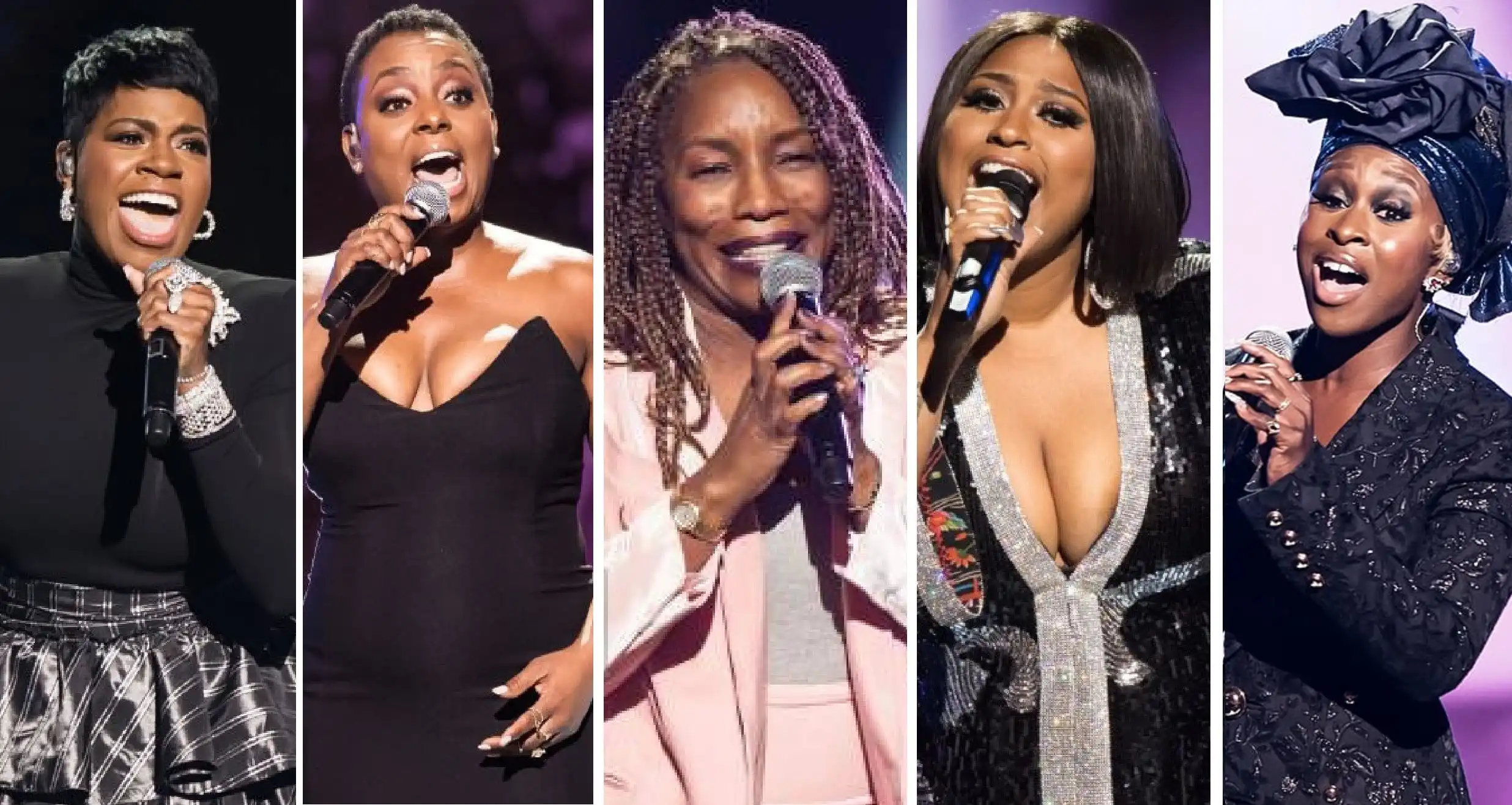
Most Successful Female Artists vs. Best Vocalists
Here’s the part most people miss when they argue about the greatest female singers: commercial success and vocal greatness are related, but they’re not the same thing. Madonna is one of the best-selling female artists in music history, and she has consistently ranked lower on vocal-ability lists than on commercial-impact lists. That’s not a knock on Madonna. It’s an acknowledgment that what made her extraordinary, her visual identity, her production instincts, her ability to read and define pop culture, wasn’t primarily about the quality of her singing voice. The same tension shows up across the list.
According to Chart Masters’ 2026 analysis of best-selling female artists, the top sellers are dominated by artists who combined vocal ability with massive production machines, strategic reinvention, and cultural timing. Whitney Houston, at number five on the all-time list with an estimated 170 to 200 million records sold, is probably the clearest case of vocal greatness and commercial dominance lining up perfectly. Mariah Carey, with 19 number-one Billboard Hot 100 singles, is another. But Taylor Swift, now the top-selling female artist of all time, has built her record-breaking catalog on songwriting and fan connection far more than on what any vocal coach would call pure instrument quality. The best female vocalist of all time and the best-selling female artist of all time are not the same person, and understanding that distinction makes both conversations more interesting.
So what does that tell us? It tells us that “best” is always doing multiple jobs at once. When someone searches for the best woman vocalist of all time, they often mean: whose voice moves me most? When someone asks for the most successful female artist, they mean: whose records sold, whose tours sold out, whose name is everywhere? Both questions are worth asking. They’re just different questions.
Commercial Success vs. Vocal Greatness: What the Numbers Say
Best vocalists and best-selling artists diverge most sharply when you look at the 1990s, the decade when the Vocal Trinity (Whitney Houston, Mariah Carey, and Celine Dion) dominated both categories simultaneously, a rare alignment. Outside that decade, the split is more common. Rihanna, one of the best-selling female artists of all time, is not primarily ranked among the top female vocalists. Adele, who has sold over 120 million records, is considered a great singer and a great commercial force, but she’s rarely placed above Aretha or Whitney on pure-voice rankings. The data shows that what drives sales over a long career is a combination of voice, personality, production, and timing, and that’s what separates a pop phenomenon from a “best vocalists” debate.
| Artist | Est. Records Sold | Voice Classification | Position on Vocal Rankings | Key Chart Record |
|---|---|---|---|---|
| Madonna | 300+ million | Mezzo-Soprano | High on artist rankings; lower on pure vocal lists | 2nd best-selling female artist of all time (historical) |
| Whitney Houston | 170-200 million | Spinto Soprano | Consistently top 3 on vocal lists | Only artist with 7 consecutive #1 Hot 100 singles |
| Mariah Carey | 200+ million | Coloratura Light Lyric Soprano | Top 5 on vocal lists | Most weeks at #1 in Billboard Hot 100 history |
| Celine Dion | 200+ million | Lyric Soprano | High on vocal lists; excluded from Rolling Stone 2023 | Titanic soundtrack among best-selling albums of all time |
| Taylor Swift | 300+ million (est.) | Light Soprano | Top-seller; rarely in top vocal ability lists | 6 Billboard Top Female Artist wins (most ever) |
Who Is the Best Female Singer in the World?
The short answer? It depends on what you’re measuring. Who is the best singer in the world if you mean raw vocal technique? Mariah Carey’s documented five-octave range and whistle register make a serious case. Who is the best singer in the world if you mean emotional impact and legacy? Aretha Franklin won that debate on both the 2008 and 2023 Rolling Stone lists, and most musicologists would agree. Who is the best female singer in the world right now, among living artists? That’s where the conversation gets genuinely contested.
Beyonce’s case rests on technical range, artistic vision, genre versatility, and live performance under demanding physical conditions. Adele’s case rests on emotional directness and a voice that communicates with an almost frightening intimacy. Celine Dion, when healthy, has arguably the most technically controlled voice of any living pop vocalist. And then there are singers from outside the Western pop mainstream, voices in Arabic classical music, Indian classical traditions, and Latin American folk forms, who would rank among the greatest women singers ever by any technical measure, but who simply don’t appear on English-language lists. Who is the best singer in the world is a question that keeps expanding the more honestly you try to answer it.
The best singer of all time female, by the combined weight of critical consensus, technical analysis, cultural impact, and sheer durability, is Aretha Franklin. That’s not a particularly controversial position. What is more interesting is the way the question forces you to think about what a singing voice actually does, and why it matters. The best female singer ever isn’t just someone who hit the highest notes or sold the most records. She’s someone who, when she opened her mouth, made you feel something you didn’t expect to feel. The best female singer of all time did that, consistently, across decades, for audiences who didn’t always share her background or her beliefs. That’s a rare thing. And the list of singers who’ve managed it is shorter than any ranking can capture.
Why the Answer Depends on What You Value Most
Think about it this way: a classical vocal coach, a gospel choir director, a jazz critic, and a pop radio programmer would each give you a different answer to who is the best female vocalist of all time, and each of them would be right within their own framework. Technical vocal training prizes range, breath support, and register control. Gospel music prizes emotional surrender and the ability to carry a congregation. Jazz prizes improvisation, rhythmic flexibility, and timbral creativity. Pop prizes the hook, the moment of connection, the verse-chorus structure that lives in your head for days. The best female singers in history tend to be the ones who understood at least two of these frameworks at the same time. That’s why so many great pop and soul singers come from gospel backgrounds. Gospel teaches you both the technique and the emotional permission to use it.
Essential Songs to Hear First
If you’re new to this list, or if you want to share it with someone who’s just starting to explore the greatest female voices in music history, this section is your shortcut. The songs below aren’t necessarily the biggest hits, though some of them are. They’re the recordings that best demonstrate what made each famous girl singer on this list singular. Listen to these tracks and you’ll understand within the first chorus why the debate exists at all.
Some of these songs are technically astonishing. Some are emotionally devastating. A few are both at once, which is the rarest combination of all. Each one captures one of these famous girls singers at the exact moment when everything she’d learned, technically, emotionally, and culturally, came together in a single performance. You can build a playlist around this list and spend an afternoon with some of the most consequential music ever recorded.
Worth pausing on this for a second: a single essential song per singer is an impossible task, and it’s deliberately incomplete. These are entry points, not verdicts. After you’ve heard “Strange Fruit,” go find Billie Holiday’s “God Bless the Child.” After “Respect,” find Aretha Franklin’s live gospel album Amazing Grace. After Whitney Houston’s “I Will Always Love You,” find her 1991 national anthem performance at the Super Bowl. The essential song is always a door, not a destination.
One Must-Hear Song per Top-Ranked Singer
- Aretha Franklin: “Respect” (1967) — the definitive statement of rhythmic authority and gospel power in three minutes.
- Umm Kulthum: “Inta Omri” (1964) — a 90-minute live performance that demonstrates tarab, the Arabic concept of musical ecstasy, at its most total.
- Whitney Houston: “I Will Always Love You” (1992) — the opening a cappella verse alone is a masterclass in breath support and emotional intelligence.
- Mariah Carey: “Vision of Love” (1990) — the debut single that announced a five-octave voice and rewrote pop-R&B vocal phrasing.
- Ella Fitzgerald: “How High the Moon” (1960 live) — scat improvisation as pure musical conversation, flawless pitch across three octaves.
- Billie Holiday: “Strange Fruit” (1939) — the recording that changed what music was allowed to say and how silence could be used as a vocal tool.
- Maria Callas: “Casta Diva” from Norma (1954) — the bel canto soprano assoluto voice in its fullest expression.
- Celine Dion: “All By Myself” (live) — pitch stability and dynamic control under conditions of maximum emotional pressure.
- Beyonce: “Halo” (live at Glastonbury, 2011) — four-octave range, live, while headlining Glastonbury’s Pyramid Stage.
- Amy Winehouse: “Back to Black” (live) — jazz-inflected back-phrasing and contralto tone that no one has managed to replicate since.
Albums, Playlists, and Biopics Worth Exploring
Once you’ve heard the essential songs, the next step is to go deeper. The greatest female singers of all time didn’t make one great track; they made entire bodies of work that reward repeated listening across different moments in your life. The albums listed below are the ones that showcase each artist’s full range, literally and figuratively, and that give you a real sense of what a complete musical vision looks like when it’s executed at the highest level.
For legendary female singers from earlier eras, the reissue and remaster market has never been better. Billie Holiday’s original Columbia recordings have been remastered multiple times, with the 2001 Verve reissue being the most widely recommended for sound quality. Aretha Franklin’s I Never Loved a Man the Way I Love You (1967), her first Atlantic Records album and the one that included “Respect,” is available in a beautifully remastered version. Ella Fitzgerald’s Songbook series, eight albums recorded for Verve between 1956 and 1964, is the most comprehensive showcase of jazz vocal artistry ever committed to record. Vinyl reissues of several of these are now available through specialty labels, and for girl singers who grew up with digital audio, hearing these recordings on a properly set-up turntable is a genuinely different experience.
For the more recent names on this list, streaming playlists make it easy to build a survey. Spotify’s “The Sound of Vocal Jazz” and “Queens of R&B” playlists are reasonable starting points. But if you want something more curated and personally selected, this site’s music guides go deeper into world music and diaspora artists who don’t always make the mainstream lists, including voices from North Africa, the Arab world, and the French music scene that deserve far more attention than they get.
Greatest-Hits Albums and Vinyl Reissues
- Aretha Franklin: I Never Loved a Man the Way I Love You (1967) and the Queen of Soul box set for a full career survey.
- Billie Holiday: The Complete Decca Recordings or the Verve Masters Collection for the canonical recordings.
- Ella Fitzgerald: The Songbook series (Cole Porter, Duke Ellington, George & Ira Gershwin) on Verve, 1956-1964.
- Whitney Houston: Whitney (1987) and The Bodyguard: Original Soundtrack Album (1992) together capture the full arc.
- Mariah Carey: Music Box (1993) and The Emancipation of Mimi (2005) for two distinct peaks of her career.
- Beyonce: Lemonade (2016) and Renaissance (2022) for the most ambitious work of her solo catalog.
- Amy Winehouse: Back to Black (2006) in the deluxe edition, which includes the original demos.
- Celine Dion: Let’s Talk About Love (1997) for the most concentrated display of her lyric soprano at its peak.
For music biopics and documentaries, the options have expanded considerably in recent years. Respect (2021), starring Jennifer Hudson as Aretha Franklin, captures the gospel roots and the Atlantic Records years with reasonable fidelity. Whitney (2018), directed by Kevin Macdonald, is probably the most honest and emotionally complete portrait of Whitney Houston’s life and voice. Amy (2015) remains one of the best music documentaries ever made, capturing Amy Winehouse’s genius and the circumstances that surrounded it with devastating clarity. These music biopics are worth watching not just as biography, but as studies in what it costs to have a voice like the ones on this list.
Who is the greatest female singer of all time?
By the most widely cited critical consensus, Aretha Franklin is the greatest female singer of all time. She topped both the 2008 and 2023 Rolling Stone lists of the greatest singers of all time, male or female. Her voice, classified as a rare falcon soprano with a documented range from G2 to E6, combined the rich lower register of a mezzo-soprano with the power and extension of a dramatic soprano. But what made her irreplaceable wasn’t the technical range alone. It was what she did with it: the gospel urgency, the rhythmic authority, the sense that every performance was both technically precise and completely emotionally honest. That combination, the discipline and the abandon at the same time, is what puts her above every other name on this list for most serious critics and musicians.
Who is the best female vocalist of all time, and is there one definitive answer?
There isn’t one definitive answer, and that’s actually what makes the question worth asking. Who is the best female vocalist of all time depends entirely on the criteria you prioritize. If you’re measuring pure vocal range and technical agility, Mariah Carey’s five-octave instrument with its controlled whistle register is the technical benchmark. If you’re measuring emotional depth and phrasing innovation, Billie Holiday’s back-phrasing style changed jazz and popular music forever, even though her voice was smaller than most other candidates. If you’re measuring global cultural impact, Umm Kulthum, the Star of the East, had a reach across the Arab world that dwarfs almost every Western pop singer on this list. The best girl singer depends on which tradition you’re asking, and the honest answer is that different traditions produce different answers, all of them legitimate.
What makes someone one of the best female voices of all time?
The best female voices of all time share a few qualities that go beyond range or power. First, distinctiveness: you should be able to identify the voice in under three seconds without seeing a name or an album cover. Second, consistency: the voice should hold up live, under pressure, and across a long career, not just in one famous studio take. Third, influence: the greatest voices tend to create a generation of singers who reference them, try to learn from them, and sometimes simply try to replicate them. And fourth, what musicians sometimes call “the thing you can’t teach,” the quality of emotional presence that makes a performance feel less like a performance and more like a direct transmission of something real. The best female voices of all time have all four of these qualities simultaneously. Most voices have one or two. Having all four is what separates the legends from the merely excellent.
Who’s the best female singer of all time according to critics vs. fans?
Critics and fans often agree on the top names but disagree on the order. Critics consistently rank Aretha Franklin first, followed by Whitney Houston, Billie Holiday, and Ella Fitzgerald. Fans, especially those surveyed in online polls, tend to rank Whitney Houston first, followed by Mariah Carey and Beyonce, with Aretha Franklin just behind. The gap is partly generational: younger audiences grew up with Houston and Carey as their reference points, while older critics often cite Franklin and Holiday as the foundational figures. Who is the best singer in the world at any given moment also reflects the technology of the time: streaming has brought Mariah Carey’s “All I Want for Christmas Is You” to a new global audience, which has boosted her standing considerably. The most honest answer is that Aretha leads among critics and Whitney leads among the general public, and both positions reflect something real about what each voice meant to the people who heard it.
Who is the most famous female singer?
By global reach today, Taylor Swift and Beyoncé are the most famous female singers in the world. Historically, Madonna, Whitney Houston and Celine Dion reached similar levels of worldwide fame.
Who is the richest female singer?
According to Forbes, Taylor Swift has been the richest female musician since 2024, with a fortune estimated above $1 billion largely from her music and touring. Rihanna is also a billionaire, mainly through her Fenty Beauty business.
Which female R&B singer has the most Grammys?
Beyoncé. With 35 Grammy Awards she is not only the most-awarded woman but the most-awarded artist in Grammy history.
The Voices That Will Not Be Forgotten
After a decade writing about music, I keep coming back to the same conclusion: the greatest female singers of all time aren’t great because of any single quality. They’re great because they refused to be only one thing. Aretha Franklin was technically brilliant and emotionally raw. Billie Holiday was understated and unforgettable. Whitney Houston was classically supported and gospel-trained at the same time. These apparent contradictions aren’t weaknesses. They’re exactly what makes these voices last.
But the real question is this: why does the debate matter? Because the voices we call great tell us something about what we value. When Umm Kulthum can fill an entire city with silence by beginning a phrase, and Aretha Franklin can make “R-E-S-P-E-C-T” feel like a constitutional amendment, they’re doing something that goes beyond entertainment. They’re using sound to make meaning. And that, more than any vocal range or chart position, is what the best singers in history have always done.
If you’re discovering any of these voices for the first time, start with the essential songs list above. If you want to go further into the world of music that doesn’t always make English-language rankings, especially artists from the Arab world, the African diaspora, and the intersection of folk and contemporary sound, explore what we’re building at Hindi Zahra’s fan site, a space for music that refuses to be categorized and voices that deserve far more of the world’s attention.

Leila Benkacem is a Paris-based music journalist with a decade of writing about the intersection of North African folk traditions and contemporary Western sounds. Born in Lyon to an Algerian family, she grew up between two musical worlds — her father’s cassettes of Berber songs and the French radio jazz of Sunday mornings. She discovered Hindi Zahra through a late-night set at La Maroquinerie in 2011 and has followed her work ever since. Leïla writes about world music, diaspora artists, and the quiet power of music that refuses to be categorized. She created this fan site as a personal archive and a space for others who believe Hindi Zahra’s voice deserves far more of the world’s attention.
Sources
- Rolling Stone Staff. “200 Greatest Singers of All Time.” Rolling Stone, 2023.
- Editors. “How Billie Holiday’s ‘Strange Fruit’ Confronted an Ugly Era of Lynchings.” HISTORY, A&E Networks, 2025.
- Vieira, Guillaume. “The 49 Best-Selling Female Music Artists of All Time.” Chart Masters, January 2026.
- Editors. “What Made Aretha Franklin’s Voice So Special? A Professional Soprano Explains.” Classic FM, 2026.
- Wikipedia Contributors. “Amy Winehouse.” Wikipedia, The Free Encyclopedia, 2025.