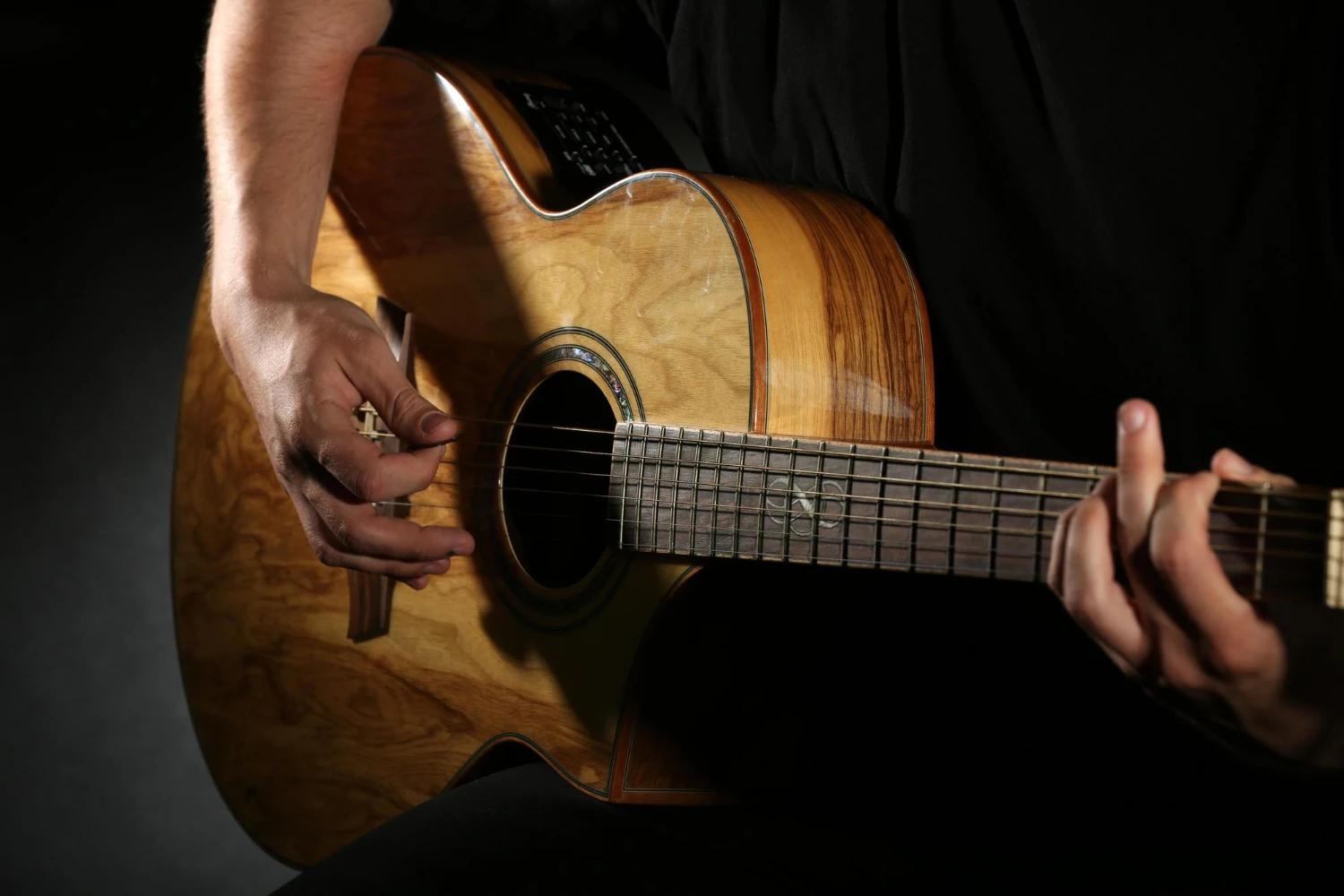
Finding the best acoustic guitar isn’t as simple as picking the most expensive one or buying whatever brand name you recognize. A guitar that sounds great for fingerpicking folk might feel completely wrong for strumming country. A beginner’s needs are genuinely different from an intermediate player’s. And the guitar that works in a recording studio is often not the one that projects best in a live acoustic setting.
This guide cuts through the usual noise. It covers what actually matters when buying an acoustic guitar, which brands are worth the money at different price points, and how to match the instrument to the way you actually play.
What Makes a Good Acoustic Guitar?
Before comparing brands and models, it helps to understand what separates a great-sounding acoustic guitar from a mediocre one. Most of it comes down to four things: tonewoods, build quality, setup, and playability.
Tonewoods matter enormously. The top (the face of the guitar) has the biggest impact on tone. Solid wood tops vibrate differently than laminate — they respond to the vibration of the strings more dynamically, and they tend to improve with age as the wood opens up. A solid sitka spruce top is the standard for good reason: it’s balanced across frequencies, durable, and responsive. Cedar tops produce a warmer sound that works beautifully for fingerpicking. Mahogany tops give a focused, midrange-forward tone.
Back and sides matter too, but less than the top. Rosewood back and sides add bass depth and complexity. Mahogany produces a warmer, more focused sound. Sapele, which has become more common as rosewood availability has declined, splits the difference fairly well.
Build quality comes down to how the guitar was put together: whether the neck joint is tight, whether the bracing inside is consistent, whether the nut and saddle are properly cut. A poorly set up guitar plays hard and sounds dull no matter what the materials are. This is why buying from a reputable dealer who does setups matters.
Best Acoustic Guitar Brands: What’s Worth Buying
A few brands consistently produce reliable, well-built instruments across price points. Here’s an honest breakdown:
- Martin: One of the oldest American guitar makers, founded in 1833. Martin’s 000, OM, and Dreadnought bodies are industry standards. Their all-solid wood guitars (the Standard Series and above) are genuinely excellent. The 000-15M and similar mid-range models offer solid mahogany construction at a reasonable price point.
- Taylor: Known for a brighter, more articulate sound than Martin, and for excellent playability out of the box. Taylor’s use of bolt-on neck joints makes adjustment and repair straightforward. Their 200 and 300 series represent very good value for intermediate players.
- Gibson: The J-45 and J-200 are iconic. Gibson acoustics have a warmer, slightly darker tone than Martin or Taylor. Quality control has been inconsistent over the years, so playing a specific guitar before buying matters more with Gibson than some other brands.
- Yamaha: Consistently delivers excellent build quality and tone at budget and mid-range prices. The FG and FS series use solid spruce tops on otherwise laminate guitars and punch well above their price. For beginners especially, Yamaha offers the best value.
- Seagull: A Canadian brand that builds all-solid wood guitars at mid-range prices. The S6 Original is one of the best value acoustic guitars available anywhere. The wild cherry back and sides give it a distinctive look and a warm, clear tone.
- Takamine: Strong mid-range options with built-in electronics, popular with performers. Their use of solid cedar tops on many models gives them a warmer, more immediate sound.
Best Acoustic Guitar for Beginners: What to Look For
If you’re starting out, the biggest mistake is either spending too little or spending too much. A $50 guitar from an unknown brand will fight you: high action, poor intonation, and a sound that doesn’t reward practice. But spending $1,500 on an all-solid wood instrument before you know whether you’ll stick with it is also unnecessary.
The sweet spot for a beginner acoustic guitar is roughly $150 to $400. In that range, you can get:
- A solid spruce or cedar top (even if the back and sides are laminate, a solid top makes a meaningful difference)
- Proper factory setup, or a guitar from a dealer who will set it up before you take it home
- A brand that will hold its value if you decide to sell it
Specific beginner recommendations: the Yamaha FG800, the Fender CD-60S, and the Seagull S6 Original. All three are well-built, play reliably, and sound good enough to motivate consistent practice. That last part matters. A guitar you enjoy playing is the best guitar for a beginner, whatever it costs.
Best Acoustic Guitars for Intermediate Players
Once you’ve been playing for a year or two and you know you’re committed, it’s worth stepping up. Intermediate players usually notice the limits of a budget guitar before beginners do — the dynamic range feels narrow, the sustain fades quickly, the tone doesn’t reward nuance.
The intermediate range ($400 to $1,200) is where all-solid wood construction becomes the standard to target. Solid top, solid back, solid sides — each piece resonating as one system. The difference in sound between a laminate guitar and an all-solid one is audible to most players after a few months of experience.
Strong picks in this range: the Taylor 214ce (with electronics, good for live playing), the Martin 000-15M (all-solid mahogany, warm and focused), the Seagull Artist Series, and the Gibson G-45 Standard. Each has a distinct character, so the right choice depends on the music you play.
Acoustic Guitar Body Shapes: Does It Matter Which Type You Choose?
Yes, significantly. The body shape affects both volume and tone. The main types of acoustic guitars by body shape:
- Dreadnought: The most common shape. Big, loud, full-bodied. Great for strumming and bluegrass. Can feel overwhelming for smaller players or for intimate fingerpicking.
- Concert (000): Smaller body, more balanced frequency response, comfortable for fingerpickers and players who sit down to play. The Martin 000 body is the standard here.
- Auditorium (OM): Slightly wider waist than the concert, good middle ground between volume and comfort. Versatile across playing styles.
- Parlor: The smallest common body shape. Intimate, quiet, historically used for blues and folk. Great for travel and smaller spaces.
- Jumbo: Bigger than a Dreadnought. Maximum volume and bass response. Popular in country music.
If you’re deciding between acoustic and electric, understanding the fundamental tonal differences helps clarify what each instrument is actually good at. The acoustic vs electric guitar difference goes beyond just whether you need an amp — it’s about the kind of music each instrument is built to express.
Do Acoustic Guitar Brands Really Matter?
Up to a point. A respected brand means consistent quality control, available replacement parts, good resale value, and usually a warranty that’s worth something. These are real benefits, especially at the higher end of the market.
But brand reputation alone doesn’t guarantee a great guitar. Two guitars from the same company made in the same year can sound noticeably different — wood is a natural material and it varies. This is why, whenever possible, you should play the specific guitar you intend to buy. Not a floor model of the same model, but the actual one.
Lesser-known brands can also produce excellent instruments. Eastman, Collings, Santa Cruz, and Bourgeois make guitars that rival or exceed the big names at comparable prices — and among serious players, they’re respected for a reason.
Acoustic guitar has been central to folk music traditions around the world for generations. Understanding what folk music is and its history gives context to why certain acoustic guitar characteristics — clarity, projection, warmth — have been prized for so long.
Frequently Asked Questions About Acoustic Guitars
What is the best acoustic guitar brand overall?
For sheer legacy, consistency, and range across price points, Martin and Taylor are the two most consistently cited names among players and luthiers. Martin has been making guitars since 1833 and their all-solid wood models represent a high standard of American craftsmanship. Taylor is known for excellent playability, particularly for newer players, and for a bright, articulate sound. Neither is universally ‘better’ — they’re different, and the right one depends on what you play and how you play it.
How much should I spend on a first acoustic guitar?
For a first guitar, the range of $150 to $400 hits a practical sweet spot. Below that, build quality tends to compromise the playing experience in ways that frustrate beginners. Above that, you’re paying for diminishing returns until you have enough experience to actually hear the difference. The Yamaha FG800 at around $200 is one of the best beginner acoustic guitars available at any price point — consistent quality, solid top, good playability.
Does an acoustic guitar need electronics?
Only if you plan to perform live or record without a microphone. Acoustic-electric guitars have a pickup and preamp built in, which lets you plug into a PA system or interface directly. If you’re learning at home, or plan to record with a mic, you don’t need electronics. Adding them later is difficult and expensive for most guitar designs, so if you think you might ever perform live, it’s worth considering a model with electronics from the start.
Is a more expensive acoustic guitar always better?
Not always, but often. Above $300, you start getting solid wood construction that genuinely improves tone and responsiveness. Above $1,000, you’re getting fine craftsmanship, premium woods, and instruments that will last decades with proper care. Above $3,000, you’re increasingly in the territory of handmade instruments and premium figured woods — real benefits for serious players, but hard to justify for casual ones. The law of diminishing returns applies. The jump from $100 to $300 is dramatic. From $3,000 to $5,000, much less so.
The Right Guitar for the Right Player
The best acoustic guitar is ultimately the one that makes you want to pick it up and play. That sounds obvious, but it matters practically: playability, weight, neck profile, and how the guitar feels in your hands all affect whether you’ll actually practice. The acoustic guitar has been essential to film music and storytelling for decades precisely because of its expressive warmth and immediacy.
Buy from a shop where you can play before you buy. Ask for a setup if it isn’t already done. And don’t overthink the brand — what matters is the specific guitar in your hands, how it sounds, and whether you enjoy playing it.
A great acoustic guitar, maintained well and played consistently, can last a lifetime. That’s a different kind of purchase than most things. Choose carefully, but don’t let perfection get in the way of starting.