People constantly ask what is folk music. You hear this term used to describe everything from ancient acoustic ballads to modern pop songs. This massive genre holds a unique place in human history.
Finding a single folk music definition requires looking at human civilization itself. Before recording studios existed, everyday people needed a way to share stories. They used simple melodies and rhythms to pass information across generations.
This guide explains everything about the folk genre. You will learn where did folk music originated and how it changed the world. We explore the deep history of folk songs and what makes them so special today.
The True Folk Music Definition
If you want to know what does folk music mean, you must look at the word itself. The term derives from the German word volk. This translates directly to the people.
A proper definition of folk music describes songs created by ordinary citizens rather than professional composers. Communities passed these tunes down orally instead of writing them on sheet music. Each singer added their own unique flavor to the melody.
When people ask what is folklore music, they usually refer to this exact oral tradition. Mothers sang these melodies to their children. Workers shouted these rhythms in the fields to keep time during hard labor.
Today, the folk music meaning often includes acoustic instruments and storytelling. However, the core identity remains unchanged. It represents the authentic voice of everyday human experience.
Where Did Folk Music Come From?
Tracing the exact origin of folk music presents a massive challenge for historians. It did not start in a single city or country. Every ancient culture on earth developed their own unique musical traditions simultaneously.
If you wonder where does folk music come from geographically, the answer covers the entire globe. African tribes used complex drum rhythms to communicate between villages. European peasants sang ballads to entertain themselves during long winters.
The folk music origins in North America offer a fascinating study of cultural blending. Immigrants brought their traditional songs from England, Ireland, and Scotland across the ocean. These European melodies eventually mixed with the powerful spirituals created by enslaved Africans in the American South.
This collision of cultures created entirely new sounds. It proves that folk style music constantly evolves based on human migration. The songs travel wherever the people go.
When Was Folk Music Invented?
You cannot point to a specific year and ask when did folk music start. Humans likely created rhythmic chants before they even developed complex spoken language. It represents our oldest form of artistic expression.
Historians know that ancient civilizations in Greece and Egypt used traditional folk music during religious ceremonies. However, the academic study of these songs only began in the nineteenth century. Scholars finally started writing down the lyrics to preserve them.
So, when was folk music popular? It served as the primary form of entertainment for the vast majority of human history. It only lost its absolute dominance when the industrial revolution pushed people into noisy cities.
Who Created Folk Music?
Nobody can name exactly who invented folk music. The genre belongs to thousands of anonymous farmers, sailors, and factory workers. They never recorded their names or asked for copyright protection.
Every person who modified a lyric or changed a guitar chord helped create the genre. The music lived in the public domain. A song might start in a coastal fishing village and end up completely transformed in a mountain town ten years later.
When someone asks who created folk music, the most accurate answer is the community. It represents a massive collective effort spanning thousands of years.
The Fascinating History Of Folk Music
The history of folk music changed dramatically during the twentieth century. Researchers began traveling through rural areas with early recording equipment. They captured the raw sounds of authentic folk singing for the first time.
These field recordings preserved the original folk traditions before modern radio could erase them. Listeners in big cities suddenly heard the haunting melodies of Appalachian mountain singers. This exposure sparked a massive cultural shift.
During the 1950s and 1960s, a massive revival hit the United States and Great Britain. Young musicians discovered these old recordings and started playing the songs in coffee shops. This era completely redefined the folk music history for modern audiences.
Artists like Woody Guthrie and Pete Seeger used folks music to protest social injustice. They wrote new lyrics to old melodies to support labor unions and civil rights. The genre became a powerful tool for political change.
Core Characteristics Of Folk Music
You can usually identify ethnic musics by listening for specific elements. While styles vary wildly between countries, certain features remain universal. These traits separate the genre from classical or commercial pop.
Here are the primary characteristics of folk music that define the sound.
- Simple melodies that anyone can sing without formal training
- Acoustic instrumentation utilizing locally available materials
- Storytelling lyrics focusing on real human struggles
- Repetitive chorus structures designed for group participation
- Natural vocal delivery rather than operatic perfection
These elements of folk music make the songs incredibly accessible. You do not need a music degree to understand or perform them. The music invites everyone to join the chorus.
What makes a song belong to the folk music genre? It must feel honest and grounded. The listener should feel a direct emotional connection to the singer’s story.
Exploring Types Of Folk Music
The folk genre music category acts as a massive umbrella covering countless subgenres. Every region developed its own specific style based on local geography and history. You could spend a lifetime exploring all the different variations.
Understanding the types of folk music requires looking at both traditional and modern interpretations. They sound completely different but share the same creative DNA.
Traditional Folk
When people ask what is traditional music, they mean songs strictly preserved from the past. Traditional folk relies entirely on acoustic instruments like the fiddle, banjo, and accordion. The performers try to play the songs exactly as their ancestors did.
This category includes sea shanties, work songs, and ancient murder ballads. You will often hear this music at historical festivals or cultural preservation events. It acts as a living museum of human history.
The Contemporary Folk Genre
The contemporary definition of folk music shifted during the 1960s revival. Artists started writing completely original songs using traditional acoustic styles. They kept the storytelling element but applied it to modern problems.
What is folk music genre today? It includes singer-songwriters playing acoustic guitars in small clubs. They sing about personal heartbreak, political frustration, and modern anxiety.
This modern folk music style heavily influences other genres. Many artists who create alternative rock use these exact same acoustic foundations. You can explore our detailed guide on the indie music definition to see how this acoustic storytelling evolved into modern independent pop.
What Are Folk Songs About?
The lyrics provide the heartbeat of the entire genre. Folk song writers do not care about fast cars or expensive jewelry. They write about the dirt under their fingernails and the holes in their shoes.
If you study what are folk songs actually about, you find universal human themes. They cover the pain of leaving home to find work. They detail the joy of a good harvest or the tragedy of a sudden death.
Many folks music tracks serve as historical records. Before newspapers existed, people learned about train wrecks or outlaws through song. A catchy melody helped people remember the facts of the event.
Other songs simply exist to make heavy labor easier. Sailors sang sea shanties to synchronize their pulling on heavy ropes. The rhythm of the music literally drove the work forward.
What Is Folk Music Examples
Finding what is folk music examples helps you hear the difference between the subgenres. You should start by listening to classic American field recordings from the 1930s. The raw emotion in those tracks remains unmatched.
Next, you can listen to Irish pub bands playing fast jigs on fiddles and tin whistles. This represents a completely different energy but still qualifies as authentic folk culture music. The community aspect remains the same.
You can also find amazing examples in modern record collections. Many artists blend traditional acoustic sounds with jazz elements to create something completely new. If you want to hear how diverse these acoustic influences can get, check out our list of the 10 best jazz albums of all time to see how different genres borrow from early folk traditions.
How Folk Style Music Influences The World
You cannot overstate the history of folk music and its impact on modern entertainment. Every commercial music genre owes a massive debt to these early acoustic pioneers. Country music directly evolved from Appalachian mountain songs.
Even modern hip-hop shares DNA with the folk tradition. Both genres rely heavily on oral storytelling, rhythmic rhyming, and speaking truth to power. They both give a voice to marginalized communities who lack access to expensive recording studios.
Describe folk music to a teenager today, and they might think it sounds boring. However, the rebellious attitude of early folk singers paved the way for punk rock. The desire to challenge authority remains a constant theme across musical generations.
Analyzing Folk Music Statistics And Demographics
Understanding who listens to ethnick music provides fascinating insights into the genre’s endurance. You might assume only older generations care about acoustic ballads. However, recent data tells a much more interesting story about the audience.
Studies show that younger listeners actively seek out traditional sounds when they feel overwhelmed by digital technology. Demographic statistics from recent music census reports indicate that over 50 percent of professionals working within these independent sectors are under the age of 40. People want something that sounds real and unpolished.
A recent analysis of radio listenership proved that folk stations create incredibly strong listener loyalty. Folk listenership grew steadily from 11 percent to 13 percent between 2022 and 2023. While commercial pop stations experience high turnover, folk audiences stay tuned in for hours because they value authenticity over algorithms.
Interestingly, many young people discover the genre through video game soundtracks or movie scores. Composers frequently use ethnic musics to create a sense of history or fantasy in modern media. This introduces ancient instruments to millions of new ears every single day.
Why Folk Culture Music Remains Essential
You might ask why we should care about folkmusic in an era of electronic dance tracks and viral social media hits. The answer lies in our basic need for grounding. Modern society moves incredibly fast and leaves many people feeling disconnected from their roots.
Folk traditions offer an anchor. When you sing a song that your grandparents knew, you instantly bridge a generational gap. You participate in a continuous chain of human experience that stretches back centuries.
The simplicity of the folk music style also encourages active participation. Mainstream pop concerts usually feature fans passively watching a superstar on a massive stage. A true folk gathering breaks down the wall between the performer and the audience.
Everyone is encouraged to clap their hands, stomp their feet, or sing along with the chorus. This shared experience creates a temporary community out of total strangers. It provides a rare moment of genuine unity in a divided world.
Furthermore, traditional folk acts as a historical archive. History books usually tell the stories of kings, generals, and wealthy politicians. Folk songs tell the stories of the coal miners, the factory girls, and the soldiers dying in the mud.
If you want to understand what life actually felt like for ordinary people two hundred years ago, you must listen to their music. The lyrics preserve their fears, their jokes, and their daily struggles with absolute clarity. It stands as the ultimate democratic art form.
Instruments That Define The Folk Sound
The instruments used in the genre directly reflect its working-class origins. Poor farmers could not afford grand pianos or expensive brass horns. They built instruments from whatever materials they could find in their immediate environment.
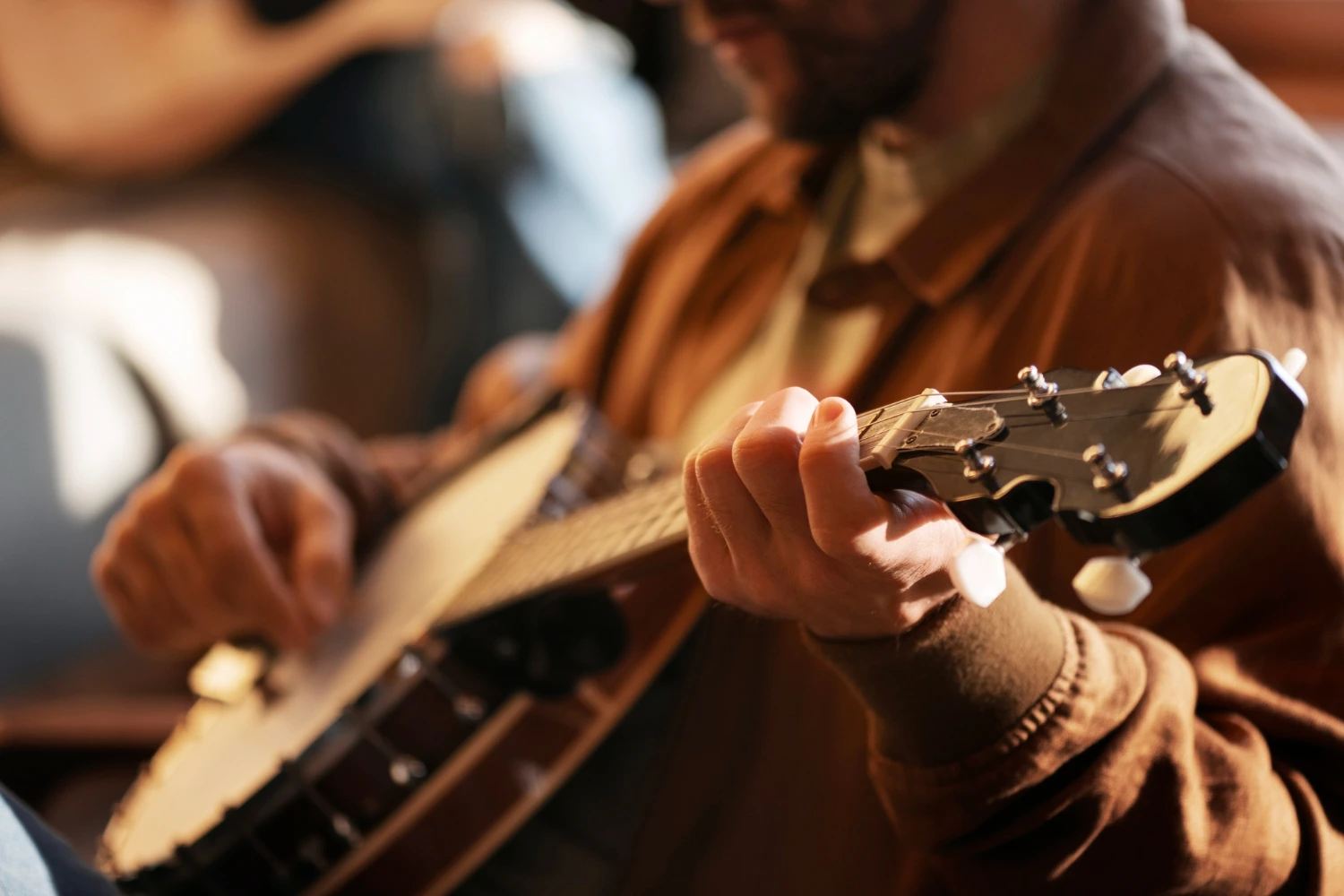
The acoustic guitar remains the most iconic symbol of the genre. Its portability allowed traveling musicians to carry it on trains and play it on street corners. The banjo, originally created by enslaved Africans in the Caribbean and America, provides the driving rhythmic heartbeat of Appalachian music.
Other common instruments include the fiddle, which functions simply as a violin played in a rougher, more rhythmic style. The harmonica offers cheap, pocket-sized melodies that instantly evoke a feeling of loneliness or travel. You will also hear the mandolin, the upright bass, and various types of simple hand drums.
These instruments share one crucial feature. They do not require electricity to produce a powerful sound. This unplugged nature guarantees that the music can happen anywhere, at any time, under any circumstances.
The Future Of Folkloric Music
Some critics wonder if traditional folk music can survive the digital age. They worry that computers and artificial intelligence will replace human musicians entirely. This fear completely misses the point of why the genre exists.
People will always need a way to connect with each other in a room. You cannot replicate the feeling of fifty people singing the same chorus together at a local pub. That human connection guarantees the survival of the folk music origin story.
As long as people experience heartbreak, injustice, or simple joy, they will write songs about it. They will pick up an acoustic guitar and share their feelings with anyone willing to listen. The methods of recording might change, but the impulse remains exactly the same.
Summary Of Folk Music History
We can organize the massive history of folk songs into a simple reference guide. This helps you track how the music evolved over thousands of years.
| Era | Musical Development | Key Characteristics |
| Ancient Times | Early vocal chants and drum rhythms | Used for religious rituals and basic communication |
| Middle Ages | Troubadours traveling between villages | Oral storytelling and simple acoustic instruments |
| 19th Century | Academic scholars start writing lyrics down | Preservation of regional dialects and melodies |
| 1930s | Early field recordings capture rural singers | The raw sound of the working class is preserved |
| 1960s | The massive urban folk revival begins | Protest songs and original acoustic compositions |
| Modern Day | Digital streaming and global fusion | Independent artists blending traditional sounds |
This chart shows how the definition of folk music constantly expands. It never stays stuck in the past. It always adapts to fit the needs of the current generation.
Answering what is the definition of folk music requires you to listen with an open mind. It asks you to value honesty over technical perfection. It challenges you to hear the beauty in simple, everyday experiences.
Now that you understand the true folk music meaning, you can start exploring this massive catalog for yourself. Go find a local acoustic show or search for traditional artists online. You will discover a rich history that connects directly to the music you already love today.