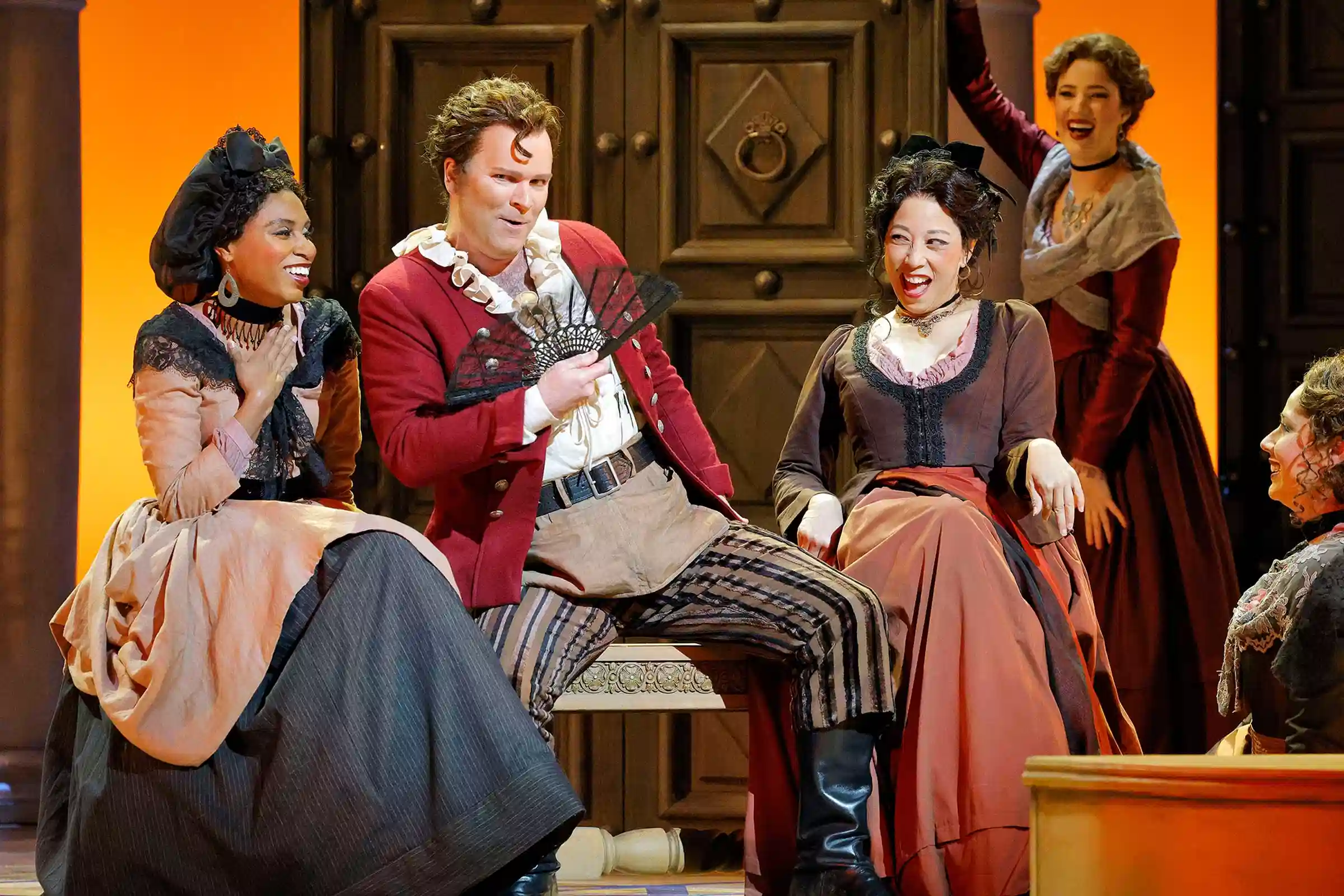
An opera buffa is an Italian comic opera built around recognizable people, social friction, romantic confusion, and quick dramatic action. Its characters may be servants, guardians, young lovers, merchants, or self-important members of the upper class, and the comedy often comes from watching their plans collide.
The form took shape in 18th-century Italy before spreading through European opera culture. You can recognize it through conversational singing, lively ensembles, mistaken identities, and satire aimed at rank or convention. Its history also explains how Mozart, Gioachino Rossini, and other composers turned comedy into musically sophisticated theatre.
In This Article
- What Is An Opera Buffa? Definition And Musical Traits
- From Comic Intermezzi To An 18Th-Century Genre
- Serious, Comic, And Blended Opera Forms
- Major Composers And Lasting Influence
- Key takeaways
- Frequently asked questions
- Recognize the Comedy in Opera
What Is An Opera Buffa? Definition And Musical Traits
The opera buffa definition starts with the Italian word buffa, which translates to comic or amusing. Unlike comedy that relies solely on jokes, Italian comic opera typically derives its humor from the characters involved: a servant can be more cunning than their master, an elderly man tries to prevent a couple from marrying, or multiple characters misinterpret the same event.
Its music keeps those conflicts moving. Secco recitative, accompanied mainly by continuo, follows the rhythms of speech while remaining sung. Arias reveal individual motives, while duets and larger ensembles let characters react at once. Act finales often add voices in stages as confusion grows. These elements of opera buffa support social satire because the audience can hear personal rivalries develop into collective disorder.
From Comic Intermezzi To An 18Th-Century Genre
The genre developed in early 18th-century Italy, especially in Naples. Short comic intermezzi were performed between the acts of serious operas, giving audiences a change of tone while scenery or costumes were prepared. These compact works used small casts, contemporary settings, and direct musical language.
Giovanni Battista Pergolesi’s La serva padrona (1733), originally staged as an intermezzo, served as another model. In this story, a clever maid manages to trick her master into marrying her, and demonstrates how much drama can be wrung from just two well-defined characters. Following this, independent buffa operas started to get bigger, with more developed plots and larger ensemble finales. Italian troupes and composers brought the buffa genre to Vienna and elsewhere, where it merged with regional styles.
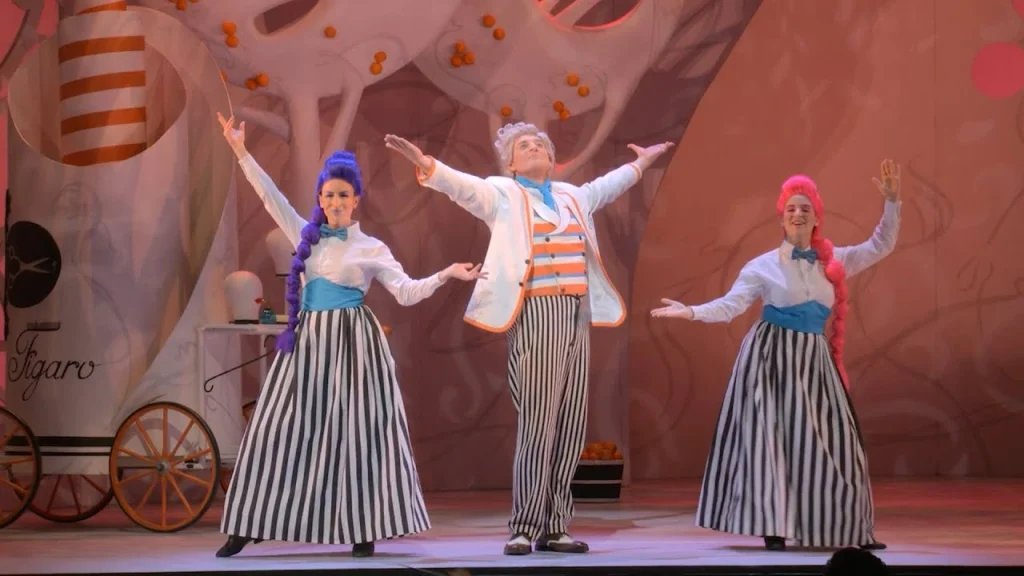
Serious, Comic, And Blended Opera Forms
Opera seria was a more direct antithesis to opera buffa. Often taking mythological or historical sources, and frequently centering on conflicts between royals and aristocrats, it presented elevated subjects with serious themes. A hallmark of opera seria is its heavy emphasis on formal solo arias that highlight virtuosity.
Dramma giocoso joined comic and serious material within one work. Mozart’s Don Giovanni, described by its creators with that label, moves between servant comedy, seduction, violence, and supernatural judgment. Later forms followed different priorities. French grand opera favoured large-scale historical spectacle, while verismo focused on intense conflicts among ordinary people; Giacomo Puccini’s Tosca is tragic rather than comic. Richard Wagner’s music dramas pursued continuous mythic drama and recurring musical motives, placing them far from buffa’s conversational pace.
Opera Seria And Opera Buffa: Key Differences
Opera seria and opera buffa contrasts eighteenth-century Italian opera seria and opera buffa. The opposition in seria is between noble heroes and elevated history, versus everyday characters and social comedy. Also, in seria formal arias are emphasized whereas buffa relies more on quick exchanges and ensembles.
Opera seria vs opera buffa: characters, stories, and musical style
| Opera form | Typical subjects and characters | Vocal and dramatic style | Common structure | Representative works |
|---|---|---|---|---|
| Opera seria | Mythology, ancient history, rulers, heroes, and moral duty | Virtuosic solo arias express elevated emotions; dignified tone | Three acts; recitative links da capo arias; limited comic action | Handel’s Rodelinda; Mozart’s Idomeneo |
| Opera buffa | Domestic disputes, romance, servants, merchants, and social class | Conversational pacing, comic timing, patter, and contrasting voices | Usually two acts; secco recitative, arias, duets, and expanding finales | Mozart’s Le nozze di Figaro; Rossini’s Il barbiere di Siviglia |
| Seria character model | Idealized noble figures facing conflicts of love, loyalty, and power | Star singers display control, range, ornamentation, and sustained lyricism | Action often pauses for reflective exit arias | Cleopatra in Handel’s Giulio Cesare |
| Buffa character model | Recognizable social types, including clever servants and pompous guardians | Physical comedy and quick exchanges reveal personality and status | Multiple characters collide in fast ensemble finales | Figaro and Susanna in Le nozze di Figaro |
| Seria ending and effect | Order restored through mercy, sacrifice, or legitimate rule | Aims for grandeur, pathos, and admiration | Formal resolution follows high-stakes political or romantic conflict | Tito grants clemency in Mozart’s La clemenza di Tito |
| Buffa ending and effect | Mistaken identities exposed; lovers united; authority figures humbled | Aims for laughter while satirizing class, vanity, and hypocrisy | Cumulative finale resolves intertwined comic plots | Count Almaviva is forgiven in Le nozze di Figaro |
The opera seria has noble characters, heroic themes and formal virtuoso arias; the opera buffa uses common people, satire of social norms, rapid dialog and lively ensembles.
Major Composers And Lasting Influence
Mozart gave his comic operas unexpected psychological complexity. In The Marriage of Figaro, different musical styles are used to characterize impulsive Cherubino, resourceful Susanna, the jealous Count and an increasingly determined Figaro. Their ensembles don’t simply add ornamentation to the narrative; each of their entrances brings about a radical shift in how we perceive the scene.
Mozart also developed large finales in which tempo, key, and vocal combinations shift as misunderstandings accumulate. Rossini later used rhythmic repetition, accelerating patterns, and agile vocal writing to create a different kind of comic momentum. Their methods influenced 19th-century Italian comedy, including Gaetano Donizetti’s works, as well as French comic opera and Viennese operetta. The lasting model was dramatic: music could reveal several competing viewpoints at the same moment.
Opera Buffa Examples: Mozart And Other Landmark Works
These opera buffa examples show several versions of the tradition, from Mozart’s layered characterization to Rossini’s rhythmic comedy. Serious works by George Frideric Handel and Puccini clarify the contrast.
- Mozart’s The Marriage of Figaro follows one eventful day as Figaro and Susanna try to marry despite Count Almaviva’s interference. Ensembles turn overheard conversations, disguises, and concealed identities into tightly organized musical comedy.
- Mozart’s Don Giovanni blends comic episodes with mortal danger, so it is often approached as dramma giocoso rather than straightforward comedy. Rossini’s The Barber of Seville sits more securely in the comic tradition, with Figaro helping Count Almaviva outwit Doctor Bartolo.
- Whereas the plot of Handel’s Rodelinda revolves around questions of sovereignty, fealty and the possibility of usurpation, and Puccini’s Tosca represents a different kind of tragedy, one more concerned with the brutality and chaos of politics, both serve to highlight those features which comic opera excludes.
Key takeaways
- The genre developed in 18th-century Italy from short comic intermezzi.
- The stories focus on ordinary characters, satirize social issues, and include romantic subplots.
- Fast ensembles and conversational vocal writing.
- It is a stark contrast to the serious themes and dignified style of opera seria.
- Several of its most famous works of lasting popularity were composed by Mozart and Rossini.
Frequently asked questions
What are some famous opera buffas?
Other well-known works are Mozart’s Marriage of Figaro, Rossini’s Barber of Seville and Cenerentola, and Donizetti’s Don Pasquale. A short work like Pergolesi’s La serva padrona may be more helpful for understanding the genre’s origins as an intermezzo.
What’s the difference between opera seria and opera buffa?
Opera seria usually presents noble or mythological figures in elevated conflicts, with formal arias occupying much of the musical attention. Opera buffa favours contemporary social types, comic complications, conversational recitative, and ensembles in which several characters respond at once.
Did Mozart write opera buffa?
Yes. Mozart wrote major works within the Italian comic tradition, most clearly The Marriage of Figaro and Così fan tutte. Don Giovanni combines buffa characters and techniques with serious and supernatural material, which accounts for its designation as dramma giocoso.
What does the term “opéra bouffe” mean?
Opéra bouffe is a French musical-theatrical genre particularly linked to the satiric comedic works of the 19th century, such as those by Jacques Offenbach. While the word is derived from the Italian opera tradition, it actually refers to a distinct French genre defined by parody, contemporary satire, and often lighthearted or silly subject matter.
When was opera buffa most popular?
Opera buffa flourished during the 18th century and remained important into the early 19th century. Rossini, Donizetti, and their contemporaries carried its character types and musical devices into the bel canto period, even as newer comic forms developed around Europe.
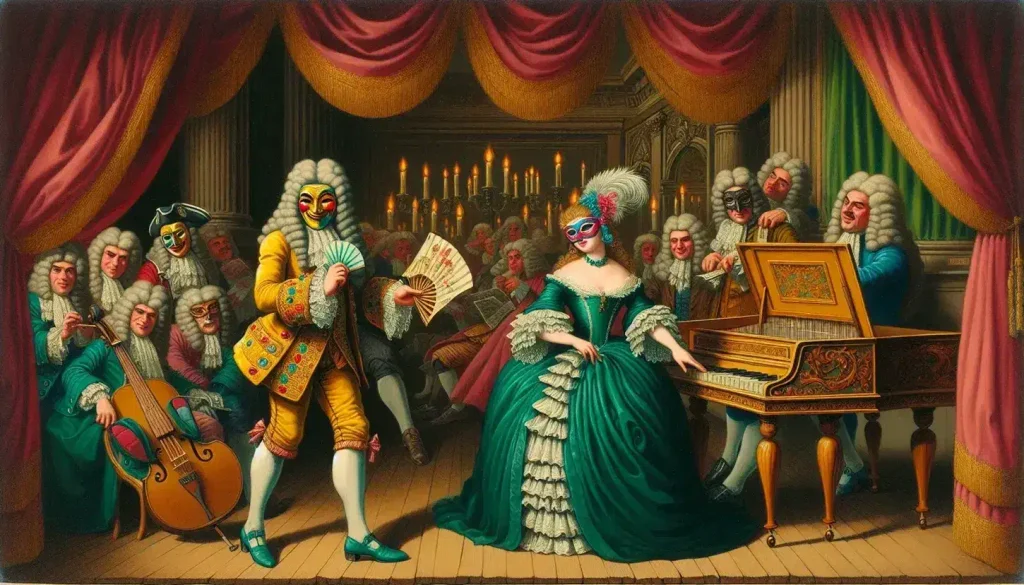
Recognize the Comedy in Opera
Opera’s tradition of comic elements was more than a source of levity—it also made social status audible, enabling the servant to be in charge of the plot, authority figures to be mocked, and multiple characters to speak at once.
Hear the way story and music work together. Recitatives in a conversational style advance the plot, while solo songs reveal innermost longings, and finales collect all the misunderstandings into a tidy knot of bewilderment. «The Marriage of Figaro» offers a clear introduction to these elements, and «The Barber of Seville» displays Rossini’s more rapid-fire rhythms. Once you get that sense of how the opera buffa works, opera buffa is easy to separate and easier to enjoy.