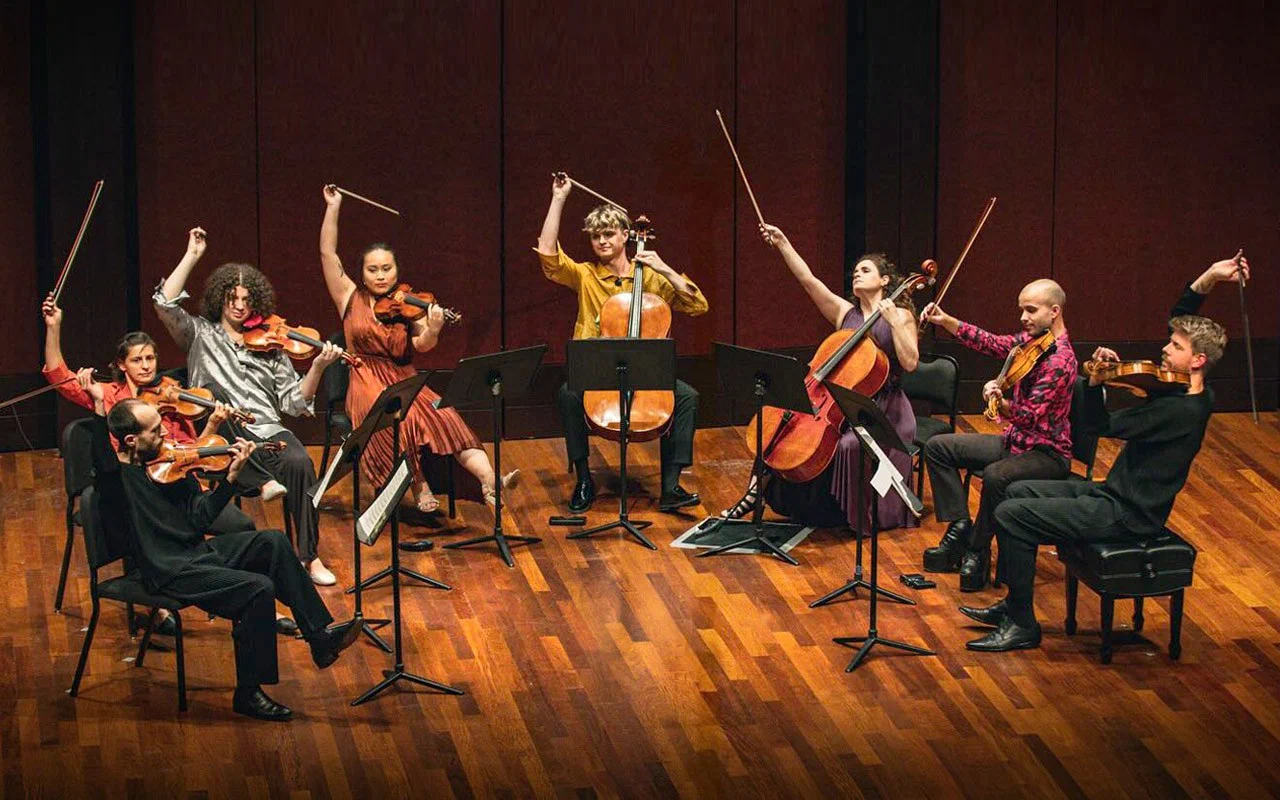
The Classical era in Western music lasted roughly from 1750 to 1820, between the Baroque and Romantic periods. It is the age of Haydn, Mozart and the young Beethoven, and it gave us the symphony, the string quartet, the piano sonata and the modern concerto in the forms we still know today. Its music is built on clear, singable melodies, balanced phrases and strong contrasts.
In This Article
- When Was the Classical Era?
- Classical Era vs “Classical Music”
- Characteristics of Classical Era Music
- The Classical Orchestra and Instruments
- Main Forms of the Classical Era
- Classical Era Composers
- Essential Classical Era Works
- Baroque vs Classical vs Romantic
- Key takeaways
- Frequently asked questions
When Was the Classical Era?
Historians usually date the Classical period from around 1750, the year Johann Sebastian Bach died, to around 1820, when the Romantic style was taking over. Some extend it to Beethoven’s death in 1827. The boundaries are approximate: a lighter, simpler “galant” style was already developing in the 1730s and 1740s, and Beethoven’s middle-period works point firmly towards Romanticism. The style is centred on Vienna, which is why Haydn, Mozart and Beethoven are often called the First Viennese School.
Classical Era vs “Classical Music”
“Classical music” in everyday speech means the whole tradition of Western art music, from medieval chant to today. The Classical era (often written with a capital C) is just one period within it. So Bach and Chopin both write “classical music”, but only Haydn, Mozart and their contemporaries belong to the Classical period.
Characteristics of Classical Era Music
- Homophonic texture: a clear melody with accompaniment replaced the dense counterpoint of the Baroque.
- Balanced, periodic phrases: melodies often fall into “question and answer” pairs of equal length, which makes them easy to follow.
- Simpler harmony with clear cadences: music moves between a home key and related keys in a way the listener can hear.
- Contrast: sudden changes of mood, key and dynamics within a movement, instead of one mood per piece.
- Gradual dynamics: crescendos and diminuendos, popularised by the Mannheim orchestra, became expressive tools.
- Alberti bass: broken-chord accompaniment patterns in the left hand of keyboard music.
- The end of basso continuo: the harpsichord-and-cello bass line of the Baroque gradually disappeared.
- Sonata form: the defining musical structure of the era (see below).
The Classical Orchestra and Instruments
The orchestra grew and became more standardised. A typical Classical orchestra had strings, pairs of flutes, oboes, bassoons and horns, with trumpets and timpani for festive works – and the clarinet joined during the period. Mozart was one of the first to write prominently for it. Around 30–40 players was common, much smaller than a Romantic orchestra.
The piano (then the fortepiano) replaced the harpsichord as the main keyboard instrument, because it could play both soft and loud – exactly what the new style of contrast needed.
Main Forms of the Classical Era
| Form | What it is | Famous examples |
|---|---|---|
| Symphony | Large orchestral work, usually in four movements | Haydn’s “Surprise” Symphony No. 94; Mozart’s Symphonies Nos. 40 and 41 |
| Sonata | Work for one or two instruments, usually piano or piano with violin | Mozart Piano Sonata K. 545; Beethoven “Pathétique” and “Moonlight” |
| String quartet | Two violins, viola and cello – the core of chamber music | Haydn’s “Emperor” Quartet, Op. 76 No. 3 |
| Concerto | Soloist with orchestra – see our concerto guide | Mozart’s Piano Concerto No. 21; Haydn’s Trumpet Concerto |
| Opera | Comic opera buffa and Gluck’s “reform” opera | Mozart’s The Marriage of Figaro, Don Giovanni, The Magic Flute; Gluck’s Orfeo ed Euridice |
What Is Sonata Form?
Sonata form is the blueprint for most first movements of Classical symphonies, sonatas, quartets and concertos. In the exposition, two contrasting themes are presented in different keys; in the development, they are broken up and moved through other keys; in the recapitulation, both themes return in the home key. The drama comes from leaving home and coming back.
Classical Era Composers
- Joseph Haydn (1732–1809) – wrote over 100 symphonies and dozens of string quartets; often called the “father of the symphony” and of the string quartet.
- Wolfgang Amadeus Mozart (1756–1791) – mastered every form of the age, from 41 numbered symphonies and 27 piano concertos to his great operas, before dying at 35.
- Ludwig van Beethoven (1770–1827) – began as a Classical composer and pushed the style towards Romanticism; his Third Symphony, the “Eroica” (1803–1804), is often seen as the turning point.
- C.P.E. Bach and J.C. Bach – sons of J.S. Bach who shaped the early Classical style.
- Christoph Willibald Gluck – reformed opera to serve the drama.
- Luigi Boccherini, Muzio Clementi, Antonio Salieri – important contemporaries in chamber music, piano music and opera.
Essential Classical Era Works
- Haydn – Symphony No. 94 “Surprise” (1791) and the oratorio The Creation (1798)
- Haydn – String Quartet Op. 76 No. 3 “Emperor”
- Mozart – Eine kleine Nachtmusik (1787)
- Mozart – Symphony No. 40 in G minor (1788)
- Mozart – The Marriage of Figaro (1786)
- Mozart – Requiem (1791, unfinished)
- Beethoven – Piano Sonata “Pathétique” (1798) and “Moonlight” Sonata (1801)
- Beethoven – Symphony No. 3 “Eroica”
Baroque vs Classical vs Romantic
| Baroque | Classical | Romantic | |
|---|---|---|---|
| Dates | c. 1600–1750 | c. 1750–1820 | c. 1820–1900 |
| Texture | Polyphonic, counterpoint | Mostly homophonic, melody and accompaniment | Rich, often dense harmony |
| Mood | One mood per movement | Contrast within movements | Intense personal emotion |
| Keyboard | Harpsichord, organ | Fortepiano | Modern piano |
| Key forms | Fugue, concerto grosso, suite, oratorio | Symphony, sonata, string quartet, solo concerto | Symphonic poem, art song, character piece, grand opera |
| Composers | Bach, Handel, Vivaldi | Haydn, Mozart, early Beethoven | Schubert, Chopin, Brahms, Wagner |
For the period before the Baroque, see our guide to Renaissance music.
Key takeaways
- The Classical era ran from about 1750 to 1820, between the Baroque and Romantic periods.
- Its music favours clear melodies, balanced phrases, homophonic texture and strong contrasts.
- Sonata form and the symphony, string quartet, piano sonata and solo concerto took their classic shapes.
- Haydn, Mozart and Beethoven – the First Viennese School – are its central composers.
- The piano replaced the harpsichord and the orchestra became standardised.
Frequently asked questions
When was the Classical era in music?
Roughly 1750 to 1820 – from the death of J.S. Bach to the rise of Romanticism. Some historians extend it to Beethoven’s death in 1827.
Who are the three main composers of the Classical era?
Joseph Haydn, Wolfgang Amadeus Mozart and Ludwig van Beethoven, often called the First Viennese School.
What is the difference between Classical and Baroque music?
Baroque music (c. 1600–1750) is often polyphonic, ornate and keeps one mood per movement, with a continuo bass. Classical music is lighter and clearer: a single melody with accompaniment, balanced phrases and dramatic contrasts.
Is Beethoven Classical or Romantic?
Both. His early works are firmly Classical, while from about the “Eroica” Symphony onwards he expanded the forms and emotional range in ways that opened the Romantic era.
What instruments were used in the Classical period?
Strings, woodwinds (flute, oboe, clarinet, bassoon), horns, trumpets and timpani in the orchestra, and the fortepiano as the main keyboard instrument.
What is the most famous piece from the Classical era?
Candidates include Mozart’s Eine kleine Nachtmusik and Symphony No. 40, Haydn’s “Surprise” Symphony and Beethoven’s “Moonlight” Sonata.
Explore more styles on our music genres page.