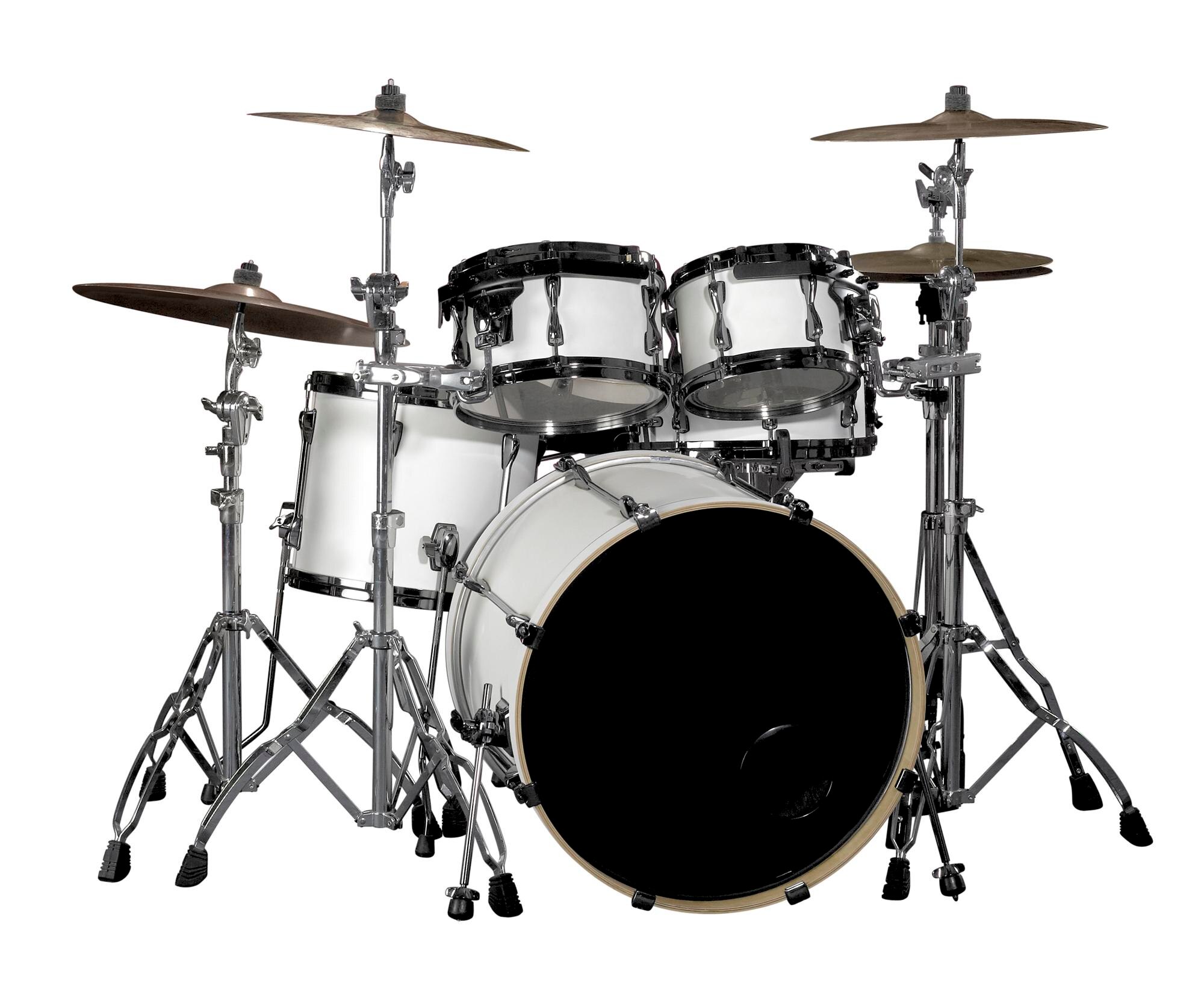
Common types of drums include snare drums, bass drums, tom-toms, timpani, djembes, congas, bongos and tabla. This guide covers individual instruments, drum families and complete kits, explaining their sounds and musical uses. It also includes steelpan and cajón: commonly called drums, they produce sound through vibrating metal or wood rather than stretched heads.
| Drum | Origin | How played | Sound | Typical music |
|---|---|---|---|---|
| Snare drum | Europe | Sticks | Crack/buzz | Rock/pop |
| Bass drum | Middle East | Pedal/mallets | Boom | Rock/orchestral |
| Tom-toms | — | Sticks | Thud | Rock/jazz |
| Electronic kit | International | Sticks/pedals | Programmable | Pop/rock |
| Timpani | Middle East/Europe | Mallets | Pitched | Orchestral |
| Steelpan | Trinidad and Tobago | Mallets | Ringing | Calypso |
| Frame drums | Widespread | Hands/beaters | Varied | Folk |
| Djembe | Mandé/West Africa | Hands | Bass/slaps | Dance |
| Talking drum | West Africa | Stick/cord-squeezing | Speechlike | Praise |
| Congas | Cuba | Hands | Bass/slaps | Salsa |
| Bongos | Cuba | Fingers | Bright | Son |
| Cajón | Afro-Peruvian | Hands | Bass/crack | Flamenco |
| Tabla | North India | Hands | Ringing/bending | Hindustani |
| Mridangam | South India | Hands | Bass/treble | Carnatic |
| Taiko | Japan | Sticks | Powerful | Festivals |
In This Article
- 1. Snare Drum
- 2. Bass Drum
- 3. Tom-Toms
- 4. Electronic Drum Kit
- 5. Timpani
- 6. Steelpan
- 7. Frame Drums
- 8. Djembe
- 9. Talking Drum
- 10. Congas and Bongos
- 11. Cajón
- 12. Tabla and Mridangam
- 13. Taiko
- Key Takeaways
- Frequently Asked Questions
- Recognize Drums by Sound and Shape
1. Snare Drum
Wires called snares stretch across the bottom head. Strike the top and they buzz, producing the sharp crack heard on beats two and four in most rock and pop. Flip the side lever to lift the wires away, and the drum sounds like a dry tom.
Marching snares are deeper and tighter to project outdoors, typically measuring 13 to 14 inches across and about 12 inches deep.
2. Bass Drum
The bass drum supplies the low pulse. On a kit, a foot pedal plays it, giving it the name kick drum.
Marching versions measure about 16 to 32 inches across; bands tune several to different pitches. The orchestral concert bass drum measures about 28 to 40 inches across, hangs in a stand and is played with soft mallets. Its sustained rolls fill a hall with low sound.
3. Tom-Toms
Toms lack snare wires, producing a round, pitched thud. Rack toms mount above the bass drum; a floor tom stands on legs. Tuned from high to low, they let a drummer send fills tumbling downward into the next bar.
Marching tenor sets carry several toms, commonly called quads or quints, with diameters from 6 to 14 inches.
4. Electronic Drum Kit
Electronic kits replace resonating shells with sensor pads. Each hit triggers a recorded or synthesized sound from a module, heard through headphones or speakers.
Mesh pads make apartment practice quieter, although kick pedals still transmit thumps through floors. Hybrid setups combine acoustic drums with clipped-on triggers or a sample pad beside the snare.
5. Timpani
Timpani are copper or fiberglass bowls with stretched heads, measuring 20 to 32 inches across. Players usually use four, each tuned to a definite note.
A foot pedal changes head tension, allowing pitch to slide while a note rings. Felt mallets strike off-center for a sustained tone that can double an orchestra's bass line.
6. Steelpan
The steelpan is Trinidad and Tobago's national instrument. Makers hammer a steel oil drum into a bowl, shaping separate areas into tuned notes. The metal itself vibrates; there is no stretched head.
Rubber-tipped sticks play voices ranging from high tenor to bass pans. Steel bands perform calypso and classical arrangements, and compete at Carnival.
7. Frame Drums
Frame drums have shells much shallower than their heads are wide. Ireland's bodhrán, roughly 10 to 26 inches across, is struck with a double-ended tipper. The player's other hand presses behind the skin to change pitch and tone.
The Middle Eastern daf is larger, often with metal rings inside its frame. The tambourine instead carries jingles in its rim.
8. Djembe
Associated with the Mandé peoples of West Africa, the djembe has a wooden goblet-shaped body and a rope-tensioned goatskin head. Bare hands produce a deep central bass, an open edge tone and a sharp slap.
In ensembles, supporting djembes repeat patterns against the interlocking lines of cylindrical dunun bass drums. A lead djembe adds solos and calls for dancers.
9. Talking Drum
The talking drum has an hourglass body and two heads joined by tension cords. Held under one arm, it is struck with a curved stick.
Squeezing the cords raises its pitch; relaxing lowers it. Those shifts imitate tonal speech. In Nigeria's Yoruba dùndún tradition, skilled players communicate praise names and proverbs.
10. Congas and Bongos
These Cuban drums divide their work by size. Congas are tall barrels, played in sets named quinto, conga and tumba from high to low. Bongos are a joined pair: the smaller macho and larger hembra.
Congas sustain the repeating tumbao pattern, mixing muted strokes with slaps and open tones. Bongos add quick finger strokes and rim sounds against that steady foundation in son, salsa and Latin jazz.
11. Cajón
The Afro-Peruvian cajón is a wooden box played while sitting on it. Strikes near the upper edge make a crisp sound; central hits supply bass.
Paco de Lucía brought one from Peru in the late 1970s, helping establish it in flamenco alongside handclaps and footwork. Many modern cajóns contain snare wires for an added buzz.
12. Tabla and Mridangam
Tabla, central to North India's Hindustani music, pairs a smaller wooden dayan with a larger, often metal bayan. The dayan carries a precise pitch; palm pressure bends the bayan's bass notes. Black tuning paste helps the heads produce clear, ringing tones.
South India's Carnatic tradition uses the mridangam, a double-headed drum played with both hands. Its differently sized heads produce contrasting bass and treble tones, supporting rhythmic accompaniment to singers and melodic instruments.
13. Taiko
Taiko is Japanese for drum. Players use wooden bachi sticks; the barrel-shaped nagadō-daiko has heads nailed to a carved body.
Ō-daiko means a large drum, often a large nagadō-daiko, rather than a separate construction type. Players use whole-body strokes, raising their arms before each blow to produce a powerful low rumble.
Key Takeaways
An acoustic kit puts distinct drums and cymbals within one player's reach. Snare wires add a sharp buzz; toms produce a rounder thud. Timpani pedals and pressure on talking-drum cords change head tension and pitch, while palm pressure on a tabla's bayan bends its bass notes.
Frequently Asked Questions
What is the difference between a side drum and a snare drum?
They are the same instrument. “Side drum,” used in orchestras and Britain, comes from soldiers carrying it at their side. “Snare drum” refers to its wires.
What are the different types of African drums?
Examples include the Mandé djembe and dunun, Yoruba dùndún and batá, Senegal's sabar, and Ghana's kpanlogo. These represent only a fraction of Africa's drum traditions, with different techniques and ensemble roles.
What are the types of drums in a marching band?
Marching bands usually use snares, tenor sets and pitched bass drums. Tenors commonly carry four or five toms on a harness. Some bands also include a cymbal line.
What are some other names for drums?
A drum set is also a drum kit or trap set; a kit bass drum is a kick; timpani are kettle drums. Stretched-head drums are classified as membranophones.
Are hi-hats and cymbals drums, or separate percussion instruments?
They are separate percussion instruments, though part of a standard kit. Cymbals, steelpan and cajón are idiophones: their metal or wood vibrates to make sound. Membrane drums instead produce sound through a stretched head.
Recognize Drums by Sound and Shape
For playing, match the physical action to your interest. Cajón or djembe puts your hands directly on the instrument; tabla and timpani offer pitch control. An electronic kit lets you play a full beat through headphones, although its kick pedal can still transmit thumps through floors.