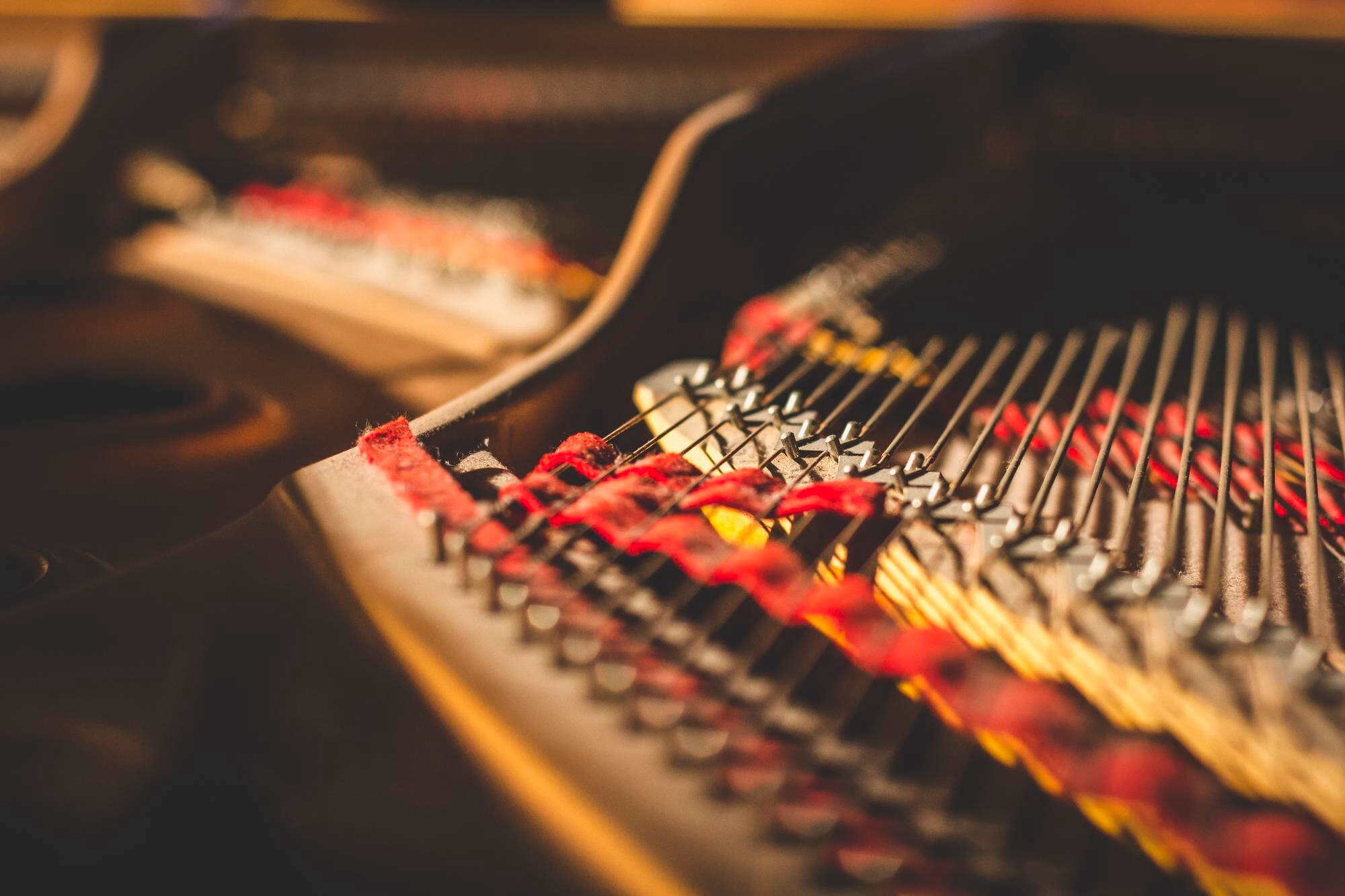
A zither is a stringed instrument whose strings run along a flat or tubular body with no neck sticking out of it. In its best-known form, the Alpine zither of Austria and Bavaria, it plays like a guitar and a harp stapled into one shallow box: five fretted strings on the player's side carry the tune, and 27 open accompaniment, bass and contrabass strings beyond them supply harmony on a standard concert model. The same word also names a worldwide family that runs from the Chinese guzheng to the hammered dulcimer.
Most confusion about zithers comes from mixing those two meanings. A guzheng and an Alpine concert zither belong to the same broad family, but their layouts and playing techniques differ substantially.
In This Article
- What the Word "Zither" Covers
- How the Alpine Concert Zither Is Built
- How a Player Makes the Sound
- What the Zither Sounds Like
- From Medieval Box to Concert Instrument
- Anton Karas and The Third Man
- Related Instruments Around the World
- Buying or Restoring an Older Zither
- Key Takeaways
- Frequently Asked Questions
- Start With the Sound You Love
What the Word "Zither" Covers
As a family name, "zither" comes from the scheme Erich von Hornbostel and Curt Sachs published in 1914, still the standard way musicologists sort instruments. Their rule is short. A zither has strings stretched along a string bearer with no neck or yoke projecting from it, either alone or with a resonator that can be detached without destroying the sound-producing apparatus.
Short rules cast wide nets. By that definition the Japanese koto is a zither, and so are the autoharp, the Finnish kantele and the hammered dulcimer. So is the valiha of Madagascar, which is a tube of bamboo with strings running down its length. So, technically, is the piano in your aunt's front room, since its strings lie across a frame and soundboard with no neck in sight. A system that files a concert grand next to a stick of bamboo is doing its job correctly, and it still sounds absurd.
The line it draws is about geometry, not sound. A guitar is a lute because its strings run up a neck that extends past the body. A harp's strings rise away from the soundboard at an angle. Zither strings lie parallel to the surface they cross, whether they are plucked, struck or bowed, fretted or not.
Ordinary speech is far narrower. When someone in Munich or Vienna says "Zither," they mean the Alpine instrument with frets, and when an old record sleeve credits zither music, it almost always means that instrument too. The next several sections are about that Alpine form; the family comes back near the end.
How the Alpine Concert Zither Is Built
The Alpine concert zither is a shallow wooden box, usually played flat on a table or across the knees. It has a soundhole in the top and an outline that bulges on the side away from the player. Along the edge nearest the player runs a fingerboard with metal frets, like a guitar's fingerboard laid on its back. Five melody strings pass over it.
Those five strings are the guitar half. Beyond the fingerboard, across the open body, run the accompaniment and bass strings, which are never stopped and usually bring the total past thirty. Each sounds one fixed pitch, the way a harp string does. They are laid out so the notes of common chords fall under the player's fingers.
That split is the whole design. The fretted section can play any note in its range, including fast scales and ornaments. The open section supplies harmony and bass. A guitarist strums chords and picks a melody from the same six strings; a zither player gives the two jobs separate strings.
The two halves differ in material as well as layout. Melody strings can be steel, bronze or brass and sound bright. Accompaniment and bass strings are often wound, and they grow longer and heavier toward the far side of the body. Every string runs from a tuning pin at one end to an anchor at the other, over bridges that set its vibrating length.
Thirty-odd strings pulling on one wooden box add up to a large combined tension. On a new instrument that is just engineering. On an eighty-year-old one it is the first thing to worry about.
Two body shapes are common. The Salzburg shape has a rounded bulge on the far side. The Mittenwald shape has rounded bulges on both sides. The difference affects resonance a little and looks a lot, and both are played the same way.
How a Player Makes the Sound
Technique follows the stapled-together layout. The left hand presses the melody strings against the frets. The right thumb wears a ring-shaped metal pick and plucks those same melody strings, which gives the tune its sharp, clear attack.
The rest of the right hand works the harp half. The index, middle and ring fingers reach across to pluck the open accompaniment and bass strings, usually with bare fingertips or short nails. So one hand plays tune and harmony at the same moment. In a typical waltz pattern the fingers drop a bass note on beat one and a chord on beats two and three, while the thumb keeps the melody going above.
That independence is the core skill. Thumb and fingers move in different rhythms on strings set well apart, and beginners find it awkward for a long time. Fingerstyle guitarists know the feeling, but the zither spreads the strings wider and leaves the fretting to the other hand.
Tuning depends on tradition. The most common setup for the five melody strings is the Munich tuning, A–A–D–G–C. On a standard concert model, the 27 open strings comprise 12 accompaniment strings, 12 bass strings an octave below them and three contrabasses. The accompaniment and bass groups follow the circle of fifths; the contrabasses usually descend chromatically. The fifths-based layout groups chord tones conveniently under the fingers.
Other regional tunings exist. Sheet music written for one does not always suit another, so players usually learn inside a single system, with a teacher or a tutor book written for it. Anyone who has played a fretted instrument picks up melody fairly quickly. Smooth accompaniment under that melody takes far longer.
What the Zither Sounds Like
Each half of the Alpine zither has its own voice. The melody, struck with a metal thumb pick, is bright and focused, with a slightly metallic edge; each note starts sharply and then rings. The fingers' accompaniment is softer and rounder, so the tune stays clearly on top.
The open accompaniment strings give the concert zither a different texture from a guitar. They can sustain after being plucked, while untouched strings can vibrate sympathetically with matching pitches. But open does not mean uncontrolled: players deliberately damp strings to shape articulation and keep harmonies clear. The ringing resonance contributes to descriptions such as "twangy," "silvery" or "wistful"; how much of it remains depends on the player's touch.
Speed does not bury the tune. Running notes on the melody strings cut through, and a tremolo, the thumb repeating one note quickly, lets a long melody note hold its pitch.
Slow music makes the balance between sustain and silence especially audible. A player can let a bass note ring beneath a chord, then damp the strings to separate the next phrase or harmony. Waltz accompaniment need not blur from bar to bar: the Tyrolean music-school curriculum recommends teaching it with damping from the outset where possible. Sustained resonance and crisp articulation are both part of the instrument's expressive range.
From Medieval Box to Concert Instrument
The Alpine zither grew out of plainer folk instruments. Its best-known ancestor is the Scheitholt, a long narrow box with a few strings, some of them fretted, played across the lap or a table. Michael Praetorius described it in his Syntagma Musicum of 1619. Simple box zithers like it served German-speaking villages for generations, mostly for dances and singing.
Makers in the Alpine regions of Austria and Bavaria gradually widened the box, added open strings and moved the fretted section to the player's side. By the early nineteenth century an instrument recognizable as the Alpine zither was in use, though still made by local craftsmen and played by ear in villages and taverns.
Then it went to court. Johann Petzmayer, a zither virtuoso, toured widely and played music far harder than folk dances. His patron was Duke Maximilian in Bavaria, himself an enthusiastic amateur on the instrument. A royal favorite playing elaborate pieces gave the tavern box a standing it had never had.
Status created demand, and demand created the concert zither. Through the middle and later nineteenth century, workshops standardized fret positions, added accompaniment and bass strings, and settled on tunings such as the Munich system. Publishers printed music. Zither clubs formed in towns across the German-speaking world and among emigrants in America.
It ended up in the parlor as often as on stage. Middle-class households kept a zither the way others kept an upright piano, and amateurs played arrangements of popular songs and light classics in the evening. That broad amateur tradition helped sustain the instrument and train later professional players. One of them played in Vienna's wine taverns.
Anton Karas and The Third Man
His name was Anton Karas, born in Vienna in 1906, and he is the reason most people outside Central Europe know the zither's sound at all. In 1948 the director Carol Reed was in Vienna shooting The Third Man, heard Karas play, and decided the zither would score the film.
Films of that era usually had full orchestral scores. Reed gave the whole soundtrack to one man and one instrument. Released in 1949, the film set postwar Vienna's black markets and bombed-out buildings against a bright, jaunty, faintly unsettling tune. "The Third Man Theme," also known as "The Harry Lime Theme," became an international hit in 1950 and made Karas a celebrity.
The theme is also the best single demonstration of everything described above. The melody rides on top, plucked hard with the thumb pick. The accompaniment chugs underneath in a steady pattern, and the open strings ring around both. Listen once for the tune and once only for the accompaniment, and you can hear one hand doing two jobs.
The film fixed the zither to Vienna and to a particular mood, half charm and half menace, for millions of viewers. It set off a run of imitation and novelty records. Karas spent much of his later career playing the theme for audiences around the world, and he died in Vienna in 1985.
Related Instruments Around the World
Back to the wide family. Zither instruments appear on every inhabited continent, and most of them look and sound nothing like the Alpine box. Many have no frets; each string is tuned to a fixed pitch, often set by a movable bridge, and the player changes pitch by pressing the string or not at all.
The East Asian long zithers show how far that goes. On the guzheng, koto, gayageum and đàn tranh, the left hand presses strings on the far side of the bridges to bend notes and add vibrato, so the melody slides the way a voice does. The koto took shape in the Japanese court before building a large solo and chamber repertoire. The table below gives each one's string count and technique.
Other branches drop plucking. The hammered dulcimer's strings cross a trapezoid-shaped box, often in courses of two or more per note, and the player strikes them with small hammers, a design found from American and British folk music to the larger cimbalom of Hungary. The autoharp works the other way round: the player presses bars with felt dampers that mute every string outside the chosen chord, then strums whatever is left.
Zither instrument relatives: string layouts and playing styles worldwide
| Zither-family instrument | Region or tradition | Typical string layout | How it is played | Musical role or repertoire |
|---|---|---|---|---|
| Concert zither | Austria and southern Germany | 5 fretted melody strings plus open accompaniment strings | Thumb pick plays melody; fingers pluck accompaniment | Alpine folk music; solo concert repertoire |
| Guzheng | China | 21 strings on movable bridges on many modern models | Right-hand finger picks pluck; left hand presses strings for bends | Chinese solo repertoire; sweeping glissandos |
| Guqin | China | 7 strings; no individual bridges or frets | Bare fingers pluck, slide and touch harmonics | Chinese literati tradition; intimate solo music |
| Koto | Japan | 13 strings on movable bridges in the standard form | Finger picks pluck; left hand presses strings beyond bridges | Sōkyoku chamber music; solo repertoire |
| Gayageum | Korea | 12 strings traditionally; 25 on many modern instruments | Fingers pluck; left hand presses for vibrato and bends | Sanjo solo music; Korean ensemble repertoire |
| Đàn tranh | Vietnam | 16 strings traditionally; 17- and 21-string models also used | Finger picks pluck; left hand bends strings beyond bridges | Vietnamese chamber ensembles; solo music |
| Qanun | Middle East and eastern Mediterranean | Commonly 24–27 courses of 3 strings | Index-finger picks pluck; small levers alter pitches | Maqam-based music; Arabic and Turkish ensembles |
| Kantele | Finland and Karelia | 5 strings in traditional small forms; up to about 40 in concert forms | Fingers pluck or strum; larger models support two-handed playing | Kalevala-associated traditions; modern concert music |
| Concert cimbalom | Hungary and neighboring Central European traditions | Multiple strings per note; large trapezoidal body with a damper pedal | Two handheld beaters strike the strings | Hungarian ensembles; orchestral and chamber works |
| Autoharp | United States; especially Appalachian folk traditions | Usually 36 or 37 strings; commonly 15 or 21 chord bars | One hand presses chord bars; the other strums or picks | Chordal song accompaniment; American folk music |
Zither-family instruments range from the seven-string Chinese guqin to the hammered Hungarian concert cimbalom, with distinct string layouts, playing techniques and musical traditions across Asia, Europe and North America.
The common thread across the table is structural, not a shared playing method. A Munich-trained zither player sitting at a guzheng finds no frets for the left hand to stop. Guzheng players also use thumb picks, but these are taped on rather than worn as the Alpine ring pick, and the left hand presses strings beyond the bridges for bends and vibrato. At the Alpine box, a guzheng player must learn fretting and the division between thumb-picked melody and finger-plucked accompaniment. Familiarity with plucked strings may help, but neither instrument's technique transfers directly.
Buying or Restoring an Older Zither
Old zithers turn up at estate sales, in attics and on used-instrument sites, and some deserve saving. Eighty-year-old instruments that a good repairer can make playable appear on the used market from time to time. Many more need work that costs more than the instrument is worth, and carved rosettes, inlay or a handsome painted label do nothing to change that.
Start by working out what you have. Many of the "zithers" in American homes are not Alpine concert instruments but fretless chord zithers, often sold as guitar zithers, mass-produced and sold widely in the early twentieth century. They have groups of strings tuned to chords plus a separate set for melody, often played from a numbered sheet slipped under the strings. They can be charming, but they are a separate, simpler instrument. To learn Alpine playing, you need the fretted fingerboard with five melody strings.
Then check the body for the damage that string tension does over decades. Look at the top for cracks, sinking or bulging, especially near the bridges. Make sure the bridges are still glued down. Sight along the fingerboard for warping and look for deep grooves worn into the frets. A cracked top or twisted body is a serious repair. A missing string is a minor one.
The tuning pins come next, and they show trouble fast because more than thirty of them sit in one block of wood. Pins that turn too easily or will not hold pitch need assessment: an individual loose pin or enlarged hole may allow a local repair or a larger replacement pin, whereas a split pin block can require major specialist work. Rust on pins and strings is common and usually fixable, but old strings should be replaced, and a long-slack instrument should be brought up to pitch gradually, not all at once.
Fewer specialists work on zithers than on guitars or violins, so find out whether a repairer near you handles them before you buy anything that needs more than new strings. For a first instrument to learn on, a zither that already plays well, old or new, beats a project that may never hold a tune.
Key Takeaways
- "Zither" names a worldwide family of neckless stringed instruments and, in everyday speech, one Alpine instrument.
- A standard Alpine concert zither puts five fretted melody strings beside 27 open accompaniment, bass and contrabass strings.
- The right thumb plays the melody with a metal pick while the other fingers pluck the harmony, which is the hardest skill to learn.
- Open strings provide ringing resonance; players use damping to control note lengths and keep harmonies clear.
- Anton Karas's music for The Third Man is the clearest single recording of that sound.
- Family members such as the guzheng, koto and cimbalom use entirely different techniques and tunings.
- On an older instrument, the top, bridges and tuning pins matter far more than decoration.
Frequently Asked Questions
What country is the zither from?
The Alpine zither comes from the Alpine regions of Austria and Bavaria in southern Germany. It developed there from older box instruments such as the Scheitholt. The wider zither family is a structural category, not evidence of a shared origin or independent invention. Grinnell College’s Musical Instrument Collection says the Malagasy valiha likely descends from tube zithers brought from insular Southeast Asia during ancient migrations.
Who is the most famous zither player?
Anton Karas is the best-known zither player, thanks to his solo score for the 1949 film The Third Man and its hit theme. Within the instrument's own history, the nineteenth-century virtuoso Johann Petzmayer did the most to raise the zither from a folk instrument to a concert one.
Is it hard to play a zither?
It is easy to start and hard to master. Simple melodies on the fretted strings come fairly quickly, especially for guitar or mandolin players. The difficult part is playing the melody with the right thumb while the other fingers pluck accompaniment and bass on separate strings, which takes steady practice and a teacher or tutor book for your tuning.
What's another name for a zither?
The Alpine instrument is often called a concert zither, and in German it is simply "Zither." Several family members have their own names, such as the psaltery, the hammered dulcimer and the autoharp. Mass-produced fretless versions sold in America are often called guitar zithers or chord zithers.
What is a zither instrument?
A zither is a stringed instrument whose strings run across a flat or tubular body with no neck extending from it. The term covers a whole family that includes the koto, the guzheng and the hammered dulcimer. It also names the Alpine zither, which pairs five fretted melody strings with many open accompaniment strings.
Start With the Sound You Love
On the concert zither, listen for the contrast between the bright, thumb-picked melody and the softer open-string accompaniment. The player can let those strings resonate or damp them for a cleaner separation between notes and chords.
If you want to play, choose the tradition whose music draws you and learn inside its tuning, since music written for the Munich tuning will not sit right on another system. If you are judging an older instrument, check the top, bridges and tuning pins before the decoration. And the next time you play a zither recording, ignore the melody for a few bars. Pick one bass note and listen for whether it rings into the next chord or is deliberately damped.