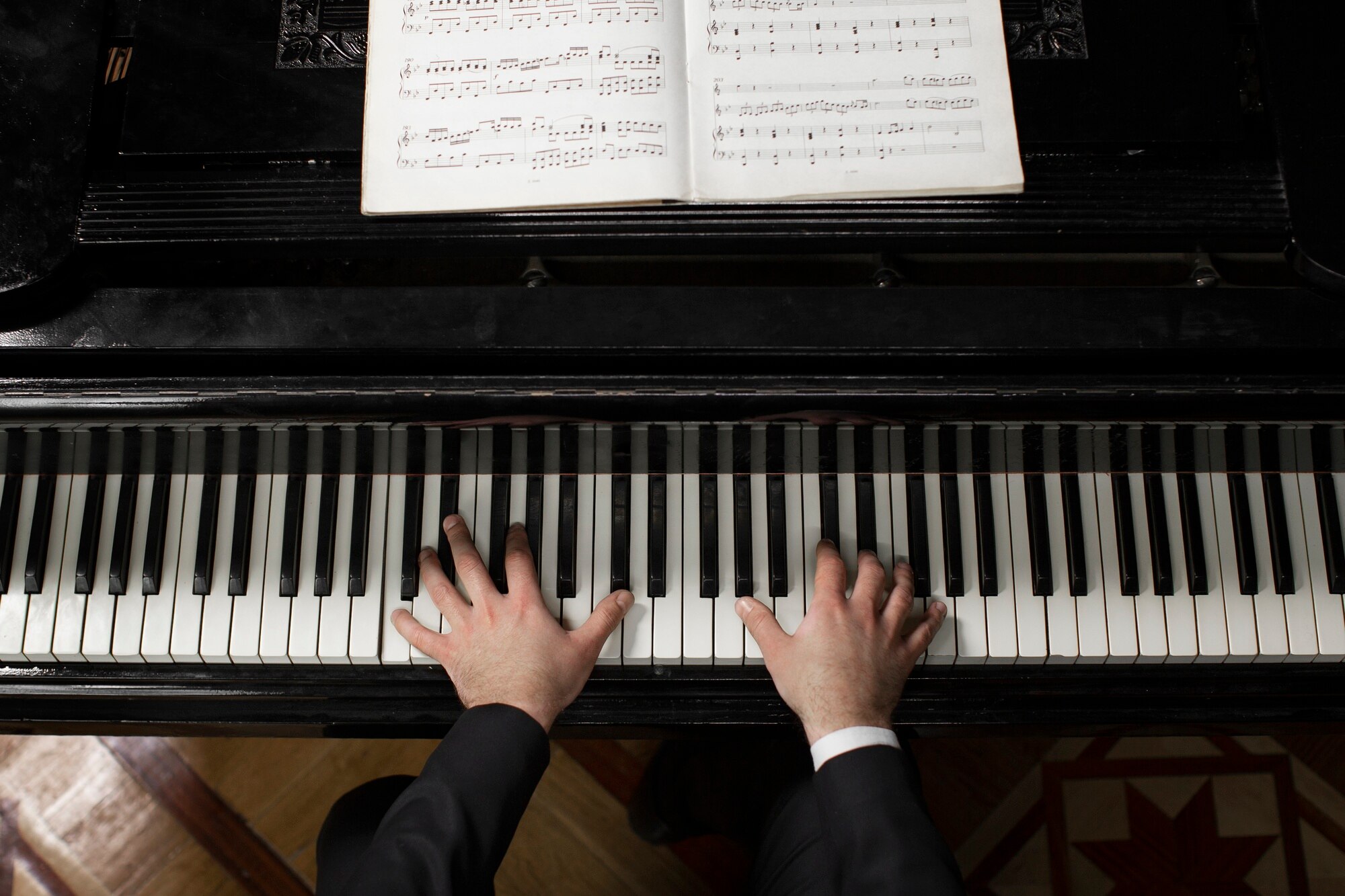
Major scales follow whole, whole, half, whole, whole, whole, half steps; natural minor follows whole, half, whole, whole, half, whole, whole. Below are all 12 of each, with ascending notes and fingerings, followed by minor variations and practice advice.
In This Article
- How Major and Minor Scales Are Built
- How to Read Finger Numbers on C Major
- All 12 Major Scales and Their Fingerings
- Keys With Two Names
- All 12 Natural Minor Scales and Their Fingerings
- Harmonic and Melodic Minor
- Practicing Several Octaves and Both Hands
- Key Takeaways
- Frequently Asked Questions
- Turn Scale Notes Into Confident Playing
How Major and Minor Scales Are Built
A half step moves to the next key, black or white; a whole step skips one key. C to C on white keys gives major; A to A gives natural minor.
Each scale uses all seven letter names once. That explains E♯ in F♯ major: it sounds on the F key but preserves the letter sequence. Likewise, C♭ uses the B key.
How to Read Finger Numbers on C Major
Both hands number thumb to little finger as 1–5. In C major:
- Right hand: C(1) D(2) E(3) F(1) G(2) A(3) B(4) C(5).
- Left hand: C(5) D(4) E(3) F(2) G(1) A(3) B(2) C(1).
The right thumb passes under to F; left finger 3 crosses over to A. Middle C sits on a ledger line below the treble staff. Match each finger number to its note in the C-major examples above.
All 12 Major Scales and Their Fingerings
Notes and fingerings run upward; reverse both to descend. RH means right hand, LH left hand. Each digit represents one finger.
C, G, D, A and E share RH 12312345; LH 54321321:
- C: C D E F G A B C
- G: G A B C D E F♯ G
- D: D E F♯ G A B C♯ D
- A: A B C♯ D E F♯ G♯ A
- E: E F♯ G♯ A B C♯ D♯ E
The remaining major scales:
- B: B C♯ D♯ E F♯ G♯ A♯ B. RH 12312345; LH 43214321
- F: F G A B♭ C D E F. RH 12341234; LH 54321321
- B♭: B♭ C D E♭ F G A B♭. RH 41231234; LH 32143213
- E♭: E♭ F G A♭ B♭ C D E♭. RH 31234123; LH 32143213
- A♭: A♭ B♭ C D♭ E♭ F G A♭. RH 34123123; LH 32143213
- D♭: D♭ E♭ F G♭ A♭ B♭ C D♭. RH 23123412; LH 32143213
- F♯: F♯ G♯ A♯ B C♯ D♯ E♯ F♯. RH 23412312; LH 43213214
In the flat keys listed, right finger 4 always plays B♭.
Keys With Two Names
C♯ and D♭ major use the same piano keys with different note spellings. So do F♯ and G♭ major, and B and C♭ major. These three pairs explain why there are 15 major key signatures but only 12 keyboard patterns.
Each cell below pairs two names for the same piano key. After degree 7, repeat the tonic one octave higher.
| Scale degree | C♯ major / D♭ major | F♯ major / G♭ major | B major / C♭ major |
|---|---|---|---|
| 1: Tonic | C♯ / D♭ | F♯ / G♭ | B / C♭ |
| 2: Supertonic | D♯ / E♭ | G♯ / A♭ | C♯ / D♭ |
| 3: Mediant | E♯ / F | A♯ / B♭ | D♯ / E♭ |
| 4: Subdominant | F♯ / G♭ | B / C♭ | E / F♭ |
| 5: Dominant | G♯ / A♭ | C♯ / D♭ | F♯ / G♭ |
| 6: Submediant | A♯ / B♭ | D♯ / E♭ | G♯ / A♭ |
| 7: Leading tone | B♯ / C | E♯ / F | A♯ / B♭ |
For C♯ major, use the D♭ major fingerings above; for G♭ major, use the F♯ major fingerings; for C♭ major, use the B major fingerings. Matching piano keys do not make the spellings interchangeable in a score: read C♯ major’s seven sharps or D♭ major’s five flats as written. E♯ uses the F key, B♯ uses the C key, C♭ uses the B key and F♭ uses the E key.
All 12 Natural Minor Scales and Their Fingerings
A natural minor scale shares its notes with its relative major, starting on that major's sixth note. C minor, for example, shares E♭ major's notes.
12 natural minor piano scales and their relative major keys
| Natural minor scale | Scale notes (ascending, tonic to tonic) | Relative major key | Shared key signature |
|---|---|---|---|
| A minor | A B C D E F G A | C major | 0 sharps or flats |
| E minor | E F♯ G A B C D E | G major | 1 sharp: F♯ |
| B minor | B C♯ D E F♯ G A B | D major | 2 sharps: F♯, C♯ |
| F♯ minor | F♯ G♯ A B C♯ D E F♯ | A major | 3 sharps: F♯, C♯, G♯ |
| C♯ minor | C♯ D♯ E F♯ G♯ A B C♯ | E major | 4 sharps: F♯, C♯, G♯, D♯ |
| G♯ minor | G♯ A♯ B C♯ D♯ E F♯ G♯ | B major | 5 sharps: F♯, C♯, G♯, D♯, A♯ |
| D minor | D E F G A B♭ C D | F major | 1 flat: B♭ |
| G minor | G A B♭ C D E♭ F G | B♭ major | 2 flats: B♭, E♭ |
| C minor | C D E♭ F G A♭ B♭ C | E♭ major | 3 flats: B♭, E♭, A♭ |
| F minor | F G A♭ B♭ C D♭ E♭ F | A♭ major | 4 flats: B♭, E♭, A♭, D♭ |
| B♭ minor | B♭ C D♭ E♭ F G♭ A♭ B♭ | D♭ major | 5 flats: B♭, E♭, A♭, D♭, G♭ |
| E♭ minor | E♭ F G♭ A♭ B♭ C♭ D♭ E♭ | G♭ major | 6 flats: B♭, E♭, A♭, D♭, G♭, C♭ |
Fingerings for all 12 natural minor scales follow below; parentheses beside each scale name identify its relative major.
These five natural minor scales share RH 12312345; LH 54321321:
- A (C)
- E (G)
- D (F)
- G (B♭)
- C (E♭)
The remaining natural minors:
- B (D): RH 12312345; LH 43214321
- F (A♭): RH 12341234; LH 54321321
- F♯ (A): RH 34123123; LH 43213214
- C♯ (E): RH 34123123; LH 32143213
- G♯ (B): RH 34123123; LH 32132143
- E♭ (G♭), also D♯ minor (F♯): RH 31234123; LH 21432132
- B♭ (D♭): RH 41231234; LH 21321432
Harmonic and Melodic Minor
Harmonic minor raises natural minor's seventh note in both directions. A harmonic minor uses G♯, creating a three-half-step gap from F.
Classical melodic minor closes that gap by raising the sixth and seventh ascending: A B C D E F♯ G♯ A. Descending, it returns to natural minor. The listed fingerings for A, E, D, G and C minor work for both variations.
Practicing Several Octaves and Both Hands
For two ascending octaves of C major, match each note to the finger below it:
Notes: C D E F G A B C D E F G A B C
RH:    1 2 3 1 2 3 4 1 2 3 1 2 3 4 5
LH:    5 4 3 2 1 3 2 1 4 3 2 1 3 2 1
At the intermediate C, both hands use finger 1. Continue to D with RH 2 and LH 4, crossing the left fourth finger over the thumb. Finish the highest C with RH 5 and LH 1. Reverse both sequences to descend.
Practice each hand over one octave, then combine hands slowly, playing corresponding notes together. Extend to two octaves when crossings sound even.
Key Takeaways
- Check spelling: use each letter once, including E♯ or C♭ where needed.
- Relative major and natural minor share notes, but have different tonics.
- Harmonic minor raises note 7 both ways; classical melodic minor raises 6 and 7 ascending and uses natural minor descending.
- Read each hand's fingering separately. When extending C major, use RH 1 on the intermediate C, not the one-octave ending finger 5.
Frequently Asked Questions
What piano scales should I learn first?
Begin with C major, then the other major keys sharing its fingering. Add A minor for an all-white-key minor scale.
What is the hardest scale to play on the piano?
It varies. E♭ and B♭ minor can feel awkward because their left-hand patterns begin on finger 2.
Do ascending and descending scales use the same fingering?
Reverse the numbers for major, natural minor and harmonic minor. Classical melodic minor changes descending notes; the five minor keys discussed above retain their fingerings.
Do relative major and natural minor scales begin on the same note?
No. C major begins on C; its relative minor begins on A. Shared notes do not mean a shared tonic.
Should both hands use matching finger numbers?
Usually not: the hands mirror each other. Follow each hand's listed pattern instead of forcing matching numbers.
Turn Scale Notes Into Confident Playing
- Play C major up and down with each hand separately, saying the note names.
- Repeat with A natural minor. Listen for A, rather than C, as the tonic despite the shared notes.
- Keep the pulse steady. Add speed only when crossings remain even.