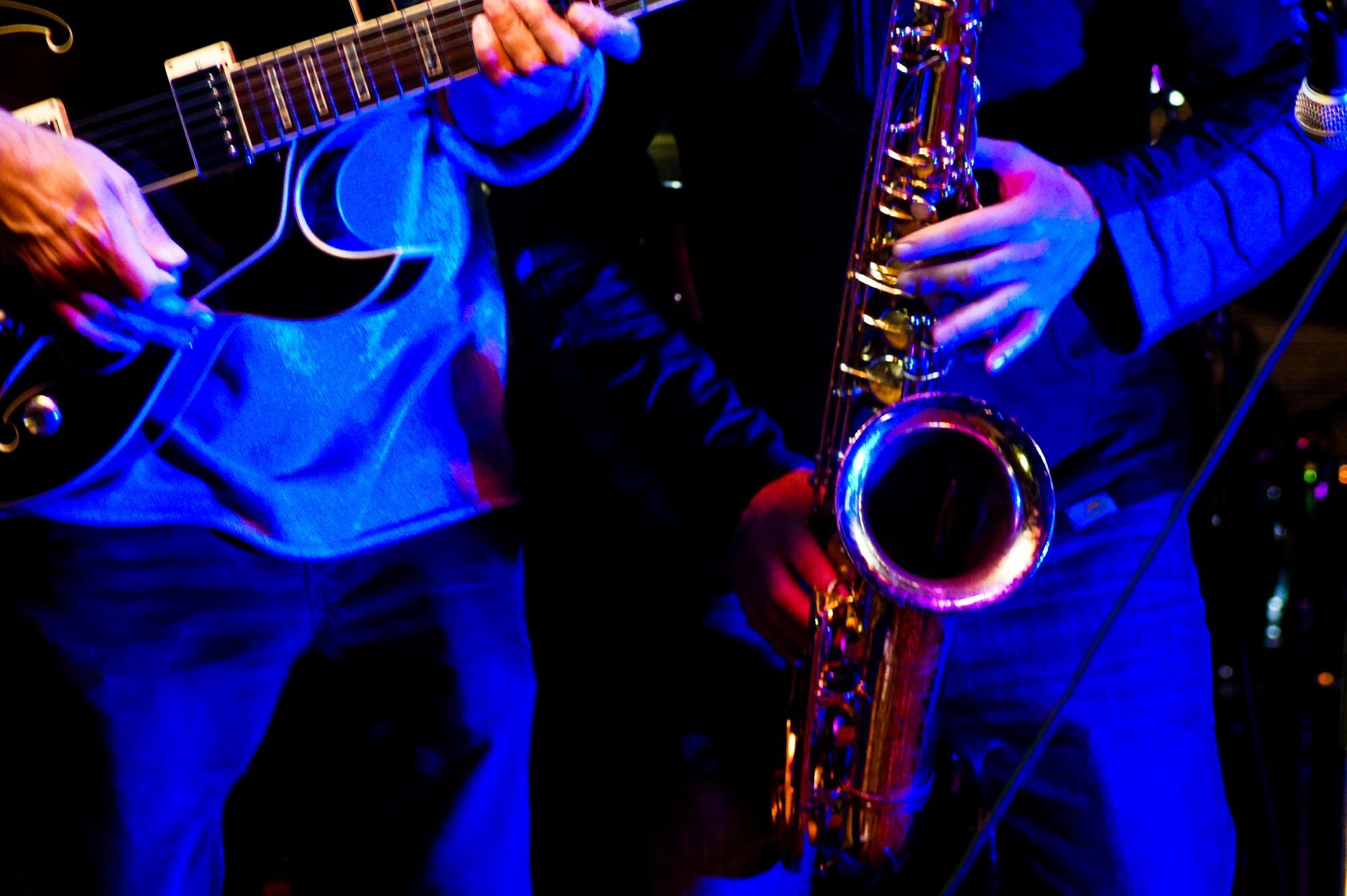
Jazz fusion combines jazz improvisation and harmony with the rhythms and amplified instruments of rock and funk. A jazz player plugs in, turns up, and suddenly a sustained guitar note can push against the drums instead of disappearing beneath them. The music can ride a heavy groove or break into tightly arranged passages at breathtaking speed; the players still have room to reshape it as they go.
That tension between a repeating foundation and musicians pulling against it is the thread to follow. On the recordings below, it takes forms as different as Miles Davis’s crowded electric ensembles and Weather Report’s sharply drawn melodies.
In This Article
- What Makes the Sound Different?
- How Fusion Began
- Why Electric Instruments Matter
- The Bands That Defined Different Approaches
- What Funk Added to the Music
- Landmark Recordings to Hear First
- How Fusion Continued After the 1970s
- Key Takeaways
- Frequently Asked Questions
- Listen for the Jazz Within
What Makes the Sound Different?
In jazz fusion, a steady rock or funk beat often replaces walking bass and the swinging ride-cymbal pattern of many acoustic jazz groups. The beat hits differently. Improvisers can stretch a phrase across it, delay a resolution, or cut across its accents while the rhythm section keeps driving.
That rhythmic freedom works with extended chords, which add notes beyond a basic chord, and modes, scales that supply a passage’s main notes. A solo can grow through changes in rhythm and exchanges with other players, without returning to a verse and chorus.
Jaco Pastorius’s fretless electric bass makes the physical difference unmistakable. Notes slide into place with a rounded, almost vocal sound, then snap into sharply articulated runs. In Weather Report, his bass can hold the floor beneath the band and then rise through the texture as a melody. Distorted guitar and sustained keyboards give that moving voice something substantial to push against.
How Fusion Began
Jazz fusion took shape in the late 1960s, as jazz musicians engaged with amplified rock and soul. Electricity offered new colors and enough volume for louder stages. To acoustic-jazz purists, that volume and the insistent backbeat threatened the music’s identity; to players pursuing the crossover, they opened another way to improvise.
Miles Davis brought electric keyboards and guitars into ensembles grounded in jazz. His sessions encouraged overlapping ideas instead of tightly prescribed arrangements. Studio editing then turned those performances into finished pieces: the recording itself became part of the composition.
Guitarist Larry Coryell was also exploring the meeting of jazz and rock. Musicians carried ideas between projects, and the crossover reached broader audiences during the 1970s. Jazz rock fusion could favor funk, rock’s attack, or open structures with no comfortable landing point.
Drummer Tony Williams made that collision bodily. His playing could shove an ensemble forward with cymbal crashes and dense bursts across the drums. The argument was audible: this was improvisation with the volume turned up and the drummer refusing to stay in the background.
Why Electric Instruments Matter
The Fender Rhodes electric piano has a bell-like attack followed by rounded sustain. A chord can ring beneath a solo without the hard edge of an acoustic piano. Add effects and its tone bends toward the grit of amplified guitar.
Herbie Hancock’s ARP Odyssey supplied a sharper electronic voice beside his electric piano. Synthesizers let a player change a note’s tone and movement as it sounds, so a line can bite, swell, or hang in the air.
Electric bass gives louder drums and guitar a firm foundation, while retaining the ability to step forward with a countermelody or solo. That balance helped small groups fill concert stages.
Jean-Luc Ponty’s amplified violin cuts through the same space. His fast bowed lines can sound like a thin, bright edge drawn across the band’s heavier textures; sustained notes keep their grain instead of dissolving into the keyboards. Fusion’s electric sound reaches well beyond guitars.
The Bands That Defined Different Approaches
Mahavishnu Orchestra made precision feel dangerous. In early live performances, guitarist John McLaughlin stands behind a double-neck guitar while Billy Cobham drives the band from the drums. Fast ensemble lines land together, then the accents shift beneath them. Odd meters move the strong beat; violin adds a bright, cutting voice to the density. Cobham makes those intricate structures hit with force.
Return to Forever, founded by Chick Corea, began with a comparatively light, Latin-influenced sound before becoming a powerful electric band. Its later music joins elaborate forms to virtuoso playing. Fast unison lines require the musicians to strike the same melody together before splitting into solos.
Weather Report, co-founded by Joe Zawinul and Wayne Shorter, loosens that separation between ensemble writing and individual voices. Keyboard textures and Shorter’s saxophone can move through the arrangement without a fixed boundary between lead and accompaniment.
Tony Williams Lifetime puts the drummer’s urgency at the center. Its original lineup paired Williams with McLaughlin on guitar and Larry Young on organ. Where Mahavishnu’s unison passages create pressure through coordinated attack, Lifetime’s rock force feeds a volatile exchange among three players.
What Funk Added to the Music
Funk made the groove itself a compositional anchor. A syncopated bass line or repeated keyboard figure could hold the music together while a soloist traveled far from the starting phrase. Frequent chord changes were no longer necessary to keep a long performance moving.
Herbie Hancock’s Head Hunters (1973) makes that principle plain. Its opening track, “Chameleon,” lasts about 16 minutes and builds around a bass figure with an immediate grip. Hancock’s keyboard solos move across that foundation without erasing its rhythmic identity. Small changes in accent and spacing keep repetition alive.
Billy Cobham’s Spectrum (1973) brings a harder edge. On “Quadrant 4,” the bass drum has a short, blunt impact beneath the rushing beat; it punches through the guitar instead of spreading into a soft thud. The electric guitar pulls toward rock, while the soloists bend their phrases around the rhythm. Following the bass beneath those phrases reveals how much movement a stable groove can support.
Landmark Recordings to Hear First
Miles Davis’s jazz fusion recordings In a Silent Way (1969) and Bitches Brew (1970) offer different entry points. The earlier album leaves space around Davis’s trumpet, with restrained keyboard and guitar textures. Choose it if you want to hear individual sounds without a crowded ensemble bearing down on them.
Bitches Brew closes that space. Its opening piece, Joe Zawinul’s “Pharoah’s Dance,” layers keyboards, percussion, and horns until the music can feel claustrophobic. A new sound enters before the previous one has cleared. Tape splices interrupt and redirect the flow, making repetition feel less like a dependable chorus than a passage you have been dropped back into.
Weather Report’s Heavy Weather (1977) offers a clearer melodic handhold in “Birdland,” composed by Zawinul. Its recognizable theme and strongly shaped arrangement give Pastorius’s bass room to supply rhythmic support and a distinctive melodic presence.
Those landmarks serve different listeners. “Birdland” gives you a tune to hold onto through the changing arrangement. “Pharoah’s Dance” makes changes in density and overlapping activity the main event.
How Fusion Continued After the 1970s
The Brecker Brothers carried jazz-funk through sharply arranged, horn-driven music. Michael Brecker’s agile tenor saxophone gave that rhythmic punch an improvising voice. Concise ensemble writing could produce as much pressure as an extended solo.
Pat Metheny Group’s later work expanded the compositional range with lyrical melodies and layered arrangements. Tribal Tech took a tougher electric route: guitarist Scott Henderson and bassist Gary Willis combined demanding grooves with flexible interaction between players.
Snarky Puppy brings that interaction into large-ensemble arrangements. On “Lingus,” from We Like It Here (2014), a minute spent inside Cory Henry’s keyboard solo shows how the band supports an expanding improvisation. Chords hold beneath quick right-hand runs; the runs grow denser, and drum accents answer their momentum. The groove remains audible through the rush.
These jazz fusion artists offer distinct ways into the music. Metheny’s melodic approach suits listeners drawn to a long compositional arc; Snarky Puppy’s rhythmically detailed playing can catch someone arriving from funk or instrumental rock.
Key Takeaways
- Choose a melody-led recording if you want clear landmarks during the solos.
- Follow the bass when a busy arrangement becomes difficult to follow.
- Treat changes in tone as musical decisions, not decorative effects.
- Hear tight ensemble passages and open improvisation as different sources of tension.
- Give a dense recording another listen before deciding that its activity is random.
Frequently Asked Questions
The most persistent questions concern where fusion sits within jazz and what its electric sound changed.
What Does Jazz Fusion Sound Like?
Jazz fusion often sounds like an electric rock or funk band playing with jazz’s harmonic and improvisational freedom. It can center on a memorable melody, a long solo, irregular rhythms, or dense exchanges between musicians.
Is Jazz Fusion Actually Jazz?
Yes, jazz fusion is jazz. Improvisation, phrasing, and harmonic choices carry that identity into music influenced by other styles; acoustic instruments and swing are not requirements.
Is Jazz Fusion Making a Comeback?
Fusion has continued developing, with contemporary groups carrying its ideas into new music. Snarky Puppy is one example of that continuity, though its presence alone does not establish a measurable increase in the genre’s popularity.
Why Was Jazz Fusion Controversial?
Critics accused fusion musicians of selling out jazz to rock audiences and commercial ambition. Stanley Crouch called Davis “the most brilliant sellout in the history of jazz.” Electric instruments, rock rhythms, and lengthy displays of technique became targets, while supporters heard jazz absorbing new influences.
Who Is the Father of Jazz Fusion?
Miles Davis is commonly called the father of jazz fusion because his electric recordings and bands helped shape its development. Larry Coryell and Tony Williams also contributed to the emerging music, so the title describes Davis’s influence, not sole authorship.
Does Fusion Always Use Electric Instruments?
No, fusion can use acoustic instruments. The fusion genre depends on the meeting of jazz improvisation with rhythms or structures from other styles, not on whether every player plugs in.
Listen for the Jazz Within
Choose “Birdland” first if a strong melody helps you stay engaged. Choose In a Silent Way if you prefer space around each instrument, or Bitches Brew if you want a denser, less predictable ensemble. Head Hunters is the direct route for someone drawn to funk.
You do not need to identify every chord or count an unfamiliar meter. A useful foothold is the relationship between a repeating part and a player who keeps changing: the bass holds steady while a keyboard phrase stretches, or the drums answer a solo’s sudden burst. That relationship makes the music intelligible without reducing it to a technical exercise. Pick the recording that suits your ear, and give its improvisers time to develop their ideas.