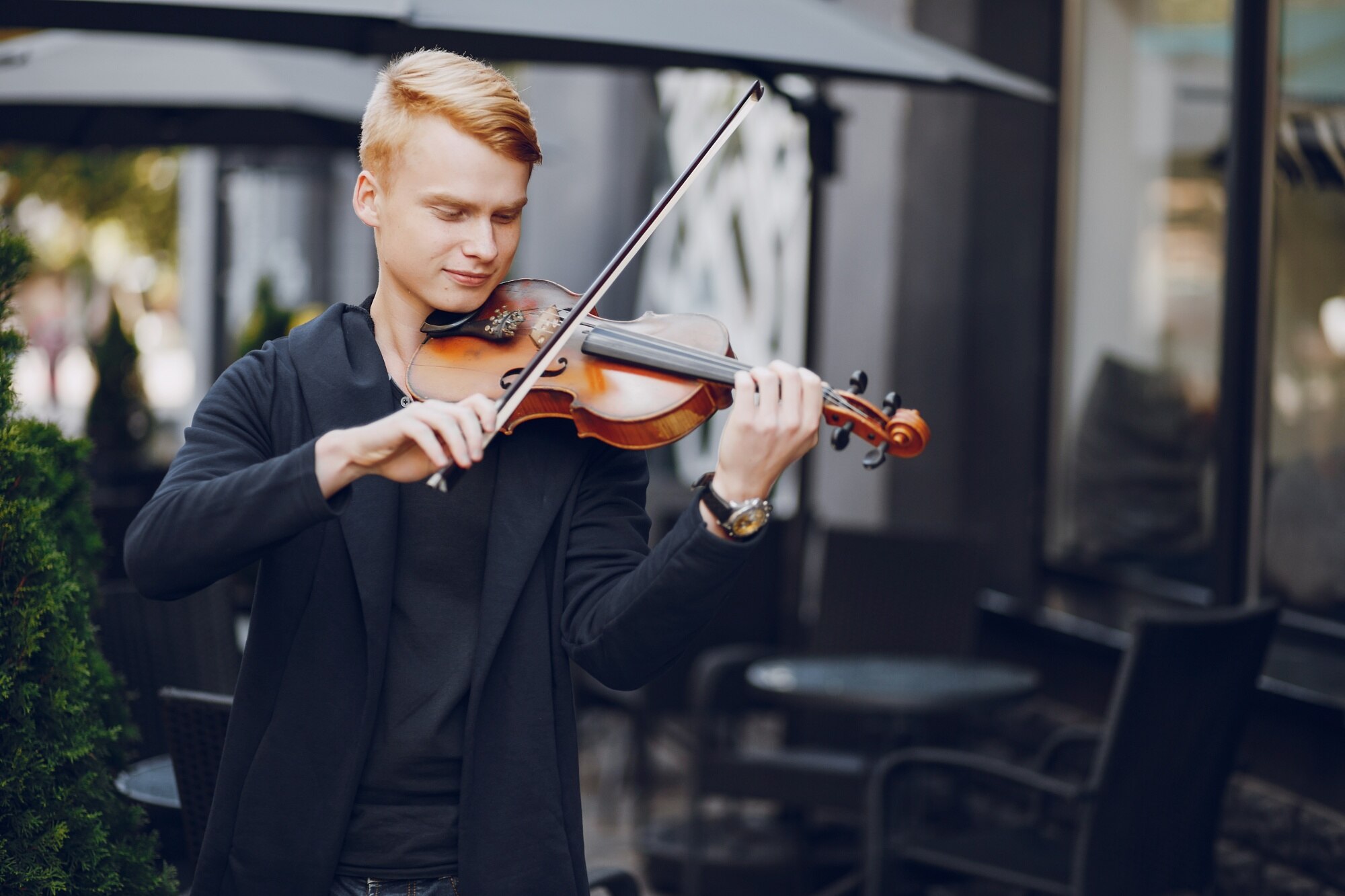
Yes, a fiddle is a violin: the same four-string instrument, tuned G-D-A-E. The names signal different musical traditions, with some optional setup choices. Here’s how those traditions shape rhythm, learning and equipment.
These are tendencies, not rules:
| Aspect | Fiddle traditions | Classical violin |
|---|---|---|
| Music | Folk, dance, country | Classical repertoire |
| Rhythm | Often dance-led | Varies by repertoire |
| Ornaments | Irish examples: cuts, rolls, slides | Repertoire-dependent |
| Setup | Standard; sometimes flatter bridge | Usually standard bridge |
| Learning method | Often by ear | Notation and listening; Suzuki starts by ear |
In This Article
- One Instrument, Two Names
- The Music People Mean by Fiddle
- What You Hear in the Playing
- How Tunes Get Passed On
- Bridges, Strings, and Setup
- Playing Amplified
- Key Takeaways
- Frequently Asked Questions
- Choose Your Style Before Your Setup
One Instrument, Two Names
The modern violin developed in northern Italy in the 16th century; Andrea Amati was an important early maker. “Fiddle” is an older English word for bowed instruments that stayed in use after the violin arrived. Makers don’t build fiddlers a separate body.
The Music People Mean by Fiddle
In an Irish session, players join familiar tunes and link them into sets without written parts. Reels are written in 4/4 or 2/2 time; many jigs use 6/8, while others use 9/8 or 12/8, with slip jigs in 9/8. Their pulse serves dancers, as old-time fiddle music does at American square dances.
What You Hear in the Playing
The bow supplies that pulse. Shuffle bowing repeats rhythmic strokes; drones add an open string beneath the melody, while double stops sound two notes together.
Irish cuts, rolls and slides decorate notes without interrupting the beat. Classical playing often gives more weight to sustained phrasing, vibrato and high fingerboard positions.
How Tunes Get Passed On
Those decorations often travel by ear, phrase by phrase. Players vary the same reel instead of treating one written version as fixed.
A skilled music reader may therefore struggle in a session. Finding the notes isn’t enough: listening repeatedly builds the tune’s rhythm and ornaments into memory.
Bridges, Strings, and Setup
Setup can support those playing habits, but neither tradition requires a special instrument. The bridge and strings offer choices, not a conversion.
The Bridge
A standard bridge’s curve helps the bow isolate each string. Some fiddlers prefer a flatter curve for easier drones and double stops with less arm movement.
That convenience makes clean single-string playing less forgiving. Many fiddlers keep an ordinary bridge.
The Strings
Steel-core strings offer a bright sound, quick response and stable tuning. Many classical players choose synthetic-core strings for warmth; some use gut. These preferences don’t define the instrument.
Playing Amplified
Alongside a country band’s drums, a pickup or clip-on microphone feeds the fiddle into the PA. Frequent amplified playing can favour an electric violin.
Some bluegrass bands instead share one condenser microphone, stepping closer for solos and back for accompaniment. Movement controls the balance.
Key Takeaways
- The name describes a musical setting, not a separate instrument.
- Dance rhythm shapes fiddle bowing.
- Learning by ear develops familiarity beyond the notes.
- Setup changes involve trade-offs.
- Amplification answers the room and band.
Frequently Asked Questions
What’s the difference between a fiddle and a violin?
“Fiddle” usually signals folk, dance or country playing; “violin” usually signals classical music. Either name can describe the instrument in your case.
Is a fiddle a hard instrument?
Yes. Without frets, accurate pitch depends on finger placement and hearing. Bow control also takes practice, though simple dance tunes offer an accessible beginning.
Can a fiddle be played like a violin?
Yes. Classical repertoire may favour a standard bridge over a flattened one, but changing the setup is optional, not a requirement for crossing styles.
Can a violin player play fiddle?
Yes. Existing technique transfers, while rhythmic feel and ear learning need attention. Knowing the notes of a reel doesn’t automatically give it dance lift.
Why do musicians still call a violin a fiddle?
The older word remained part of everyday musical language. Folk and country players use it naturally, and classical players sometimes use it casually.
Is the fiddle an Irish instrument?
It isn’t exclusively Irish. Ireland has a well-known tradition alongside Scottish, old-time, bluegrass, Cajun and country styles; the instrument’s origins are Italian.
Choose Your Style Before Your Setup
Choose music before equipment. For an Irish session, learn reels by ear and work on their ornaments; for old-time playing, develop the bow’s rhythmic drive. Play with others when you can. Your existing violin works.
Change its setup only for a specific problem. The bridge trade-off matters if double stops feel awkward; string choice matters if you want a different response. A drummer may make amplification necessary. None replaces the rhythm you put into the bow.